Business News
PM Surya Ghar scheme: India adds 4.9 GW rooftop solar capacity, only 13% of target met
.png)
3 min read | Updated on October 14, 2025, 14:19 IST


SUMMARY
India has added 4,946 MW of rooftop solar capacity under the Pradhan Mantri Surya Ghar Yojana (PMSGY) till July 2025, achieving only 13% of its 1 crore household installation goal, according to a report.
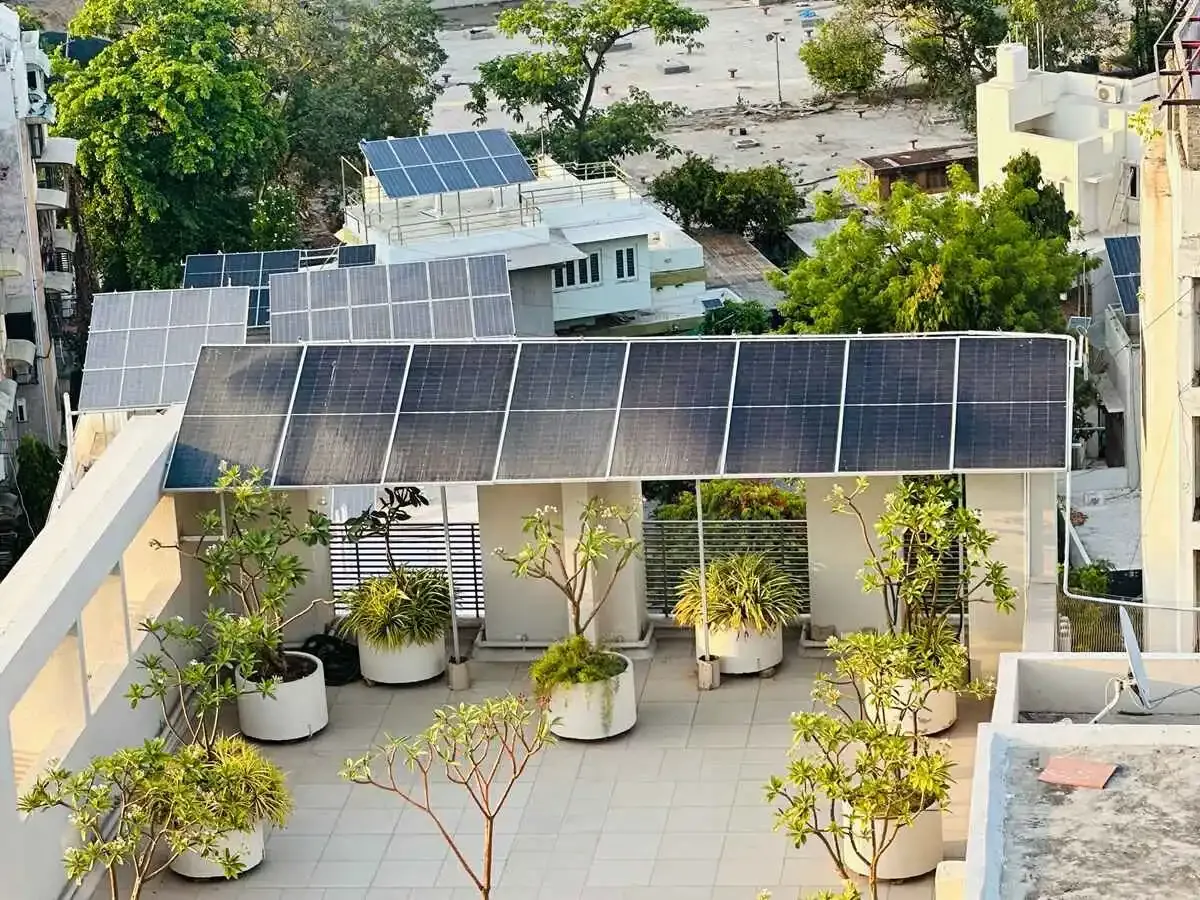
The report noted that despite a near four-fold increase in applications between March 2024 and July 2025, only 13.1% of the target of 1 crore installations has been met. Image: Shutterstock
India has added 4,946 MW of residential rooftop solar capacity under the Pradhan Mantri Surya Ghar Yojana (PMSGY) till July 2025, meeting just 13% of its target of 1 crore household installations, according to a new report.
The report, published by the Institute for Energy Economics and Financial Analysis (IEEFA) and JMK Research & Analytics, noted that the government scheme, launched to promote rooftop solar adoption in households, has attracted more than 57.9 lakh applications since its rollout.
Subsidy disbursements under the scheme have so far crossed ₹9,280 crore.
Despite strong momentum, meeting the ambitious goal of achieving 30 GW of rooftop solar capacity by FY2027 continues to be seen as a considerable challenge.
As of July, only 14.1% of the ₹65,700 crore subsidy allocation had been released.
Gujarat has emerged as the top performer under the scheme, with 1,491 MW of installed capacity, followed by Maharashtra, Uttar Pradesh, Kerala, and Rajasthan. These states together account for around 77.2% of the total installed capacity under the scheme till July 2025.
“PMSGY has steadily expanded its policy framework to speed up residential rooftop solar adoption. Since 2024, it has rolled out a nationwide capacity-building programme to train over three lakh people and help vendors, utilities and financiers upskill,” said Jyoti Gulia, Founder of JMK Research and a contributing author of the report.
"However, low consumer awareness and access to finance remain significant barriers to the adoption of rooftop solar. Outdated perceptions of high upfront costs and maintenance persist, especially in rural areas," said Prabhakar Sharma, senior consultant, JMK Research, and a co-author of this report.
The report noted that delays in component supply, including solar panels, inverters, and mounting structures, have further affected the pace of installations.
“Establishing clear, time-bound rooftop solar capacity targets at the state level is essential for creating a coherent vision and ensuring effective policy execution,” said Vibhuti Garg, Director, IEEFA South Asia.
The report also flagged gaps in grievance redressal, recommending the creation of district-level escalation systems to resolve subsidy delays and portal-related issues.
To improve conversion of applications into installations, it suggested setting up local facilitation cells to guide households in filing applications and claiming subsidies. “The rooftop solar market continues to face fragmented quality and weak end-to-end guarantees,” said Sharma.
The authors emphasised that the long-term success of PMSGY depends not just on subsidies but also on the institutionalisation of streamlined digital processes, standardised product solutions, and consumer-centric support systems.
About The Author
Next Story