Business News
Older cars banned, 'no PUC, no fuel' as Delhi’s new pollution rules kick in; Is your car affected?
.png)
3 min read | Updated on December 18, 2025, 10:45 IST


SUMMARY
Diesel vehicles over 10 years old and petrol vehicles over 15 years old have been barred from plying, while non-Delhi private vehicles that do not meet BS-VI norms are prohibited from entering the city.
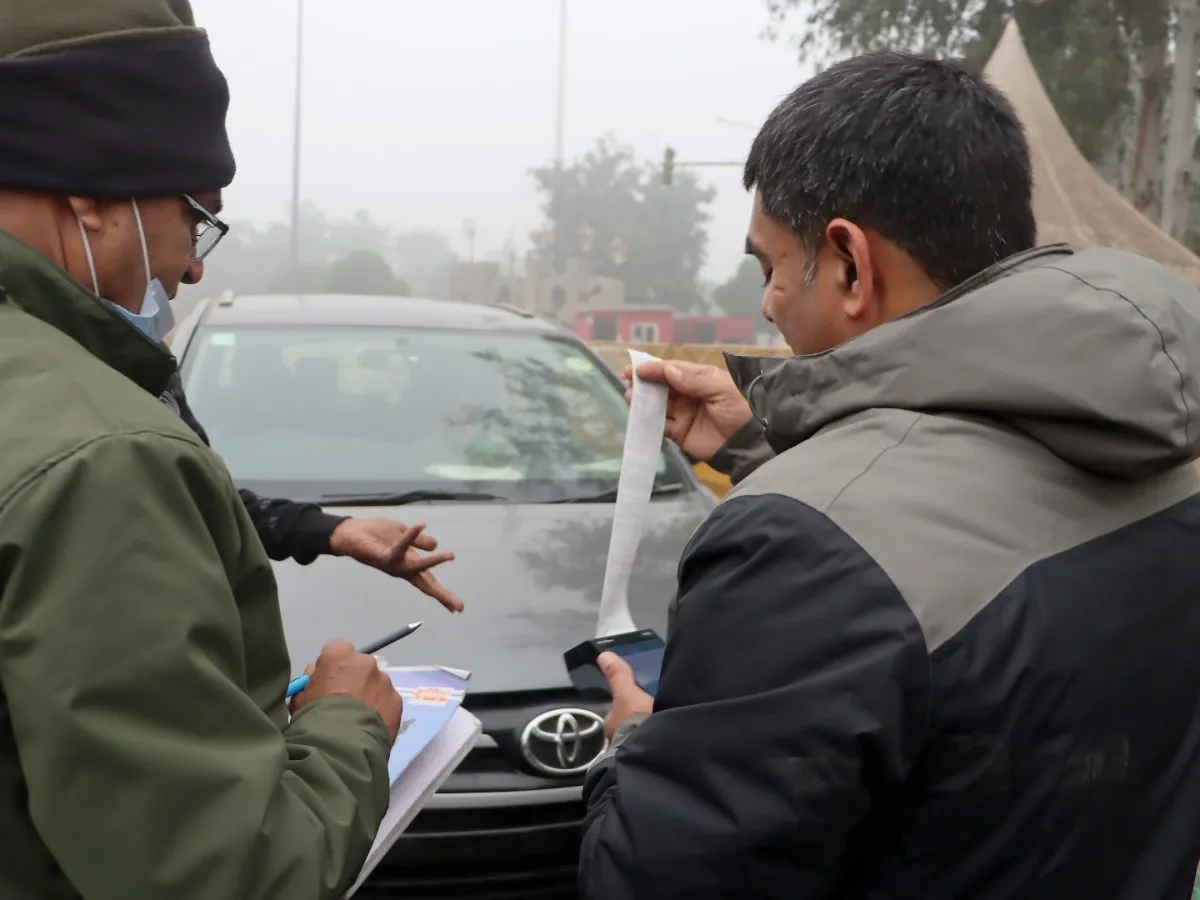
New Delhi: Traffic police personnel issue challan to a commuter at the Delhi-Noida Chilla Border, in New Delhi, Thursday, Dec. 18, 2025. (Photo: PTI)
Delhi on Thursday began enforcing a ban on the entry of older, more polluting private vehicles and stopped fuel sales to vehicles without valid pollution certificates, as authorities tightened restrictions to combat hazardous air pollution.
The measures follow a Supreme Court order issued on Wednesday modifying its earlier ruling and reinstating restrictions on vehicles that do not meet Bharat Stage-IV (BS-IV) emission standards.
The court said the curbs would remain in force only while the most stringent air pollution controls, known as Graded Response Action Plan (GRAP) Stage IV, are active.
Vehicles barred from Delhi roads
Under the latest rules, diesel vehicles older than 10 years that meet BS-III or lower standards, and petrol vehicles older than 15 years, are barred from plying on Delhi roads.
The city has also banned the entry of non-Delhi registered private vehicles that do not meet BS-VI emission norms.
Fuel stations across the capital have stopped dispensing fuel to vehicles without valid Pollution Under Control (PUC) certificates.
Enforcement is being carried out using automatic number plate recognition cameras, voice alerts at fuel stations and police support, officials said.
PUC certificates: cost and validity
Delhi Environment Minister Manjinder Singh Sirsa said vehicles without PUC certificates would not be provided fuel from Thursday.
A PUC certificate is issued after an emissions check at authorised centres and costs between ₹60 and ₹100, depending on vehicle type.
Certificates for BS-IV and BS-VI vehicles are valid for 12 months.
According to officials, around 580 police personnel have been deployed at 126 checkpoints, while transport department enforcement teams have been stationed at fuel pumps and entry points.
The restrictions do not apply to vehicles running on compressed natural gas (CNG) or electricity, public transport, emergency services or vehicles carrying essential commodities.
However, trucks transporting construction material are barred from entering the city under GRAP-IV rules.
GRAP Stage IV, the toughest level of curbs, is triggered when the Air Quality Index (AQI) exceeds 450. All four stages of GRAP are currently in force across Delhi-NCR due to persistent hazardous air quality.
Air quality outlook
Smog lingered over the city on Wednesday, with air quality in the ‘very poor’ category. The forecasts, meanwhile, predict the air quality to oscillate between 'very poor' and 'severe' categories in the coming days.
It is likely to remain in either of the two categories over the next six days, according to the Air Quality Early Warning System for Delhi.
Of Delhi’s 39 air quality monitoring stations, 29 recorded ‘very poor’ air quality, while the rest showed ‘poor’ levels. The ITO area recorded the highest AQI at 378, while the airport area registered the lowest reading at 258.
Data from the government’s air quality decision support system showed transport contributed 16.3% of Delhi’s pollution on Wednesday, up from 11.95% a day earlier.
By signing up you agree to Upstox’s Terms & Conditions

About The Author
Next Story