Business News
Can petrol pumps enforce ‘no PUC, no fuel' rule in Delhi? Know the challenges flagged by dealers' body
.png)
4 min read | Updated on December 18, 2025, 10:58 IST


SUMMARY
While backing efforts to curb air pollution, the Delhi Petrol Dealers’ Association cautioned that refusing fuel sales could expose dealers to legal risk under the Essential Commodities Act and trigger law-and-order issues at pumps.
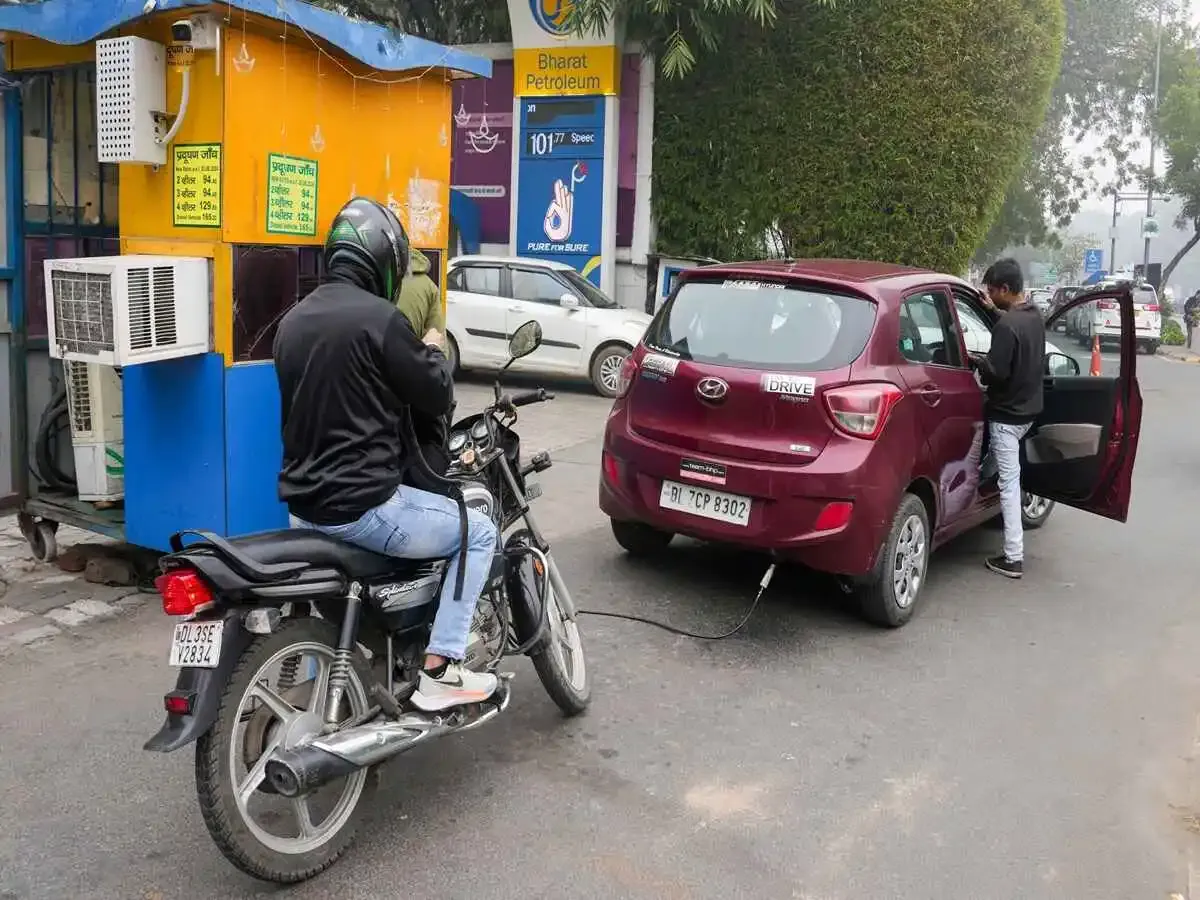
New Delhi: Commuters wait in a queue at the pollution checking centre of a petrol pump on a foggy winter morning, in New Delhi, Thursday, Dec. 18, 2025. (Photo: PTI)
Petrol dealers in Delhi have flagged multiple legal, operational and safety challenges in enforcing the city government’s ‘No PUC, no fuel’ directive, saying the rule has to be implemented by the "competent authorities vested with statutory powers".
The Delhi Petrol Dealers’ Association (DPDA) has written to Environment Minister Manjinder Singh Sirsa, extending its “whole-hearted support” to the government’s efforts to combat severe air pollution, but cautioned that effective implementation of the order would be “an extremely difficult and arduous task” unless key concerns are addressed.
Under the directive, announced by Sirsa, vehicles without a valid Pollution Under Control (PUC) certificate are barred from purchasing fuel at petrol pumps from Thursday.
A PUC certificate is issued after an emission check conducted at authorised centres.
What are the concerns raised by dealers' body?
The association said Delhi residents are affected more by transboundary pollution than by sources within the city, arguing that measures confined to the National Capital Territory (NCT) are “unlikely to yield the desired results” unless uniformly implemented across the entire National Capital Region (NCR).
DPDA also raised legal concerns, pointing out that refusal to sell an essential commodity is covered under Section 3 of the Essential Commodities Act, 1955, and the Motor Spirit and High Speed Diesel (Regulation of Supply, Distribution and Prevention of Malpractices) Order, 1998.
It said refusal of fuel sale must be “decriminalised by the relevant authority” for petrol pumps to carry out the directive without legal risk.
Stating that petrol pumps are not enforcement agencies, the association said the implementation of the ‘No PUC, No Fuel’ rule should be carried out by authorities vested with statutory powers.
Petrol pump staff, it added, are “never looked upon by customers as an enforcing authority”, and denial of fuel could lead to law-and-order issues.
The DPDA also sought that penal action against petrol pump dealers be avoided, saying they are helping the government in implementing the order.
Among other concerns, the association said the emission checking system is obsolete and needs urgent upgradation, and flagged the absence of a dashboard or live feed linked to the automatic number plate recognition (ANPR) cameras installed at retail outlets.
It also said a proper trial run of the system had never been conducted, adding that an earlier trial resulted in “junk data” being transmitted to petrol pumps, leading to failure of the drive.
The association urged the government to resolve these issues to ensure successful implementation.
The concerns come amid tightening pollution curbs after the Supreme Court on Wednesday modified its earlier August order while hearing a case on worsening air quality in Delhi-NCR.
The court reinstated restrictions on older vehicles that do not meet Bharat Stage-IV (BS-IV) emission norms, to remain in force as long as the most stringent pollution control measures under the Graded Response Action Plan (GRAP) Stage-IV are active.
As per the order, diesel vehicles older than 10 years meeting BS-III or lower standards and petrol vehicles older than 15 years are barred from plying on Delhi roads from Thursday.
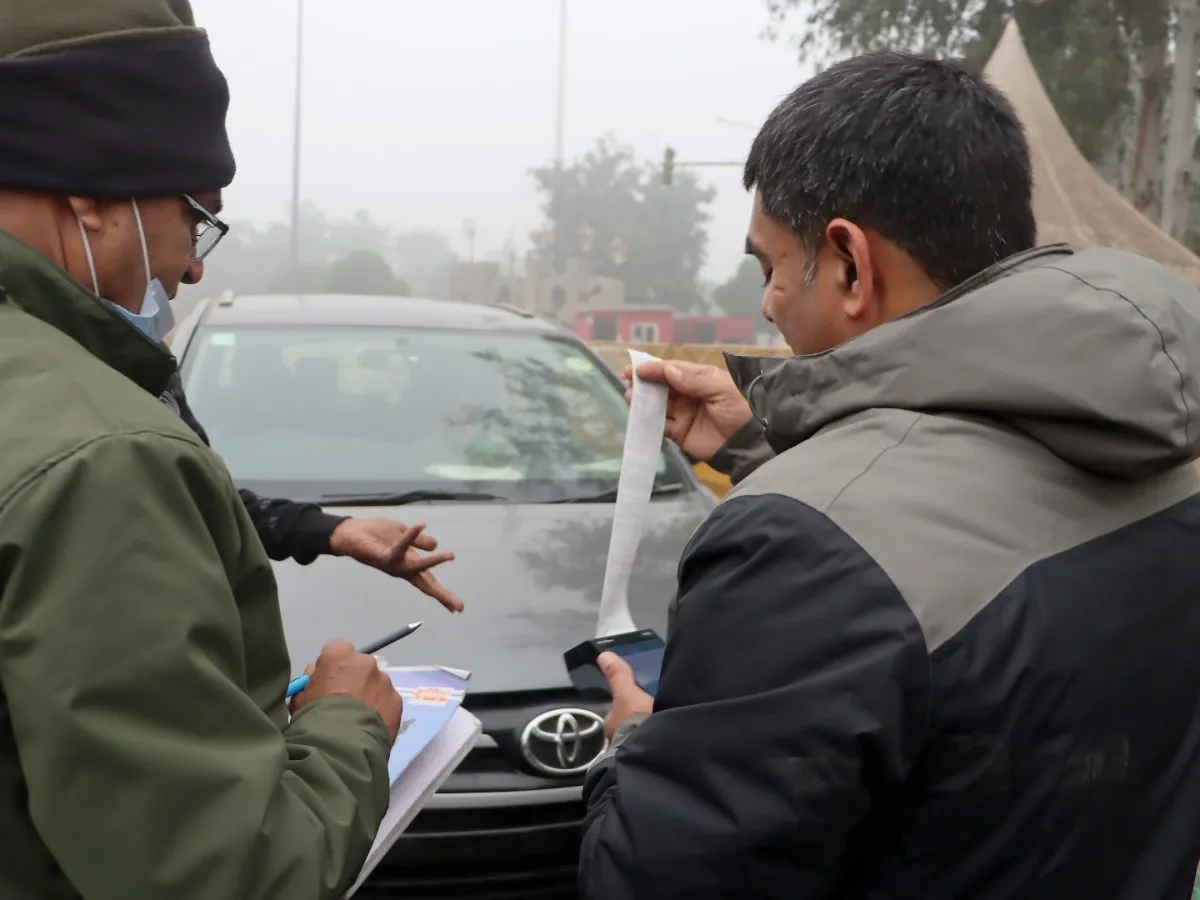
Enforcement teams of the Transport Department have been deployed at petrol pumps and border points.
The entry ban on non-compliant vehicles does not apply to CNG and electric vehicles, public transport, vehicles carrying essential commodities or providing essential services. Vehicles carrying construction material are also barred from entering the city under GRAP-IV restrictions.
GRAP Stage-IV, the most severe level of pollution control, is enforced when the Air Quality Index (AQI) crosses 450.
All four stages of GRAP are currently in force across Delhi-NCR due to hazardous air quality.
Smog persisted across the capital on Wednesday, with air quality in the ‘very poor’ category, slightly improving from a day earlier. Forecasts indicate air quality is likely to oscillate between ‘very poor’ and ‘severe’ over the next six days, according to the Air Quality Early Warning System for Delhi.
Over the weekend, AQI readings crossed 400, remaining in the ‘severe’ category for three consecutive days. Of the 39 monitoring stations, 29 recorded ‘very poor’ air quality, while the rest reported ‘poor’ levels, CPCB data showed. ITO recorded the highest AQI at 378, while IGI Airport registered the lowest at 258.
Government data showed transport contributed 16.3% of Delhi’s pollution on Wednesday, up from 11.95% a day earlier.
Related News
By signing up you agree to Upstox’s Terms & Conditions

About The Author
Next Story