Business News
Nirmala Sitharaman set to present 9th straight Budget as India balances growth and fiscal discipline

5 min read | Updated on February 01, 2026, 07:15 IST


SUMMARY
The Union Budget presentation comes amid intensifying global trade tensions, including steep US tariffs on Indian goods following Donald Trump’s return to the White House.
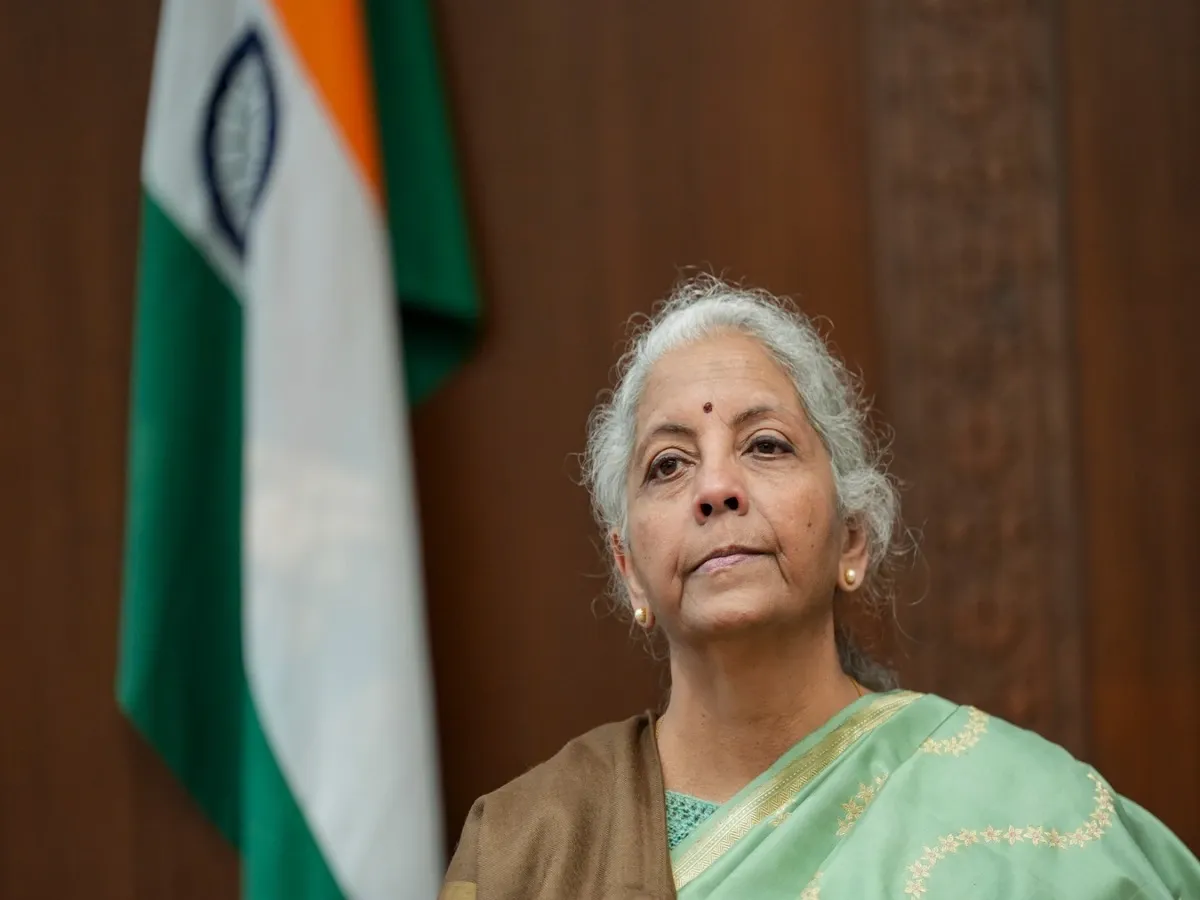
Union Finance Minister Nirmala Sitharaman poses for photographers after giving final touches to the Union Budget 2026-27, at North Block, in New Delhi, Saturday, Jan. 31, 2026. (PTI Photo)
Finance Minister Nirmala Sitharaman will on February 1 present the Union Budget 2026–27 amid intensifying global trade tensions, geopolitical uncertainty and growing pressure to sustain India’s growth momentum while staying on a path of fiscal consolidation.
The Budget presentation will be on Sunday, a first in independent India's history.
Having steered the economy through the COVID-19 pandemic and amid continuing geopolitical uncertainty, Sitharaman will present the Budget for a record ninth consecutive time.
She will also move a step closer to the record held by former prime minister Morarji Desai, who presented the Budget on 10 occasions.
On Thursday, Prime Minister Narendra Modi said Sitharaman presenting the Budget for the ninth consecutive time would be “recorded as a matter of pride in India’s parliamentary history”.
While domestic demand has remained resilient and inflation has moderated from recent highs, global uncertainties continue to cloud the outlook.
Union Budget 2025-26 was presented under the shadow of global uncertainty following the return of Donald Trump to the White House. Given how the year panned out, the only thing certain in 2026 is even greater uncertainty.
The United States has imposed steep tariffs of up to 50% on Indian goods, including a punitive 25% levy linked to India’s purchase of Russian crude oil.
India and the US have held six rounds of talks to strike a bilateral trade deal but there has not been any sign of breakthrough despite both sides expressing optimism in public.
These trade tensions, alongside the continuing Russia-Ukraine war and unrest in Iran, add to the significance of this year’s Budget.
What to expect from the Budget
The government faces the twin challenge of boosting consumption and job creation while stepping up capital expenditure and keeping the fiscal deficit on a downward trajectory.
The Economic Survey has projected India’s economy to grow between 6.8% and 7.2% in the 2026–27 financial year.
“The outlook, therefore, is one of steady growth amid global uncertainty, requiring caution, but not pessimism,” the pre-Budget document tabled in the Lok Sabha said.
This year’s Budget will be critical in sustaining growth momentum while advancing fiscal consolidation, with limited headroom for sweeping tax changes following recent reforms.
D.K. Srivastava, Chief Policy Advisor at EY India, said Budget 2026 is likely to focus more on fiscal consolidation and expenditure management rather than headline tax announcements.
Maintaining the fiscal deficit-to-GDP ratio at 4.4% in FY26 may require adjustments, particularly on the revenue expenditure side, to offset any shortfall in receipts, he said.
Srivastava added that the nominal growth assumption for FY27 could be around 9.5%, supported by real GDP growth of about 6.5%.
Sitharaman is also expected to announce reforms that could shield the economy from the trade frictions.
Budget speech focus
According to media reports, the Budget speech is expected to depart from convention followed over the past several decades.
Sitharaman is reportedly set to place greater emphasis on the second part of her speech.
Traditionally, the focus has been on Part A, which outlines the government’s policy initiatives and sectoral priorities. This year, however, Part B, dealing largely with direct and indirect taxes, is expected to receive significantly more attention.
The second part will also outline a roadmap for projecting India’s domestic strengths on the global stage, the Hindustan Times reported.
Govt spending plan
The Budget for 2026–27 is likely to target a fiscal deficit of around 4.2% of gross domestic product, according to SBI Research.
“It is important that India remains on the path of fiscal prudence as rising global debt threatens to disrupt the existing order. Remarkably, India’s post-pandemic recovery has been stronger than its rebound after the global financial crisis,” the report said.
Government capital expenditure is expected to exceed ₹12 lakh crore in FY27, representing year-on-year growth of about 10%, it added.
Sectors to watch
Defence expenditure has been a major talking point since Operation Sindoor. Experts have suggested that continued emphasis on indigenisation, higher domestic procurement, and long-term order visibility for private players would strengthen India’s defence manufacturing ecosystem.
Greater budgetary support for research and development and exports could also improve margins and reduce import dependence, supporting sustained earnings growth.
“Defence is a primary candidate for enhanced support, with expectations of 20–25% growth in capital outlay to drive indigenisation in high-tech areas such as UAVs and anti-drone systems,” Rajkumar Singhal, CEO of Quest Investment Managers, told Upstox News.
The MSME sector, which accounts for 31.1% of GDP, 35.4% of manufacturing output and nearly 48.6% of exports, remains another area of focus, according to the Economic Survey.
With over 7.47 crore enterprises employing more than 32.8 crore people, MSMEs are the country’s second-largest employer after agriculture.
Asked whether MSMEs could expect further support, Commerce and Industry Minister Piyush Goyal said the government has consistently backed the sector through a range of programmes and initiatives.
The government, he said, remains “very conscious” of the importance of MSMEs to the economy.
About The Author
Next Story