Business News
Monsoon arrives in Mumbai after 12-day delay; city gets relief amid water crisis
.png)
4 min read | Updated on June 23, 2026, 15:20 IST


SUMMARY
The India Meteorological Department said the monsoon has advanced across more parts of Maharashtra, Telangana, Odisha, Chhattisgarh, Jharkhand and Bihar.
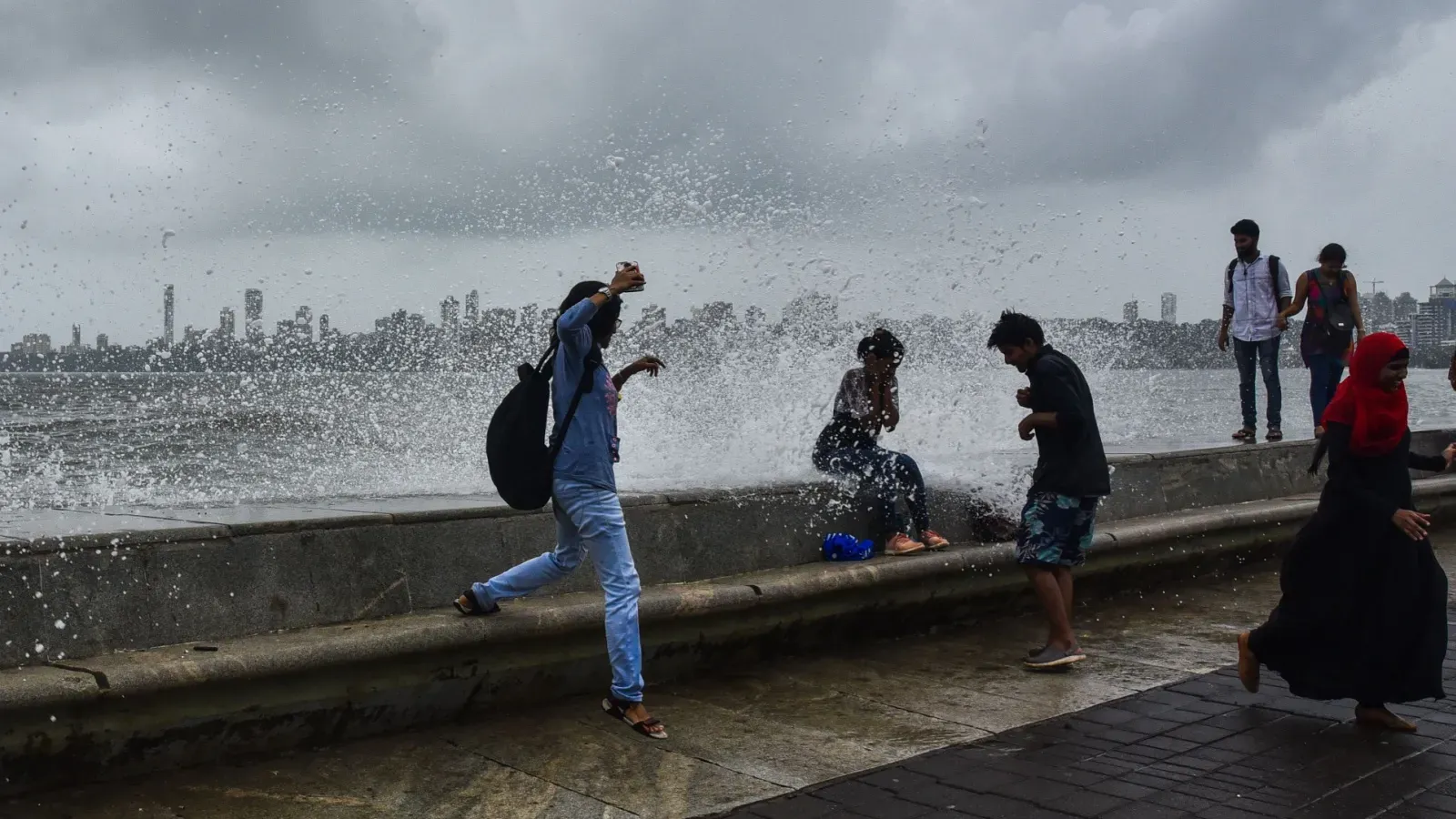
The delayed monsoon had forced the Brihanmumbai Municipal Corporation to impose water conservation measures. Image: Shutterstock
The southwest monsoon advanced into Mumbai on Tuesday, nearly two weeks after its normal onset date of June 11, offering relief amid concerns over depleting water stocks in reservoirs supplying the metropolis.
The India Meteorological Department (IMD) said the southwest monsoon has further advanced into the remaining parts of the central Arabian Sea, some more parts of Maharashtra including Mumbai, the remaining parts of Telangana and Odisha, and some more parts of Chhattisgarh, Jharkhand and Bihar.
The weather office said conditions are favourable for further advance of the monsoon into some parts of the north Arabian Sea and Gujarat, some more parts of Maharashtra and Chhattisgarh, and some parts of Madhya Pradesh over the next two to three days.
It said the monsoon is also likely to cover the remaining parts of Jharkhand and Bihar and some parts of Uttar Pradesh during the subsequent three to four days.
“The Northern Limit of Monsoon passes through 20°N/60°E, 20°N/65°E, 20°N/70°E, Dahanu, Wardha, Raipur, Daltonganj, Motihari and 28.3°N/83°E as on 23rd June, 2026,” the IMD said.
The monsoon’s arrival in Mumbai is the most delayed in the past three years.
The city had earlier recorded a late onset in 2023, when the monsoon reached on June 25.
Before the IMD’s formal announcement, light to moderate showers swept parts of the suburbs and the city division in the morning.
The sky remained overcast since early morning and rainfall activity picked up gradually after 7 am, when authorities also issued a thunderstorm warning for the next three hours.
Heavy showers were reported in parts of south Mumbai between 7 am and 8 am, while the eastern and western suburbs received light rainfall during the period, officials said.
According to data released by the Brihanmumbai Municipal Corporation (BMC), its headquarters recorded 45 mm rainfall, followed by Colaba Pumping Station and Mandvi Fire Station with 29 mm each, F/South reservoir 28 mm, C Ward office in Girgaon 24 mm, Memewada 21 mm, and N M Joshi Marg Municipal School and D Ward office in Grant Road 20 mm each.
The island city recorded an average rainfall of 13.30 mm in the 24 hours ending at 8 am on Tuesday, while the eastern and western suburbs received 0.38 mm and 0.62 mm rainfall, respectively, during the period.
The civic body said all major subways remained open and traffic movement was normal.
Suburban railway services and BEST bus operations were also running without disruption.
The delayed monsoon had led to a fall in water stocks in the reservoirs supplying Mumbai, prompting the BMC to temporarily stop water supply to construction sites and swimming pools and impose a 20 per cent cut in supply to industrial and commercial establishments.
According to the civic body, water stock in the lakes supplying Mumbai has fallen to 10.35 per cent of total capacity.
Mumbai and its suburbs require around 4,664 million litres of water every day, while the city currently receives around 4,100 million litres from available sources, according to a BMC release issued on June 16.
“Due to the delay in the monsoon, the Municipal Corporation faces the challenge of ensuring that this water stock lasts for the maximum possible number of days,” the release had said.
Under the restrictions imposed by the water engineering department, all water connections for construction activities are to be temporarily disconnected and no new construction water connections will be approved until further orders.
Water supply to swimming pools has also been suspended.
Water supply to industrial, commercial and sports club establishments has been reduced by 20%, while supply to aerated water and packaged drinking water bottling plants has been restricted to the drinking water needs of workers at such facilities.
The civic body has urged institutions running public toilets to maximise the use of tanker and borewell water and advised residents and establishments to use well and borewell water for non-potable purposes such as washing vehicles, watering gardens and cleaning roads.
About The Author
Next Story