Business News
Khamenei’s killing to Hormuz fears: What’s happening in Middle East and why India is watching closely

6 min read | Updated on March 02, 2026, 09:41 IST


SUMMARY
The Cabinet Committee on Security, chaired by Narendra Modi, reviewed the rapidly escalating West Asia crisis following the reported killing of Ayatollah Ali Khamenei and subsequent retaliatory strikes across Gulf nations.
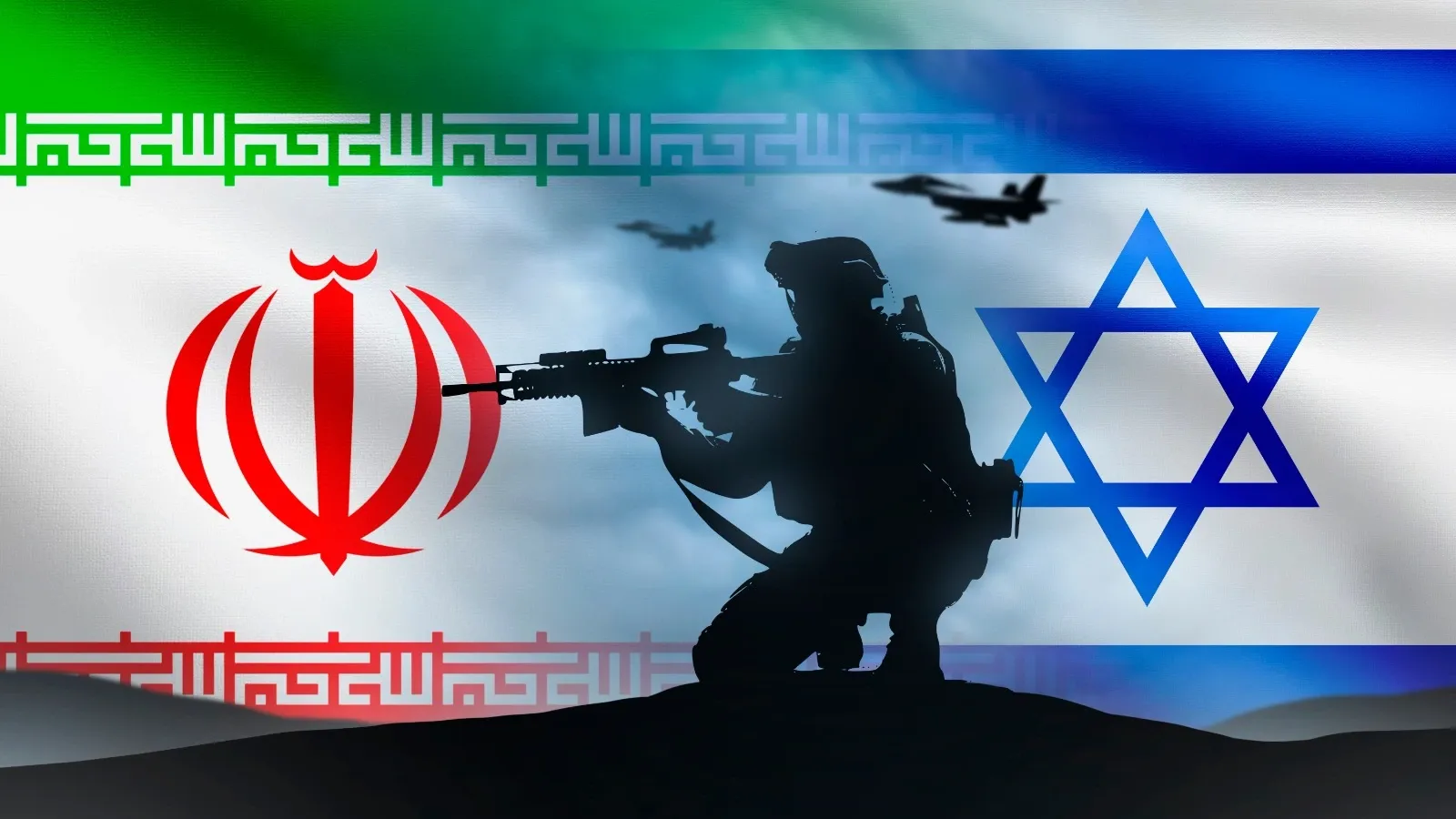
The conflict has triggered missile and drone attacks across Bahrain, Kuwait, Qatar, Saudi Arabia and the UAE, including damage at Dubai International Airport.
The Cabinet Committee on Security (CCS) met under Prime Minister Narendra Modi as the crisis in West Asia deepened following the killing of Iran’s Supreme Leader and a wave of retaliatory strikes that have rattled the region, disrupted air travel and sent oil prices sharply higher.
The Committee reviewed the “evolving situation” after airstrikes in Iran on February 28 and subsequent attacks across several Gulf countries.
It expressed serious concern about the safety of the large Indian expatriate community in the region and the impact on Indian travellers and students appearing for scheduled examinations.
The committee directed departments to take “necessary and feasible measures” to assist Indian nationals affected by the developments and stressed the need for an early cessation of hostilities and a return to dialogue and diplomacy.
In posts on X, PM Modi said he spoke separately with Israeli Prime Minister Benjamin Netanyahu and United Arab Emirates President Sheikh Mohamed bin Zayed Al Nahyan.
“Conveyed India’s concerns over recent developments and emphasised the safety of civilians as a priority. India reiterates the need for an early cessation of hostilities,” Modi said after his call with Netanyahu.
In a separate message following his conversation with the UAE leader, Modi condemned the attacks on the Emirates, offered condolences for the loss of life and thanked the UAE government for taking care of the Indian community there.
“We support de-escalation, regional peace, security and stability,” he said.
Regional escalation
The crisis intensified after Iranian state media reported that Supreme Leader Ayatollah Ali Khamenei, 86, was killed in an airstrike targeting his compound in downtown Tehran. Satellite images showed extensive damage at the site.
US President Donald Trump wrote on social media that “heavy and pinpoint bombing” would continue, describing the assault as necessary to disable Iran’s nuclear capabilities.
Iran’s Cabinet warned that the killing “will never go unanswered.”
Iran launched what it described as an unprecedented wave of missile and drone strikes across the Middle East, targeting countries hosting US military assets, including Bahrain, Kuwait, Qatar and the United Arab Emirates.
Iran’s Islamic Revolutionary Guard Corps said US and Israeli military targets had been struck and warned operations would continue.
Bahrain said a missile attack targeted the headquarters of the US Navy’s 5th Fleet, calling it a “treacherous attack” and a violation of its sovereignty. Kuwaiti and Qatari authorities said their air defense systems intercepted incoming missiles.
Saudi Arabia said Iran targeted Riyadh and its eastern region, condemning the attacks as unjustified.
In the UAE, missile and drone strikes damaged Dubai International Airport, one of the world’s busiest hubs, and set fire to a five-star resort.
Authorities reported one death and several injuries at Abu Dhabi’s airport.
Qatar, Kuwait, Bahrain and the UAE temporarily closed their airspace as strikes continued over the weekend, bringing air and sea traffic in parts of the Gulf to a standstill.
An Iraqi Shiite militia claimed a drone attack Monday targeting US troops at Baghdad’s airport.
The US military said three American service members deployed to Kuwait were killed, the first known US casualties in the conflict.
Trump told US media that casualties could rise and suggested the fighting might last “four weeks or less.”
Oil shock and Hormuz fears
The escalation has jolted global energy markets, with traders focusing on the Strait of Hormuz, the narrow waterway linking the Persian Gulf to the Gulf of Oman.
Nearly 20% of global petroleum liquids and about a fifth of global liquefied natural gas shipments transit the strait.
Iran’s state media said the country had shut the passage in response to US and Israeli strikes.
US crude rose about 8% to around $72 a barrel, while Brent crude initially jumped more than 12% before easing to just under $80.
Brent had settled at just over $73 on Friday.
The Organization of the Petroleum Exporting Countries (OPEC) and its allies said on Sunday that they would raise output by 206,000 barrels per day.
Energy experts say any sustained disruption to traffic through Hormuz could restrict exports and push up global oil and gasoline prices.
India’s exposure
India, the world’s third-largest oil importer, sources roughly half of its crude imports through the Strait of Hormuz.
About 60% of its LNG imports and nearly all liquefied petroleum gas shipments also pass through the route.
Officials and analysts in New Delhi said India is unlikely to face immediate physical disruption in supplies, as refiners hold crude inventories sufficient for at least 10 days and fuel stocks covering another five to seven days.
Even as rapidly unfolding developments in West Asia raise geopolitical uncertainty, contingency plans - including tapping diversified suppliers in US, West Africa, Latin America and even Russia as well as strategic reserves - are in place, they said.
"Indian refineries put together hold anywhere between 10 to 15 days of crude inventories, both in tanks and in transit. Besides, all their fuel tanks are full that can easily meet 7-10 days of the country's fuel requirement," an official said. "For now, we think the closure of the Strait of Hormuz will not be very long..
However, a prolonged closure could complicate LNG supplies, which are largely tied to long-term contracts with limited spot availability.
Analysts warned that while diversified sourcing reduces the risk of sustained shortages, the immediate vulnerability lies in price volatility, freight and insurance costs and broader macroeconomic pressures.
"India's recent pivot back toward Middle Eastern crude has increased its near-term exposure to Hormuz-linked risks. Escalation would most immediately manifest through higher prices, freight and insurance costs and also at last outright supply shock (as of now probability of supply/production reduction is low)," said Sumit Ritolia, Lead Research Analyst, Refining and Modelling at commodity market analytic firm Kpler.
He went on to state that while temporary disruptions cannot be ruled out, a prolonged full blockade remains low probability.
"Diversified sourcing, Russian optionality and layered inventory buffers - including strategic petroleum reserves and commercial stocks - materially reduce the risk of sustained physical shortages. The principal near-term vulnerability is therefore price volatility and macro impact, not structural supply insecurity," he said.
About The Author
Next Story