Business News
Jan Vishwas (Amendment) Bill, 2025 introduced in Lok Sabha; referred to Select Committee
.png)
3 min read | Updated on August 18, 2025, 17:55 IST


SUMMARY
Commerce and Industry Minister Piyush Goyal said the bill seeks to enhance trust-based governance for ease of doing business.
The minister said India is actively involved in the discussions with the US on the Bilateral Trade Agreement (BTA) with the aim to expand trade and investment.
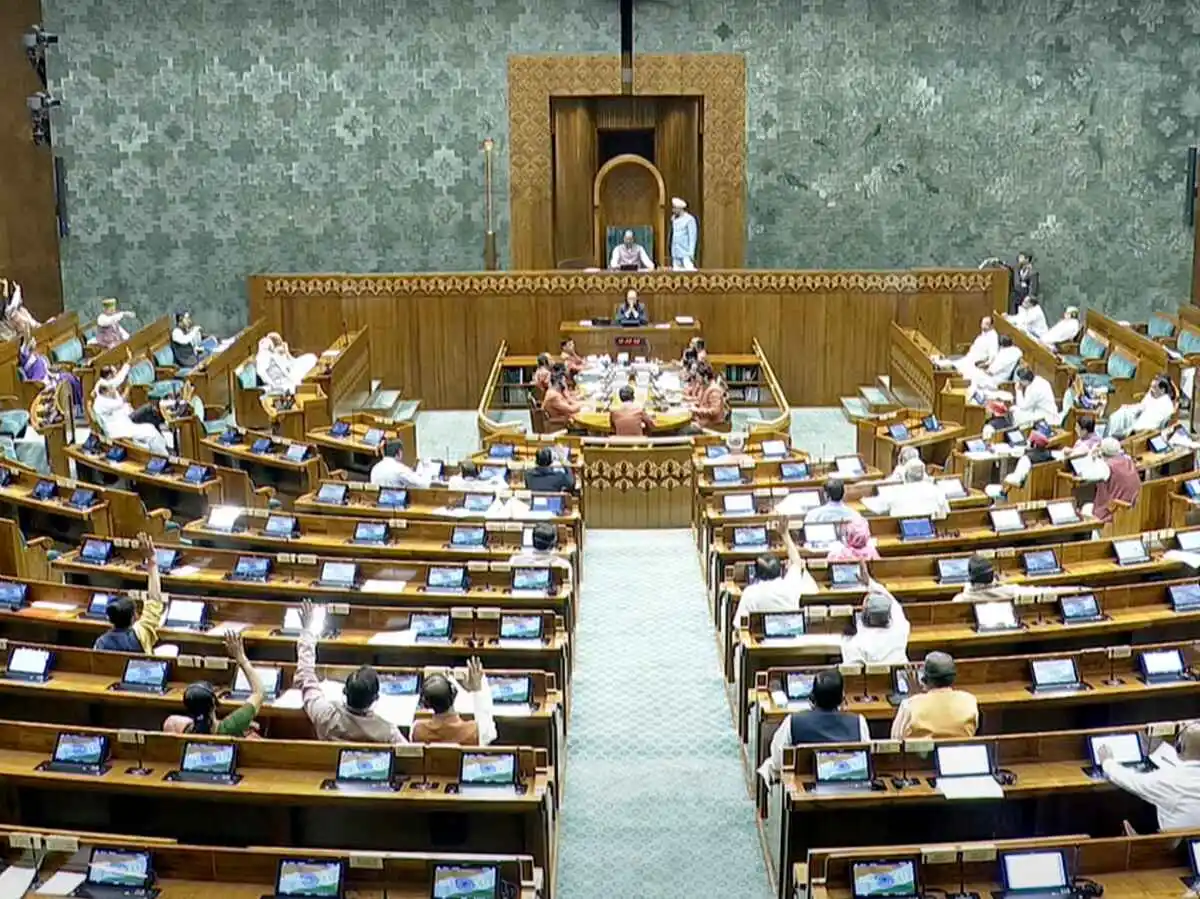
Commerce and Industry Minister Piyush Goyal on Monday introduced the Jan Vishwas (Amendment of Provisions) Bill, 2025 in the Lok Sabha, seeking to further decriminalise minor offences to promote ease of living and doing business in the country.
The Bill, cleared by the Union Cabinet last week, was referred to a Select Committee of the House, which has been asked to submit its report by the first day of the next session.
What are the proposed amendments?
The proposed legislation seeks to amend over 350 provisions across various laws.
In her Budget speech on February 1, 2025, Finance Minister Nirmala Sitharaman had promised to bring in Jan Vishwas 2.0.
“In the Jan Vishwas Act 2023, more than 180 legal provisions were decriminalised. Our government will now bring up the Jan Vishwas Bill 2.0 to decriminalise more than 100 provisions in various laws,” she had said.
It introduces the concept of an “improvement notice” under which no penalty will be imposed for a first offence, reported The Indian Express.
According to the report, an opportunity will be provided to rectify the non-compliance within a stipulated period. Penalties will apply from the second offence onwards, with fines escalating for subsequent violations, subject to a cap depending on the sections.
The new structure reportedly marks a shift from the “penalise on first detection” approach of the 2023 Jan Vishwas Act to an “inform–correct–penalise” model in Jan Vishwas 2.0.
Jan Vishwas (Amendment of Provisions) Bill, 2025, also proposes 67 amendments under the New Delhi Municipal Council Act, 1994 (NDMC Act) and the Motor Vehicles Act, 1988, to facilitate Ease of Living.
The amendments are part of the government’s ongoing efforts to improve the business climate and ensure that penalties are proportionate to the severity of offences, while retaining stringent punishment for serious violations.
In 2023, Parliament had enacted the Jan Vishwas (Amendment of Provisions) Act, which decriminalised 183 provisions under 42 central Acts administered by 19 ministries and departments.
The existing law replaced criminal penalties with civil penalties and administrative actions for minor technical and procedural lapses, reducing legal uncertainties for individuals and businesses.
The latest amendment aims to remove outdated provisions that no longer reflect the evolving technological and business environment. The reforms are expected to save time and costs for both the government and the judiciary, while creating a more conducive environment for entrepreneurs and investors.
Prime Minister Narendra Modi, in his Independence Day address on Friday, said the government was determined to remove archaic laws that put citizens at risk of imprisonment for minor infractions. “In our country, there are such laws that can put people in jail for very small things — you would be shocked. No one has really paid attention to them. We had introduced a Bill in Parliament earlier, and we have brought it again this time,” he said.
By signing up you agree to Upstox’s Terms & Conditions

About The Author
Next Story