Business News
Iraq, Kuwait exports in Peril: How big could the Hormuz oil disruption get?
.png)
3 min read | Updated on March 04, 2026, 12:38 IST


SUMMARY
The Strait of Hormuz handles roughly one-fifth of global oil consumption, making it one of the most critical chokepoints in energy trade.
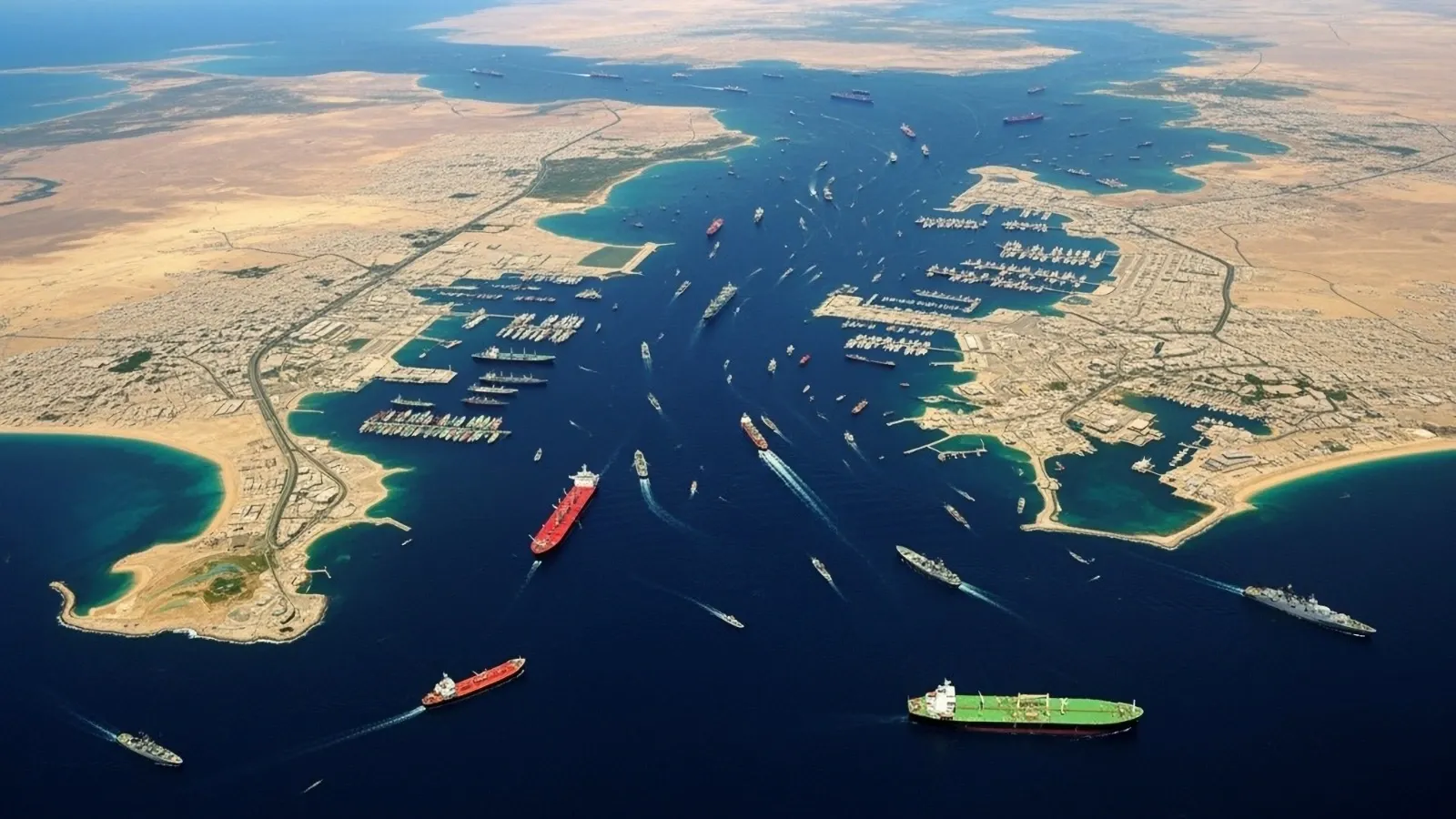
About one-fifth of the world’s oil and LNG supplies pass through Strait of Hormuz. Image: Shutterstock
The risk of a major supply shock to global oil markets is rising as exports from Iraq and Kuwait could begin shutting down within days if the Strait of Hormuz remains closed, analysts and officials have warned.
J.P. Morgan said in a research note that as much as 3.3 million barrels per day (bpd) of crude supply could be forced offline by the eighth day of the conflict in the Middle East if tankers remain unable to move through the strategic waterway.
The bank said Iraq has only about three days before it would have to halt exports routed through the strait, while Kuwait could sustain shipments for around two weeks before storage constraints force it to shut in production.
Baghdad may have to cut output by more than 3 million bpd within days if tankers cannot depart from its export terminals, reported Reuters, citing two Iraqi oil officials.
If the disruption persists, supply losses could widen further, reaching 3.8 million bpd by around day 15 and 4.7 million bpd by day 18, according to J.P. Morgan estimates.
The Strait of Hormuz, located between Iran and Oman and linking the Persian Gulf to the Gulf of Oman and the Arabian Sea, is one of the world’s most important oil transit chokepoints.
Roughly 15 million to 20 million barrels of crude oil a day, or about one-fifth of global consumption, pass through the narrow shipping lane.
Any prolonged disruption can quickly ripple across energy markets, pushing up prices and threatening supplies for major importers.
Amid mounting concerns over shipping risks, US President Donald Trump said Washington would step in to support maritime trade in the region.
“Effective IMMEDIATELY, I have ordered the United States Development Finance Corporation (DFC) to provide, at a very reasonable price, political risk insurance and guarantees for the Financial Security of ALL Maritime Trade, especially Energy, traveling through the Gulf,” Trump wrote on his Truth Social platform.
He said that the US Navy could escort tankers through the Strait of Hormuz if needed.
“If necessary, the United States Navy will begin escorting tankers through the Strait of Hormuz, as soon as possible,” Trump said, adding the measure would be available to all shipping lines to ensure the “free flow of energy to the world.”
The waterway is critical for exports from Saudi Arabia, Iraq, Kuwait, Qatar, Bahrain, the United Arab Emirates and Iran, making it one of the most strategically sensitive points in global energy trade.
India, one of the world’s largest crude importers, said it is prepared to handle short-term disruptions linked to the tensions.
Petroleum and Natural Gas Minister Hardeep Singh Puri said the country has adequate crude and fuel inventories and diversified supply sources.
India currently has enough crude in storage, pipelines and cargoes in transit to meet demand for about 25 days, according to a senior oil ministry official cited by PTI.
Additional stocks of refined products such as petrol, diesel and aviation turbine fuel could also cover demand for a similar period.
India has expanded its sourcing in recent years to include supplies that do not pass through the Strait of Hormuz, helping cushion potential disruptions.
The government has also set up a round-the-clock control room to monitor fuel supplies nationwide.
Related News
By signing up you agree to Upstox’s Terms & Conditions

About The Author
Next Story