Business News
India semiconductor market to grow sixfold to $300 bn by 2035, 60% of chip demand to be met locally: Report
.png)
3 min read | Updated on March 18, 2026, 11:41 IST


SUMMARY
While India currently imports over 90% of its semiconductor needs, local production is expected to meet around 60% of demand by 2035, according to a Deloitte report.
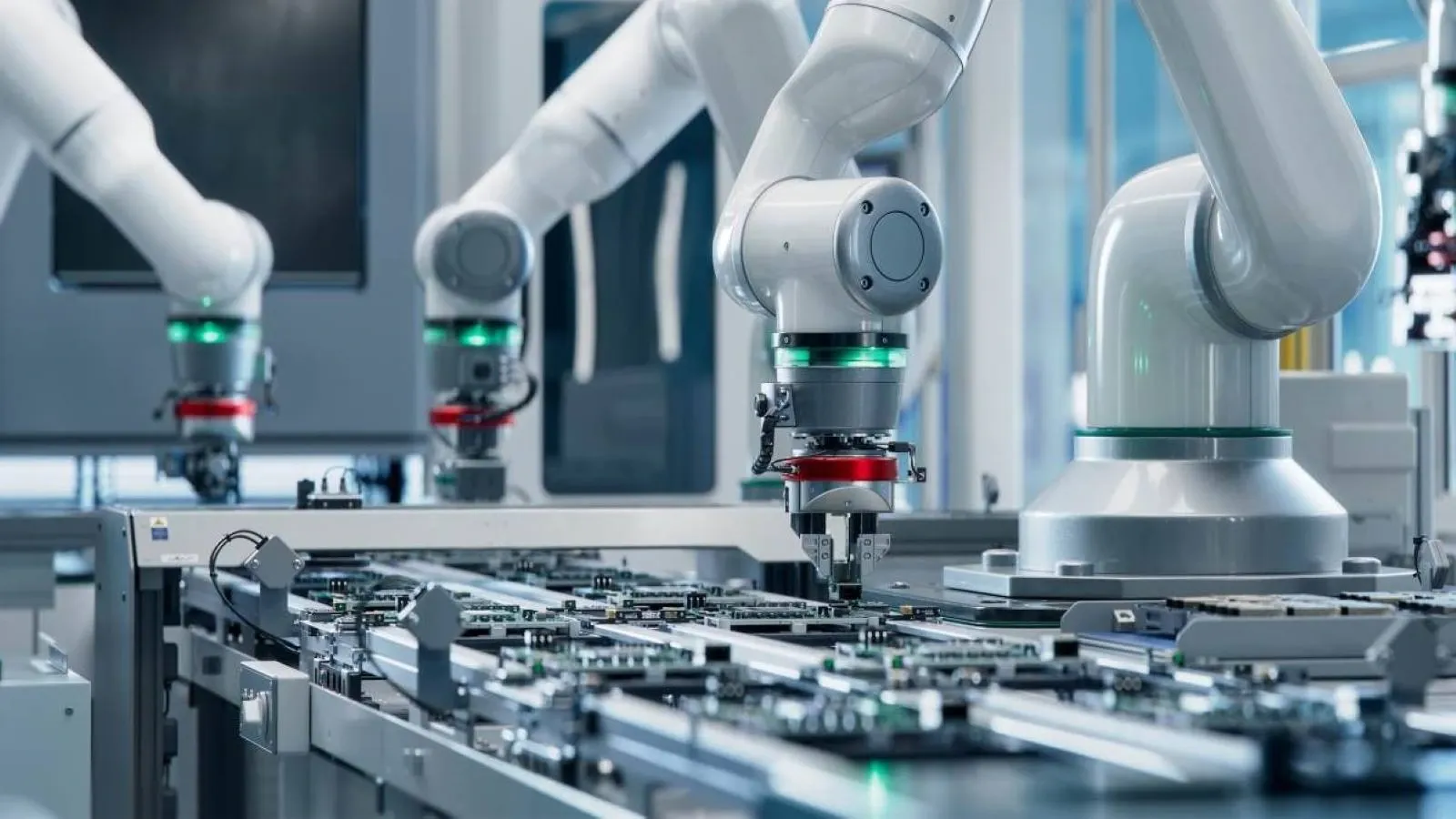
The market, currently estimated at USD 45–50 billion in FY25, is expected to grow to USD 300 billion by 2035.
India’s semiconductor market is projected to nearly triple to about $120 billion by 2030, driven by rising demand from artificial intelligence, electric vehicles, mobile devices and data centres, according to a Deloitte report.
The market, currently estimated at $45–50 billion in FY25, is expected to grow to $300 billion by 2035, Deloitte said in its ‘Technology, Media and Telecommunications Predictions 2026’ report.
“India’s semiconductor market will triple by 2030, driven by AI-, automotive- and data centre-led demand,” the report said.
The growth will be underpinned by strong domestic electronics manufacturing, increasing EV adoption and sustained policy support under the India Semiconductor Mission, which has already attracted over $19 billion in investments.
India currently meets over 90% of its semiconductor demand through imports, leaving it exposed to global supply chain disruptions.
However, this dependence is expected to decline significantly over the next decade.
“By 2035, 60% of India’s semiconductor demand will be met through local production,” Deloitte said, citing expansion in fabrication, assembly, testing and packaging capabilities.
The report noted that mobile phones, automotive, computing and data centres will account for more than 70% of India’s semiconductor demand by 2035, led by increasing adoption of EVs, advanced driver assistance systems (ADAS) and AI workloads.
India is also expected to emerge as a major semiconductor manufacturing hub over the next decade, supported by government incentives and rising investments across the value chain.
By 2035, the country is projected to host 4–5 silicon fabs, 8–10 compound semiconductor fabs, 1–2 display fabrication units and 20–25 OSAT (outsourced semiconductor assembly and test) facilities.
“India is poised to emerge as a major global semiconductor manufacturing hub,” the report said, adding that the ecosystem will likely attract cumulative investments of $125–130 billion between 2025 and 2035.
In the near term, the sector is expected to draw an additional $50 billion in investments over the next five years, including $30–35 billion in fabrication and OSAT facilities and $15–20 billion in the supporting supply chain such as materials, gases and equipment.
India’s data centre industry, which attracted about $60 billion in investments between 2019 and 2024, is expected to see another $45 billion between 2025 and 2027.
The report also highlighted that India’s semiconductor ecosystem could generate around 2 million jobs by 2035, spanning manufacturing, design and ancillary segments, although scaling talent and ensuring policy continuity remain key challenges.
“Execution will determine India’s semiconductor ascent,” Deloitte said, stressing the need for sustained policy support, stronger centre-state coordination and long-term funding certainty to build a resilient chip ecosystem.
About The Author
Next Story