Business News
India’s nuclear milestone: Kalpakkam fast breeder reactor hits ‘first criticality’; what it really means
.png)
3 min read | Updated on April 07, 2026, 12:58 IST


SUMMARY
The Prototype Fast Breeder Reactor (PFBR) is a key component of India’s three-stage nuclear strategy designed to optimise uranium use and eventually harness vast thorium reserves.
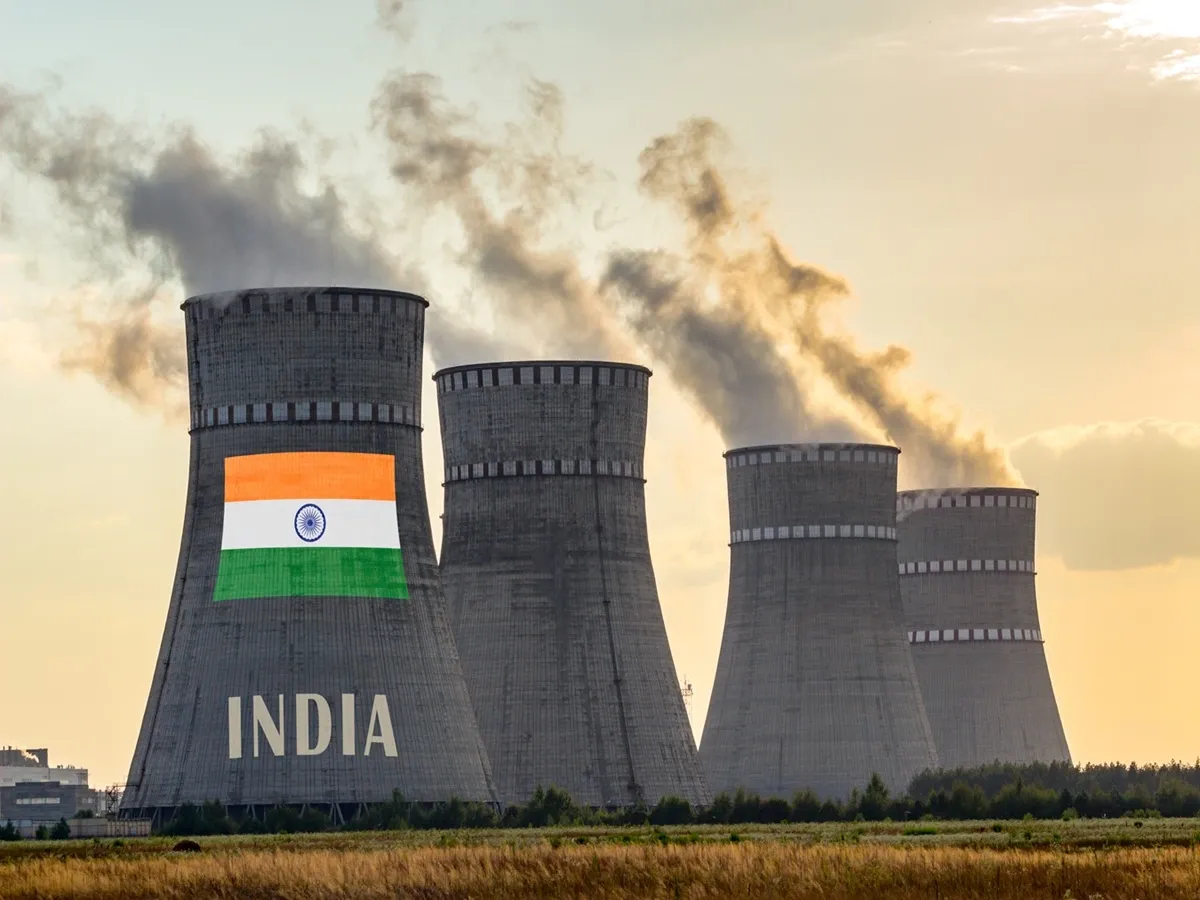
The PFBR’s ability to generate more fuel than it consumes positions it as a crucial bridge between existing reactors and future thorium-based systems. Image: Shutterstock/Representational
India on Monday achieved a major milestone in its civil nuclear programme with the 500 megawatt electric Prototype Fast Breeder Reactor (PFBR) at Kalpakkam in Tamil Nadu attaining “first criticality”, marking the start of a controlled nuclear fission chain reaction.
Prime Minister Narendra Modi termed the development a “defining step” in India’s nuclear journey, noting that it advances the second stage of the country’s three-stage nuclear power programme.
In a post on X, Modi said the indigenously designed and built PFBR reflects India’s scientific and engineering capabilities and will play a crucial role in harnessing the country’s vast thorium reserves in the third stage of the programme.
“A proud moment for India. Congratulations to our scientists and engineers,” he said.
The reactor was indigenously designed by the Indira Gandhi Centre for Atomic Research (IGCAR) and built by state-run Bharatiya Nabhikiya Vidyut Nigam Ltd (BHAVINI), both under the Department of Atomic Energy.
It attained criticality after meeting all safety stipulations set by the Atomic Energy Regulatory Board (AERB), which granted clearance following a “rigorous review of safety of the plant systems,” according to the power ministry.
The criticality was achieved in the presence of Department of Atomic Energy Secretary and Atomic Energy Commission Chairman Ajit Kumar Mohanty, IGCAR Director Sreekumar G Pillai, BHAVINI CMD-in-charge Allu Ananth, and former BHAVINI CMD K V Suresh Kumar.
What is “first criticality”?
First criticality is the point at which a reactor becomes self-sustaining, with each fission event triggering, on average, another.
It basically signals that the reactor’s core and systems are functioning as designed.
This is a key milestone before a reactor moves towards full power generation, involving a phased process of testing, calibration and regulatory approvals.
Why is the PFBR significant?
The PFBR is central to India’s three-stage nuclear programme, which aims to maximise limited uranium resources and eventually tap the country’s vast thorium reserves.
Unlike conventional reactors, the PFBR is designed to “breed” more fuel than it consumes. It uses uranium-plutonium mixed oxide (MOX) fuel, surrounded by a blanket of uranium-238.
Fast neutrons convert this into plutonium-239, creating additional fissile material.
In later stages, thorium-232 can be introduced and converted into uranium-233 to power future reactors under the third stage of India’s nuclear programme.
The development is expected to significantly enhance the utilisation of India’s limited uranium resources while paving the way for large-scale deployment of thorium-based energy systems.
How does it fit into India’s nuclear plan?
India’s nuclear roadmap, designed by Homi J. Bhabha, comprises three stages.
The first stage involves the current fleet of pressurised heavy water reactors (PHWRs) using natural uranium.
Fast breeder technology like PFBR, using plutonium-based fuel, forms the second stage of the nuclear plan.
The third and final stage involves thorium-based reactors using uranium-233 derived from thorium.
India has moved closer to realising its three-stage nuclear power roadmap, with fast breeder technology acting as a bridge between existing pressurised heavy water reactors and future thorium-based systems.
What does this mean for India’s energy future?
The milestone strengthens India’s push for reliable, low-carbon baseload power with higher thermal efficiency.
“The attainment of first criticality represents not only a technological milestone but also a major step towards a sustainable and self-reliant energy future for Viksit Bharat,” the power ministry said.
About The Author
Next Story