Business News
India–New Zealand FTA talks conclude: What’s in the deal and why it matters
.png)
5 min read | Updated on December 22, 2025, 13:11 IST


SUMMARY
The free trade agreement will reduce or eliminate tariffs on 95% of New Zealand’s exports to India and is expected to boost New Zealand’s exports by USD 1.1–1.3 billion annually over the next 20 years.
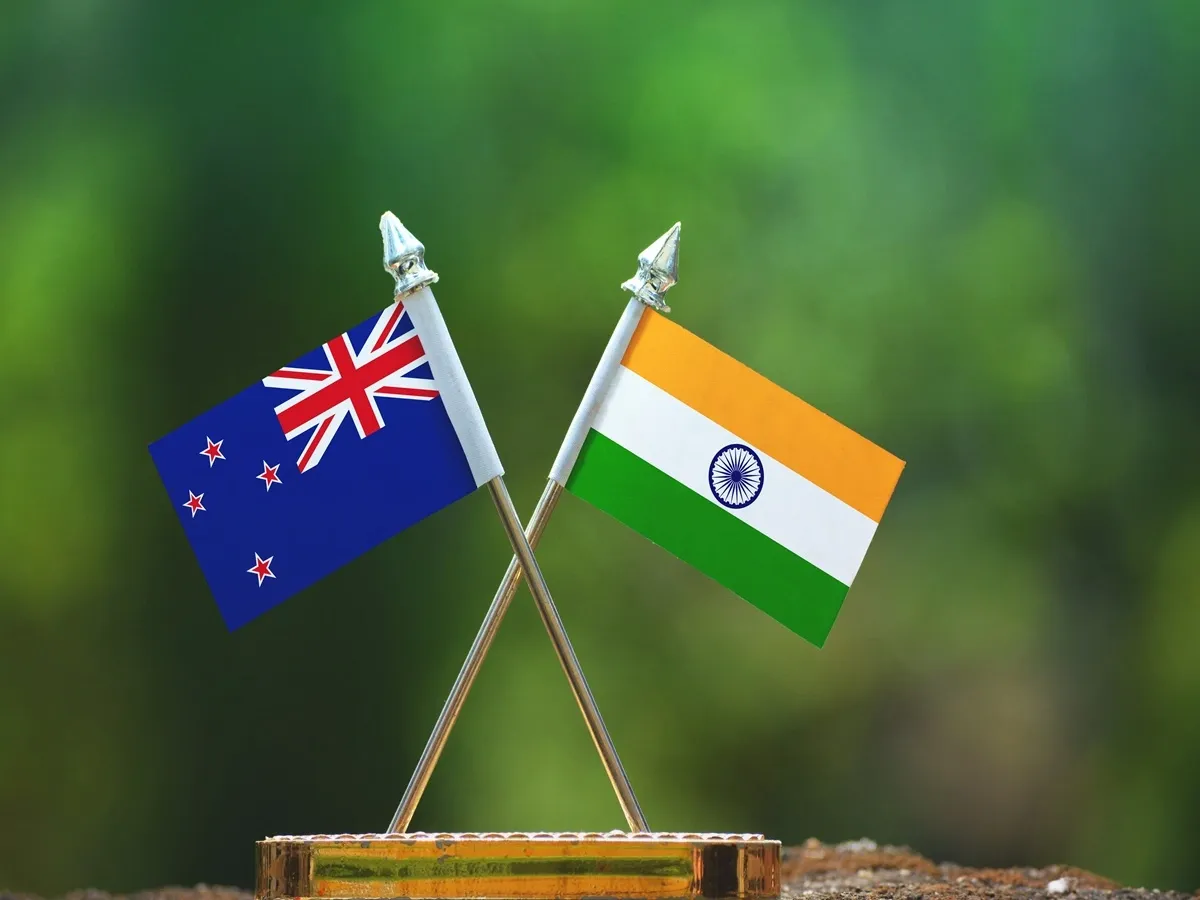
India’s bilateral merchandise trade with New Zealand stood at $1.3 billion in 2024–25, up nearly 49% from the previous year, according to government data.
New Zealand Prime Minister Christopher Luxon on Monday confirmed that the negotiations for a free trade agreement (FTA) with India have been concluded.
In a post on X, Luxon said he had spoken with Prime Minister Narendra Modi following the conclusion of negotiations on the FTA, under which tariffs on a vast majority of New Zealand exports to India will be reduced or eliminated.
He said the agreement reduces or removes tariffs on 95% of New Zealand’s exports to India and is expected to lift the country’s exports by USD 1.1 billion to USD 1.3 billion per year over the next two decades.
“Boosting trade means more Kiwi jobs, higher wages and more opportunities for hard-working New Zealanders,” he said.
“The agreement builds on the strong friendship between our two countries. India is one of the fastest-growing economies in the world, and this gives Kiwi businesses access to 1.4 billion Indian consumers,” Luxon added.
The prime minister said the New Zealand government was focused on strengthening the economy through new trade deals that help build future growth.
The Ministry of Commerce and Industry said the “new generation” agreement is people-centric and jobs-driven, and is built on four pillars — tariffs, agricultural productivity, investment and talent mobility.
The pact is likely to be signed in three months and it is expected to be implemented next year.
What are the key trade benefits for India?
New Zealand has agreed to eliminate tariffs on 100% of its tariff lines, providing duty-free access for all Indian exports. This is expected to significantly boost labour-intensive sectors such as textiles, apparel, leather, footwear, marine products, gems and jewellery, engineering goods, automobiles and handicrafts.
On its part, India has offered tariff liberalisation on around 70% of its tariff lines, covering nearly 95% of bilateral trade value.
Which sectors are protected?
To safeguard farmers and domestic industry, India has excluded several sensitive products from market access. These include dairy products, coffee, milk, cream, cheese, yoghurt, whey, onions, sugar, spices, edible oils and rubber.
New Zealand is one of the world's largest dairy exporters, while India is home to millions of small dairy farmers for whom market protection is a red-line issue. In practice, however, current trade is minimal.
India has always resisted opening the door to bulk dairy imports in all of its previous pacts.
"The dairy sector is completely a red line for us. No duty concessions under the pact in the sector," an official said.
In agriculture, productivity cooperation on apples, kiwifruit and honey will be linked to restricted market access, quotas and minimum import prices to prevent injury to domestic producers.
Why is the services component important?
The FTA delivers New Zealand’s most ambitious services offer to India so far.
Market access has been secured across 118 services sectors, including IT and IT-enabled services, professional services, education, financial services, construction, tourism and audio-visual services, along with Most-Favoured Nation commitments in about 139 sub-sectors. This opens up fresh opportunities for Indian service providers and high-skilled employment.
How does the deal help students and professionals?
The agreement establishes a future-ready mobility framework to boost student and professional movement.
It provides post-study work rights of up to three years for STEM bachelor’s and master’s graduates and up to four years for doctoral scholars, with no numerical caps.
A dedicated quota of 5,000 temporary employment entry visas for skilled professionals and 1,000 work and holiday visas has also been agreed. This pathway covers Indian professions such as AYUSH practitioners, yoga instructors, Indian chefs, and music teachers, as well as high-demand sectors including IT, engineering, healthcare, education, and construction.
What about investment commitments?
New Zealand has committed to facilitating USD 20 billion in investments into India over 15 years, supporting manufacturing, infrastructure, services and innovation under the Make in India programme. Indian firms are also expected to benefit from easier access to New Zealand and Pacific Island markets.
What's in it for New Zealand?
New Zealand Trade and Investment Minister Todd McClay said the pact would put New Zealand exporters on an equal or better footing than competitors in India and could generate billions of dollars in additional exports and thousands of jobs over time.
India has agreed to eliminate or reduce tariffs on 95% of New Zealand’s exports, among the highest levels of access India has offered in any trade deal. About 57% of New Zealand exports will be duty-free from day one, rising to 82% once the agreement is fully implemented.
The concessions cover a broad range of products, including sheep meat, wool, forestry and wood products, seafood, metals and industrial goods. Apples, kiwifruit and mānuka honey will get preferential access through quotas and phased reductions.
“We've also agreed to review the FTA one year after entry into force, which provides a mechanism to pursue further improvements into the future,” McClay said.
About The Author
Next Story