Business News
Hormuz in dire straits: Can Iran really shut oil and gas chokepoint, and what if it happens?

6 min read | Updated on March 02, 2026, 12:36 IST


SUMMARY
Reports of tanker attacks and Iranian warnings to shipping vessels have heightened fears of disruption, even without formal closure of the strait.
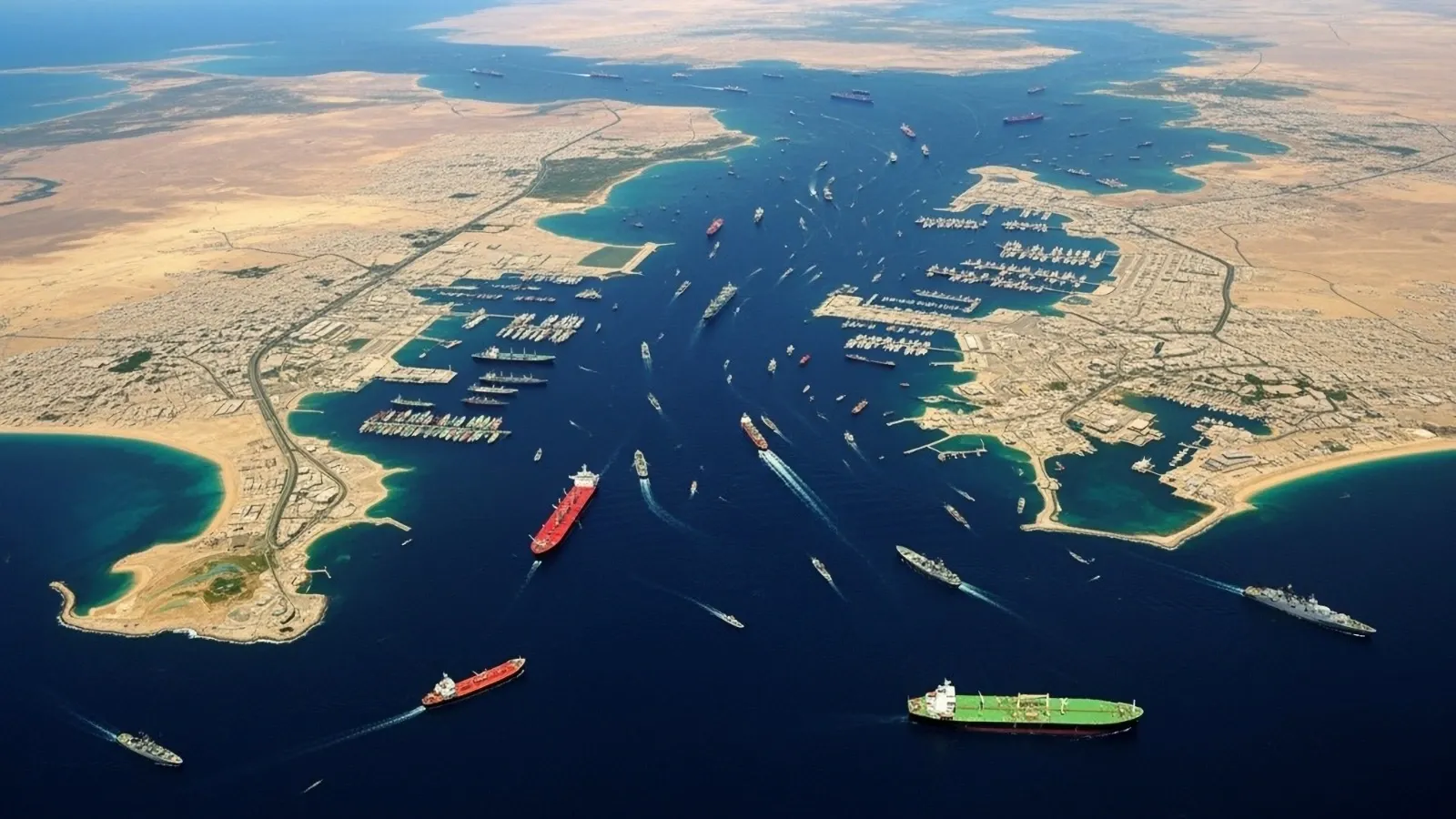
About one-fifth of the world’s oil and LNG supplies pass through Strait of Hormuz. Image: Shutterstock
Three days after the United States and Israel launched joint military strikes on Iran, killing the country’s supreme leader, senior military and political officials and more than 150 civilians including children, fears of a widening regional conflict are rippling through global energy and shipping markets.
Tehran has retaliated with strikes targeting American assets and partners across the region, including Israel, Qatar, the United Arab Emirates, Kuwait, Bahrain, Jordan, Saudi Arabia and Iraq.
Now, fears are mounting over the security of the Strait of Hormuz, one of the world’s most critical oil and gas chokepoints.
What happened in Strait of Hormuz?
Oman said Sunday that an oil tanker was attacked in the strategic waterway, wounding four mariners.
The state-run Oman News Agency identified the vessel as the Palau-flagged Skylight and said the crew included Indian and Iranian nationals.
It was not immediately clear who carried out the attack.
But the incident came amid reports that Iran’s Revolutionary Guards have issued VHF radio warnings declaring that “no ship is allowed to pass” the Strait of Hormuz.
Iran’s semi-official Tasnim news agency reported that the strait had been “shut down” following the February 28 strikes. There has been no independent confirmation of a formal closure.
The United Kingdom Maritime Trade Operations centre said such radio messages are not legally binding under international law. Under the United Nations Convention on the Law of the Sea, transit through international straits remains protected unless physically blocked.
However, shipping companies and markets often react to perceived risks long before any formal blockade occurs.
Why is Strait of Hormuz so important?
The Strait of Hormuz, located between Oman and Iran, connects the Persian Gulf with the Gulf of Oman and the Arabian Sea.
Roughly 15 million to 20 million barrels of crude oil per day, about one-fifth of global consumption, pass through the narrow waterway.
According to the US Energy Information Administration, very few alternatives exist to move oil out of the Gulf if the strait is closed.
In 2024, flows through Hormuz averaged about 20 million barrels per day, equivalent to roughly 20% of global petroleum liquids consumption.
The strait is bordered in the north by Iran and is the main export route for oil and gas from Saudi Arabia, Kuwait, Iraq, Qatar, Bahrain, the United Arab Emirates and Iran itself.
Iran exports around 1.6 million barrels of oil per day, most of it to China. Any disruption could force Beijing to seek alternative supplies, potentially driving global prices higher.
Saudi Arabia and the UAE operate bypass pipelines, but those can only handle a portion of exports.
Analysts say that even if alternative pipelines were maximised, about two-thirds of Gulf exports would still be stranded in the event of a full closure.
Qatar, the world’s largest LNG exporter, depends almost entirely on the strait to ship its super-cooled gas. About one-fifth of global LNG trade flows through the corridor.
India’s exposure
The situation on LNG supplies may turn precarious if the closure lasts long.
While near term supplies are secured, a prolonged closure of Strait of Hormuz may leave India with not enough alternatives.
This is because unlike crude oil, most LNG volumes are locked in long-term contracts and only limited volumes are available in the spot or current market, an official said.
If large buyers such as India or China scramble for alternative supplies, prices could surge.
Sumit Ritolia, lead research analyst for refining and modeling at commodity analytics firm Kpler, said India’s renewed tilt toward Middle Eastern crude has increased its short-term exposure to Hormuz-linked risks.
“Escalation would most immediately manifest through higher prices, freight and insurance costs and also at last outright supply shock (as of now probability of supply or production reduction is low),” Ritolia said.
He said that while temporary disruptions cannot be ruled out, a prolonged full blockade remains a low-probability scenario.
"Diversified sourcing, Russian optionality and layered inventory buffers - including strategic petroleum reserves and commercial stocks - materially reduce the risk of sustained physical shortages. The principal near-term vulnerability is therefore price volatility and macro impact, not structural supply insecurity," he said.
Shipping industry on edge
A leading Indian-American maritime executive warned that the shipping industry is already feeling the impact.
“Shipping is the hardest-hit industry in any such turbulence in the geopolitical situation,” said Dr. S.V. Anchan, chairman of Safesea Group.
“The Strait of Hormuz must not be allowed to be shut down,” he said, calling for urgent international action to ensure safe passage of vessels, potentially with naval escorts.
Anchan said there were estimates that about 150 tankers had dropped anchor outside the strait and were waiting rather than entering the waterway.
Oil prices are expected to rise sharply when markets open, he said, though prolonged high prices would damage the global economy.
“It’s in no one’s interest globally, including the US,” Anchan said. “Blocking the Hormuz is no less than choking the people at large of the region, at a time when even the airspaces are also closed.”
He noted that many shipowners have chosen to avoid the Middle East until uncertainties ease, with traders reluctant to charter vessels amid escalating war risk insurance costs.
Could the strait really be closed?
Under international law, Iran cannot legally block transit through an international strait. But in practice, military escalation, missile threats or harassment of ships could make passage too dangerous for commercial traffic.
Even without a formal blockade, insurers and shipping companies may decide the risks are too high.
Past crises in the Gulf have seen temporary disruptions, tanker seizures and sabotage, but a sustained closure has not occurred in modern times.
In recent years, US-linked vessels already faced challenges operating in the region due to uncertainties surrounding additional war risk coverage, Anchan said.
“Despite the highly capital-intensive nature of the business, few governments are around to extend a helping hand when this industry is in distress,” he said. “UN member nations announce sanctions at the blink of an eye. Such announcements are done without considering the investment an industry has done specially by shipping.”
Even without a formal closure, the mere threat to Hormuz is enough to rattle global markets. Freight rates, insurance premiums and oil benchmarks are expected to reflect heightened geopolitical risk.
While international law protects transit through strategic waterways, physical threats could effectively disrupt traffic regardless of legal guarantees.
Related News
About The Author
Next Story