Business News
Govt to introduce V2V communication tech: How vehicles could soon ‘talk’ to prevent accidents
.png)
3 min read | Updated on January 09, 2026, 14:34 IST


SUMMARY
The vehicle-to-vehicle (V2V) communication technology will allow vehicles to exchange real-time data on speed, location, braking and blind spots, alerting drivers to potential risks.
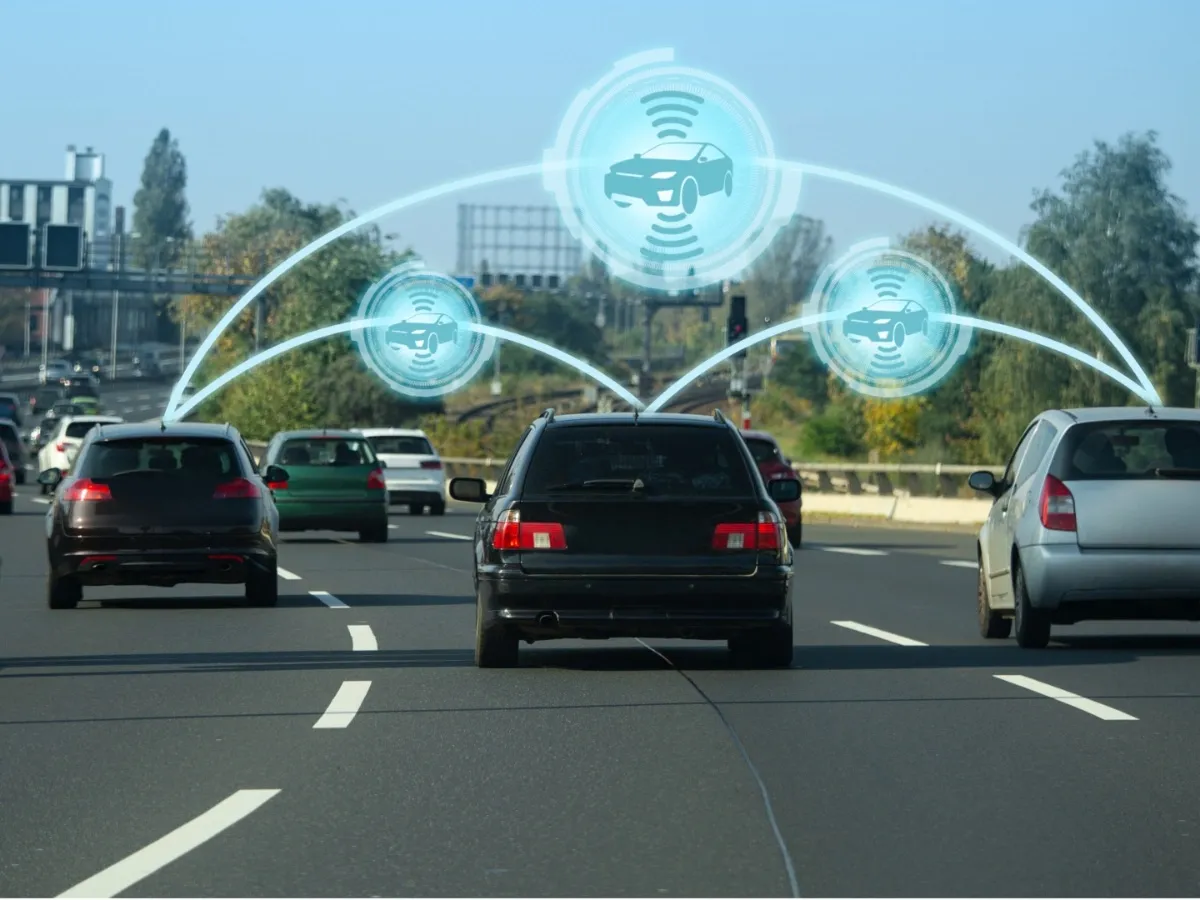
A joint task force with the Department of Telecommunications has been formed. Image: Shutterstock
The government is working to introduce vehicle-to-vehicle (V2V) communication technology to help prevent road accidents, Union Road Transport and Highways Minister Nitin Gadkari said on Thursday.
Under the V2V communication technology, drivers will receive real-time alerts on the speed, location, acceleration, braking and presence of vehicles in blind spots in their vicinity, enabling them to take timely corrective action, Gadkari said.
“A joint task force has been constituted with the telecom department,” Gadkari said at a press conference after chairing the annual meeting of transport ministers from all states and Union Territories.
What is V2V communication?
Vehicle-to-vehicle (V2V) communication is a wireless technology that allows vehicles to exchange information directly with each other in real time, without human intervention.
The road transport and highways minister said the wireless technology will allow cars to communicate directly.
Using short-range radio signals, vehicles can “talk” to nearby vehicles about their movement and behaviour.
Each vehicle equipped with V2V technology continuously broadcasts and receives data such as speed, location, direction, acceleration and braking status. When a potential risk is detected, the system alerts the driver, giving them extra time to react.
The Department of Telecom (Department of Telecom) has, according to Gadkari, agreed in principle to allocate 30 MHz of spectrum in the 5.875–5.905 GHz band for V2V communication.
Gadkari said the government has been making sustained efforts to reduce road accident fatalities through better road engineering, stricter enforcement of traffic laws and higher penalties for violations.
The minister chaired the annual meeting of transport ministers from all states and Union Territories in New Delhi, which focused on key issues such as road safety, passenger and public convenience, ease of doing business and automobile regulations.
A two-day workshop was held on January 7 and 8, 2026, at Bharat Mandapam to deliberate on challenges, solutions and next steps to drive transformation in India’s road transport sector.
The first day of the workshop, held on January 7, involved transport secretaries of all states and Union Territories and was chaired by Secretary, Road Transport and Highways, V Umashankar.
The January 8 workshop was conducted with transport ministers of all states and Union Territories and was chaired by Gadkari, where key ideas discussed earlier were further expanded.
The two-day deliberations included a decision to standardise over 100 online transport services, including inter-state services such as no-objection certificates and ownership transfers, and to strengthen Aadhaar-based authentication with name standardisation and phonetic matching.
The meeting also covered proposed amendments to the Motor Vehicles Act, including the introduction of a points-based system for tracking traffic violations, strengthening e-enforcement and e-challan systems, reviewing implementation of vehicle location tracking devices (VLTD), onboarding PUCC 2.0 for uniform emission enforcement, and ensuring 100% affixation of high-security registration plates on older vehicles.
By signing up you agree to Upstox’s Terms & Conditions

About The Author
Next Story