Business News
From US sinking Iranian warship to Senate backing Trump: Top 5 developments in escalating war
.png)
5 min read | Updated on March 05, 2026, 13:50 IST


SUMMARY
Iran has warned of further retaliation, while US officials say the fighting could last weeks as Washington seeks to cripple Tehran’s military capabilities.
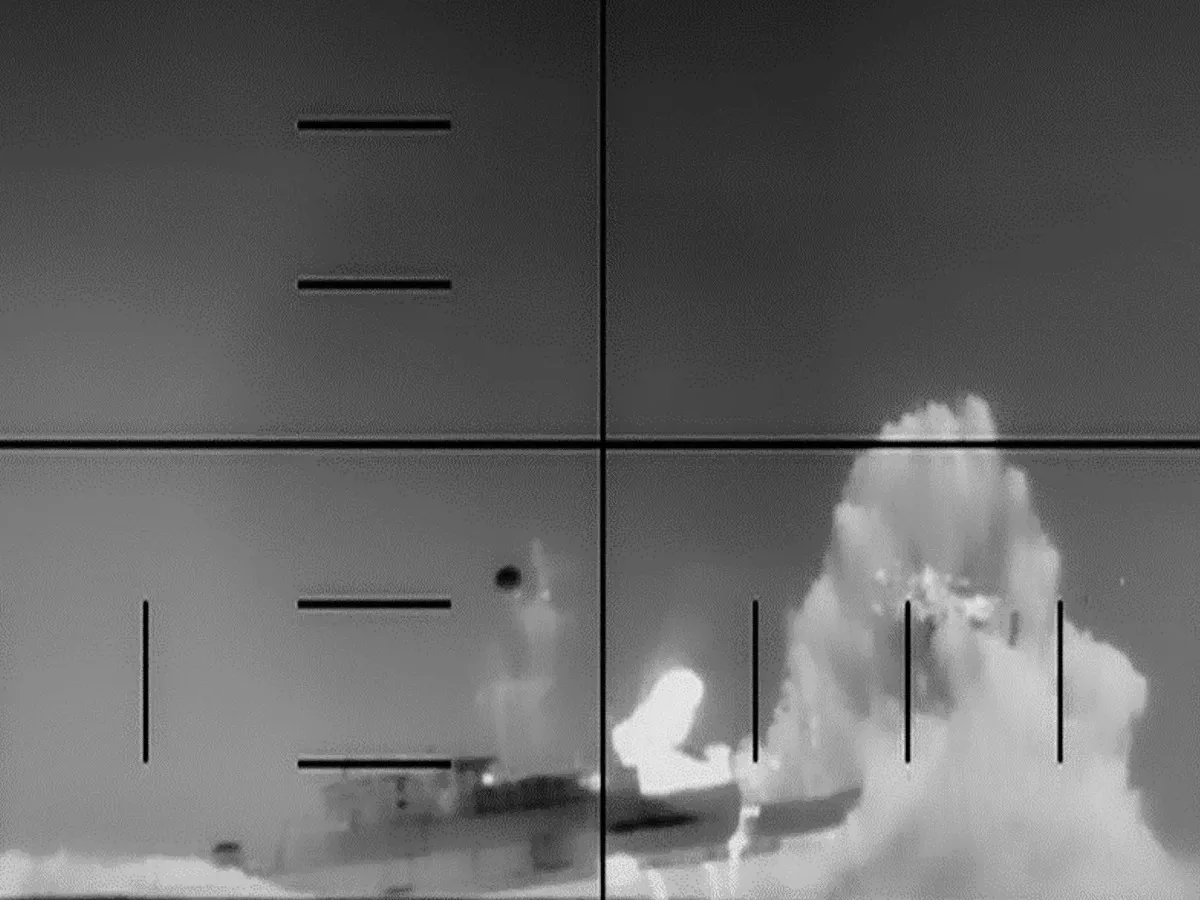
In this screengrab from a video posted on March 4, 2026, shows an explosion on an Iranian warship after it was struck by a US submarine torpedo in the Indian Ocean. (@DeptofWar/X via PTI Photo)
The war involving the United States, Israel and Iran intensified Thursday as civilian casualties mounted inside Iran, diplomatic tensions spread to Europe and US lawmakers clashed over the scope of President Donald Trump’s military campaign.
The conflict, which began with a surprise US-Israeli attack on Iranian targets over the weekend, is widening geographically and politically.
Iran has warned of further retaliation, while US officials say the fighting could last weeks as Washington seeks to cripple Tehran’s military capabilities.
Here are five key developments:
The human cost of the conflict continued to rise in Iran, where rights monitors say civilians are increasingly caught in the bombardment.
The US-based Human Rights Activists News Agency said at least 1,114 civilians have been killed since the fighting began Saturday, including 183 children, most younger than 10.
The group said hundreds of additional deaths remain under verification as rescue teams continue pulling victims from strike sites across the country.
Some of the latest attacks struck locations normally protected under international humanitarian law, including a high school and several medical facilities, according to the monitoring group.
Iranian authorities say about 6,000 people have been wounded in the strikes
Meanwhile, Iranian retaliatory strikes across the region have killed dozens of people, including six US troops, according to local authorities.
A diplomatic tussle erupted between the United States and Spain over whether Washington can use Spanish military bases for operations linked to the war.
A White House spokesperson said Spain had agreed to cooperate with US military operations linked to the conflict. But Spanish Foreign Minister José Manuel Albares quickly rejected the claim, insisting Madrid’s position remained unchanged.
“I can refute it,” Albares told Spanish radio, insisting that Spain’s stance had “not changed one iota.”
The disagreement escalated after President Donald Trump threatened to halt trade with Spain, accusing the country of undermining US military operations.
Spanish Prime Minister Pedro Sánchez responded with a blunt rebuke, describing the US and Israeli military campaign as “unjustifiable” and warning that the escalating conflict risks plunging the Middle East into another prolonged war.
At sea, tensions escalated dramatically after the United States confirmed it had sunk an Iranian naval vessel in the Indian Ocean.
US Defense Secretary Pete Hegseth said an American submarine torpedoed the Iranian frigate IRIS Dena, which went down Wednesday.
Iranian officials said at least 87 sailors were killed, with others still missing after the ship sank off the coast of Sri Lanka.
Iran’s foreign minister Abbas Araghchi condemned the attack as an “atrocity,” saying the vessel had been sailing in international waters far from Iranian territory while returning from a naval visit to India.
“Mark my words: The U.S. will come to bitterly regret the precedent it has set,” Araghchi said.
The incident has also raised concerns in India, since the warship had just completed joint naval exercises and departed an Indian port before it was sunk.
In Washington, Republican senators blocked a measure that would have forced the Trump administration to seek congressional approval before continuing military action against Iran.
The war powers resolution failed 47-53 in the Senate.
Senate Democratic leader Chuck Schumer said the vote forced lawmakers to choose between supporting the administration or opposing another prolonged Middle East war.
“Today every senator will pick a side,” Schumer said.
Senate Majority Leader John Thune argued that Trump already had the authority to launch the strikes.
Republican Senator Rand Paul sided with Democrats in backing the resolution, while Democratic Senator John Fetterman joined Republicans in opposing it.
At a Pentagon briefing, Hegseth said the conflict could last up to eight weeks, longer than previously suggested, and warned that Iranian missile capabilities remain a threat.
Gen. Dan Caine, chairman of the Joint Chiefs of Staff, said US service members “remain in harm’s way.”
The House of Representatives is expected to vote on a similar measure Thursday.
Another possible escalation is brewing along Iran’s western border, where Kurdish Iranian opposition groups are preparing for a potential military push into Iran from northern Iraq.
Officials from the Kurdistan Freedom Party, also known as PAK, said some of their fighters had moved toward the Iranian border in Iraq’s semi-autonomous Kurdish region and were on standby.
Khalil Nadiri, a PAK official, said Kurdish opposition leaders had been contacted by US officials regarding a possible operation.
If Kurdish forces were to enter the conflict, it would mark the first major ground force involvement in the war.
The groups have thousands of experienced fighters, many of whom previously battled the Islamic State group, and their participation could place additional pressure on Tehran’s government.
But it also risks dragging Iraq further into the widening conflict and inflaming long-standing tensions between Kurdish factions and other Iranian opposition groups.
By signing up you agree to Upstox’s Terms & Conditions

About The Author
Next Story