Business News
Explainer | What is Viksit Bharat Gramin Rozgar Bill, 2025, and how is it different from MGNREGA?
.png)
4 min read | Updated on December 15, 2025, 14:18 IST


SUMMARY
The government is set to introduce the Viksit Bharat—Guarantee for Rozgar and Ajeevika Mission (Gramin) Bill, 2025, which proposes a statutory guarantee of 125 days of wage employment per year for rural households.
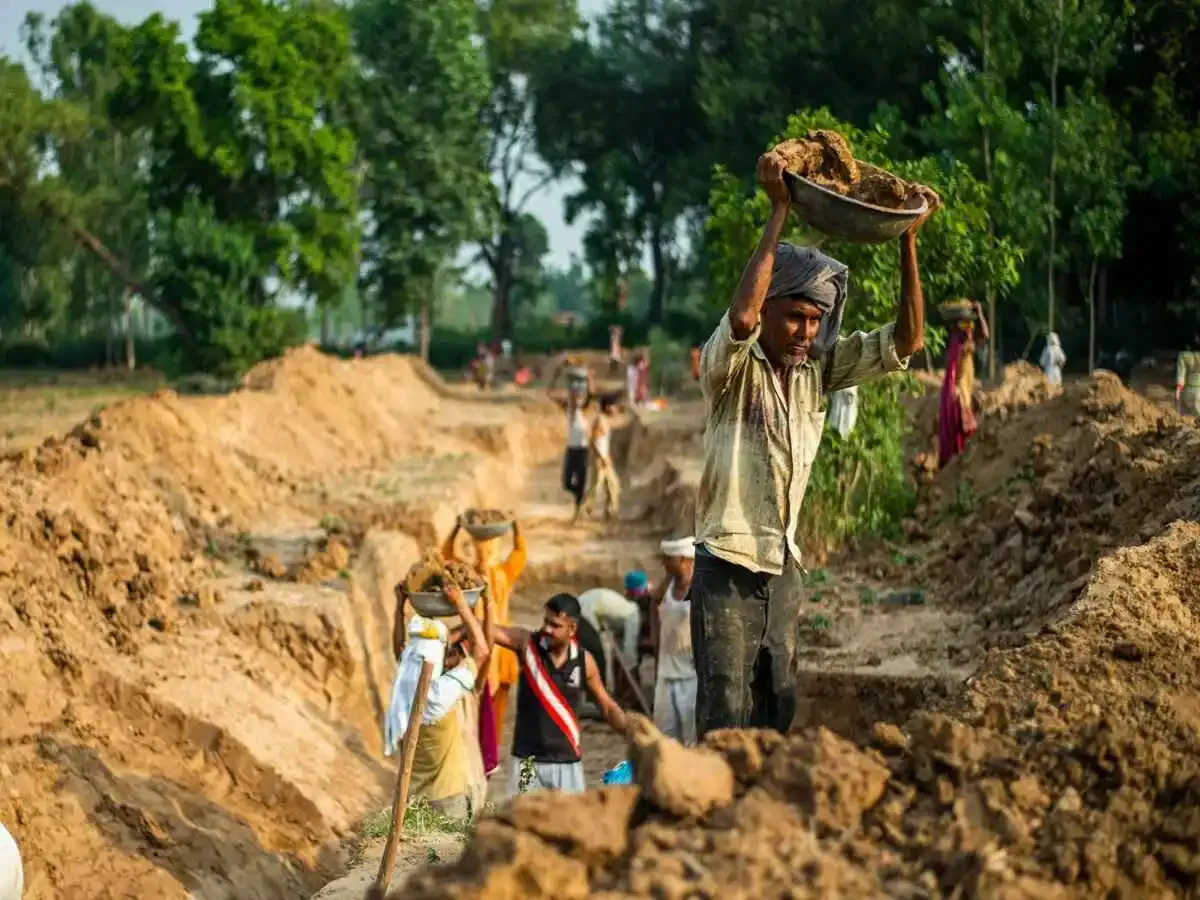
A bill to repeal the MGNREGA and bring a new law for rural employment -- Viksit Bharat Guarantee for Rozgar and Ajeevika Mission (Gramin) (VB-G RAM G) Bill, 2025 -- is set to be introduced in the Lok Sabha.
The government is set to introduce a new bill that proposes a statutory guarantee of 125 days of wage employment per year to rural households, replacing the existing framework of job guarantees under MGNREGA.
The Viksit Bharat—Guarantee for Rozgar and Ajeevika Mission (Gramin) Bill, 2025, listed in the Lok Sabha’s supplementary list of business on Monday, seeks to align rural employment generation with the national vision of Viksit Bharat @2047 and repeal the Mahatma Gandhi National Rural Employment Guarantee Act of 2005.
What does the Bill propose?
The Bill provides a statutory guarantee of 125 days of wage employment in every financial year to every rural household whose adult members volunteer to undertake unskilled manual work.
This is higher than the 100 days guaranteed under MGNREGA, which was enacted in 2005.
The bill aims to promote “empowerment, growth, convergence and saturation for a prosperous and resilient rural Bharat”, according to the statement of objects and reasons.
Focus areas
Unlike MGNREGA, which primarily focused on livelihood security, the new bill places emphasis “empowerment, growth, convergence and saturation through public works aggregating into forming Viksit Bharat National Rural Infrastructure Stack.”
Its thematic focus includes water security through water-related works, core rural infrastructure, livelihood-related infrastructure, and special works to mitigate extreme weather events.
Change in funding pattern
MGNREGA was fully funded by the Centre. VB-G RAM G will be a centrally sponsored scheme, requiring higher financial participation from states.
Under the Bill, the Centre–state fund-sharing ratio will be 90:10 for North Eastern states, Himalayan states and Union territories.
The ratio will be 60:40 for all other states and Union territories with legislatures.
Every state government will have to prepare a scheme for giving effect to the guarantee proposed under this bill within a period of six months from the date of the commencement of the Act.
Ban on works during agricultural seasons
The Bill, for the first time, explicitly bans work during the agricultural seasons. It empowers states to notify sowing and harvesting seasons during which no work will be undertaken under the scheme, to ensure availability of farm labour.
“Notwithstanding anything contained in this Act or rules made thereunder, and to facilitate adequate availability of agricultural labour during peak agricultural seasons, no work shall be commenced or executed under this Act, during such peak seasons as may be notified,” the Bill states.
Unemployment allowance
Like MGNREGA, the Bill provides for an unemployment allowance. If employment is not provided within 15 days of an application, the applicant will be entitled to a daily unemployment allowance, as prescribed.
“If an applicant for employment under the Scheme is not provided such employment within fifteen days of receipt of his application seeking employment or from the date on which the employment has been sought in the case of an advance application, whichever is later, he shall be entitled to a daily unemployment allowance in accordance with the provision of this section.”
New governance structure
A Central Gramin Rozgar Guarantee Council will be constituted by the Union government to manage the scheme.
It will include a chairperson, representatives of the Centre and states, up to 15 non-official members from Panchayati Raj Institutions, workers’ organisations and weaker sections, and a Member-Secretary not below the rank of Joint Secretary.
At the state level, State Gramin Rozgar Guarantee Councils will be set up for monitoring and review.
Under MGNREGA, the scheme was administered directly by the rural development ministry without a dedicated council.
Why replace MGNREGA?
Rural Development Minister Shivraj Singh Chouhan said that while MGNREGA has delivered guaranteed wage employment for nearly two decades, the new Bill seeks to move beyond livelihood security towards building durable rural infrastructure and resilience, in line with the long-term development vision for 2047.
"Further strengthening has become necessary in view of the significant socio-economic transformation witnessed in the rural landscape driven by widespread coverage of the social security interventions and saturation-oriented implementation of major government schemes", he said.
By signing up you agree to Upstox’s Terms & Conditions

About The Author
Next Story