Business News
Explained: The security protocol behind India’s Budget printing
.png)
3 min read | Updated on January 16, 2026, 12:15 IST


SUMMARY
North Block has a long history as the Budget printing site, with robust security protocols including the traditional quarantine or “lock-in” of officials and press staff.
While the shift to digital dissemination since 2021 has reduced the number of printed copies, several hundred hard copies will still be produced for official use.
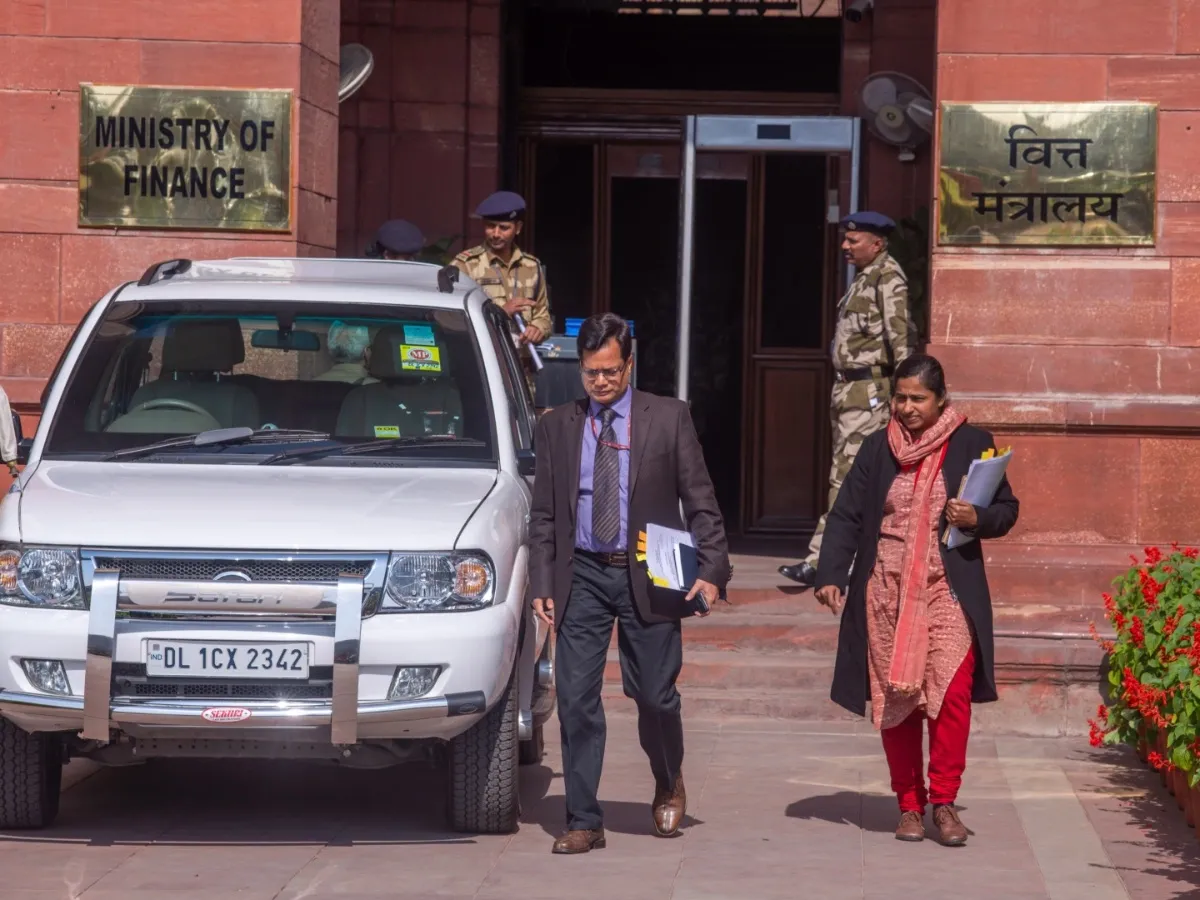
Even as the finance ministry has shifted to a modern office complex, the printing of the Union Budget, one of the country’s most closely guarded state secrets, will continue this year in the basement press of North Block.
The finance ministry moved to Kartavya Bhawan in New Delhi’s Central Vista complex in September 2025, but the new building does not yet have a fully operational secure printing press.
As a result, the printing of the Union Budget and related documents will again be carried out at the government press located in North Block on Raisina Hill, the ministry’s former headquarters.
Why North Block still matters
North Block has long housed the dedicated press used for Budget printing, tucked away from public access and designed to operate under strict secrecy.
While plans were in place to relocate and modernise the press at Kartavya Bhawan, including the installation of lighter and upgraded machinery, the new setup has not become functional in time for this year’s Budget, The Indian Express reported, citing people familiar with the matter.
The decision to stick with North Block was taken “by way of abundant caution”, given the tight timelines and the involvement of multiple ministries and departments in finalising Budget documents, according to the report.
Printing history
India’s Budget printing protocol has evolved after past breaches. In the early years after independence, Budget papers were printed at Rashtrapati Bhavan, but a leak prompted a shift to a press on Minto Road in 1950.
In 1980, the operation was moved again, this time to North Block, where tighter controls could be enforced.
The quarantine protocol
One of the most distinctive features of the Budget preparation is the “lock-in” or quarantine of staff involved in printing. Once printing begins, officials and press workers are confined to the press area, cut off from the outside world, with no access to phones or external communication.
Before the COVID-19 pandemic, this quarantine typically lasted 10 to 12 days.
With fewer physical copies now required, the lock-in period has been reduced to just under a week. Access to senior officials involved in the exercise is also restricted during this period.
The start of the lock-in is traditionally marked by the “halwa ceremony”, held at the printing press.
The ceremony, expected next week, signals the final stage of Budget preparation ahead of its presentation in parliament.
Fewer papers, more digital
The scale of printing has steadily reduced since India went paperless for the first time in 2021, when Finance Minister Nirmala Sitharaman presented the Budget using a tablet. That year, Budget documents were distributed electronically to lawmakers and made available to the public through the Union Budget mobile application.
The app provides access to 14 key documents, including the annual financial statement, demand for grants and the finance bill, sharply reducing the need for mass printing of voluminous papers.
However, several hundred hard copies continue to be printed each year for official and archival purposes.
Budget 2026-27
Finance Minister Nirmala Sitharaman is set to present the Union Budget Speech for fiscal year 2026-27 on February 1.
The Budget session will commence on January 28 with the President’s address to the joint sitting of the Parliament.
The Economic Survey is likely to be tabled in Parliament on January 29.
The exercise comes against the backdrop of India’s economy growing at an estimated 7.4% in the current financial year.
About The Author
Next Story