Business News
Explained: How Venezuela ‘stole’ its own oil from US, and why Russia is watching Maduro's fall closely
.png)
5 min read | Updated on January 05, 2026, 08:30 IST


SUMMARY
The US capture of Venezuelan leader Nicolas Maduro has thrust Venezuela’s vast oil reserves into global focus, with President Donald Trump signalling that Washington will oversee the country during a “safe, proper and judicious transition.”
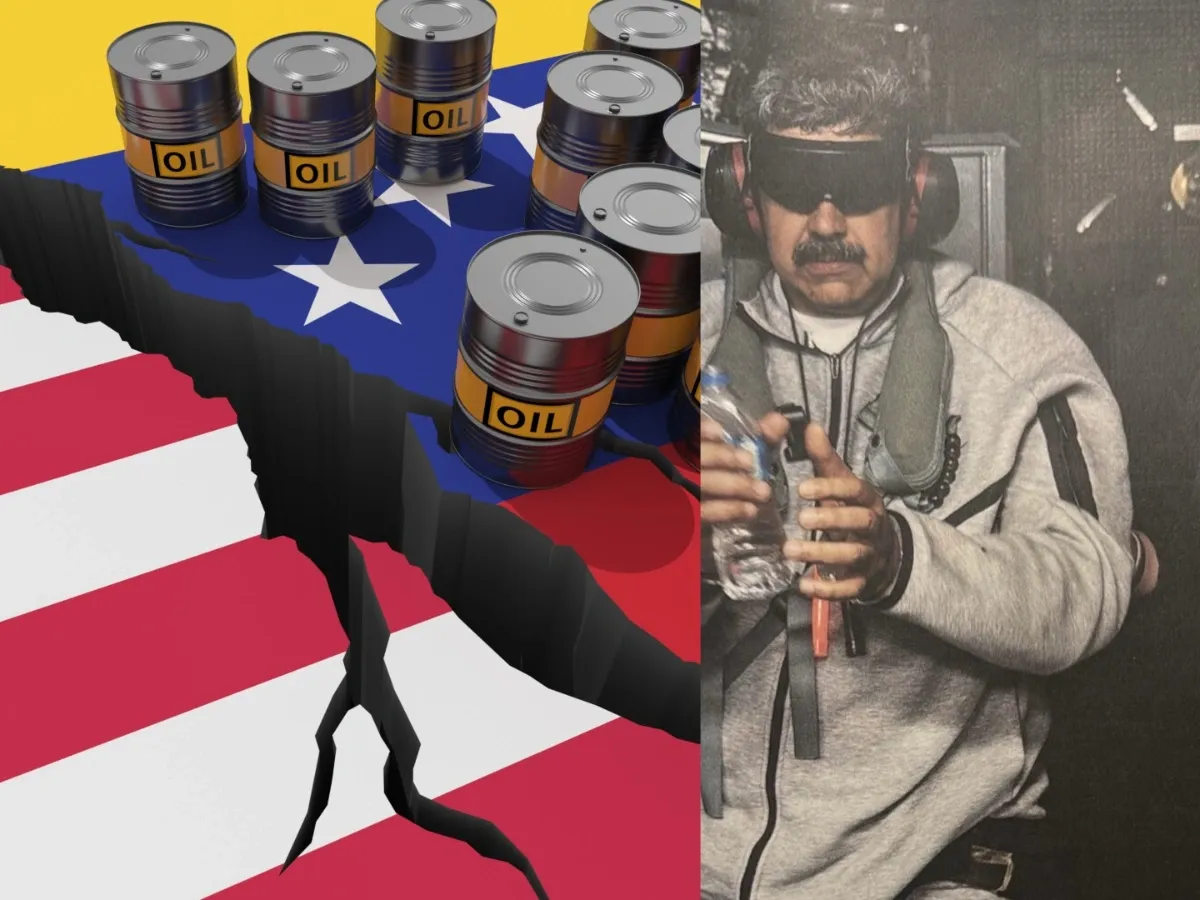
The capture of Venezuelan leader Nicolas Maduro by the United States in an audacious nighttime military operation has raised a pressing question: what happens next to the world’s largest proven oil reserves?
At a press conference on Saturday, US President Donald Trump gave a sneak peek into what America was planning next.
Trump said that the US will “run” the country until a “safe, proper and judicious transition” takes place.
Let’s decode what “safe, proper and judicious transition” actually means because “running” another country is easier said than done.
Trump’s fixation on Venezuela’s oil
Trump has been explicit about his interest in Venezuela’s crude oil reserves.
“You remember they took all of our energy rights. They took all of our oil not that long ago. And we want it back. They took it — they illegally took it,” Trump told reporters last month. “We want it back.”
He has repeatedly claimed that Venezuela “stole” American oil, even though the country legally owns the world’s largest proven crude reserves.
On Saturday, Trump said, “We built Venezuela oil industry with American talent, drive and skill, and the socialist regime stole it from us.”
Why Trump says Venezuela’s oil was ‘stolen’
Venezuela is known to have the world’s largest proven crude oil reserves, according to the US Energy Information Administration, which accounts for roughly 17% of global reserves.
Yet the country today produces barely 1% of the world’s oil, a dramatic fall from the 1960s, when Venezuela accounted for more than a tenth of global output.
That collapse did not happen overnight. Corruption, chronic mismanagement and tightening US economic sanctions steadily eroded output, which fell from around 3.5 million barrels per day in 1999 to a fraction of that today.
For much of the 20th century, the United States was a key partner in Venezuela’s oil industry, with American majors investing heavily in exploration, production and refining. Before the country nationalised its oil sector in 1976, firms such as Exxon, Mobil and Gulf Oil dominated the industry.
Venezuela briefly reopened the sector to foreign drillers in the 1990s. But that window closed again in 2007, when President Hugo Chávez, Maduro’s predecessor, launched a second wave of nationalisation as part of his socialist revolution.
That period proved disastrous for the industry. Rampant corruption at the state-owned oil company Petróleos de Venezuela, better known as PDVSA, combined with heavy government interference, drove foreign investment out.
Since the late 1990s, crude production has collapsed by more than 70%, leaving Venezuela ranked just 21st among global producers.
US oil majors including Exxon Mobil and ConocoPhillips claimed that they are owed billions of dollars after their Venezuelan assets were seized.
All but one American company exited the country in the aftermath of the Chávez revolution — Chevron.
Chevron returned in a limited way after the Biden administration granted it special licences in 2022, allowing it to resume Venezuelan oil exports under strict conditions.
The move was designed to ease pressure on global energy markets following Russia’s invasion of Ukraine. Even then, Chevron’s operations are limited to joint ventures with PDVSA.
While ExxonMobil and ConocoPhillips have won multi-billion-dollar awards through international arbitration, Venezuela has not paid. This unresolved dispute forms the backbone of Trump’s repeated assertion that Venezuela 'stole oil from US companies.
Trump has argued that the return of American oil companies would unlock Venezuela’s lost potential as a major energy producer.
“We’re going to have our very large United States oil companies, the biggest anywhere in the world, go in, spend billions of dollars, fix the badly broken infrastructure — the oil infrastructure — and start making money for the country,” he said.
Venezuela produces heavy crude, which is essential for diesel, asphalt and fuels used by heavy equipment. Diesel is in tight supply globally due to sanctions on Venezuelan and Russian oil, and because America’s lighter shale crude cannot easily substitute for it.
US refineries along the Gulf Coast were historically optimised to process heavy crude at a time when domestic production was declining and supplies from Venezuela and Mexico were abundant. Greater access to Venezuelan crude would allow those refineries to operate more efficiently, and that too at lower cost.
The Russia angle
With more diesel and heavy oil flowing from Venezuela, Europe and other buyers could reduce reliance on Russian supplies, increasing pressure on Moscow.
“There’s been a big benefit for Russia to see Venezuela’s oil industry collapse, because they were competitors in that market,” Associated Press quoted Phil Flynn, a senior market analyst at the Price Futures Group, as saying.
If Venezuela were to re-emerge as a production powerhouse, Flynn added, it could “cement lower prices for the longer term” — and, in the process, weaken Russia’s grip on the global diesel market.
That, in turn, could strengthen Washington’s hand as it seeks to curb Russia’s oil revenues amid the war in Ukraine.
So the ‘safe, proper and judicious transition’ would mean installing those who would let the United States, through its companies, regain a foothold in the oil infrastructure.
However, the events that unfolded in the immediate aftermath of Maduro's capture may complicate that vision.
Venezuela's top court has asked Vice President Delcy Rodriguez, who is no anti-Maduro figure, to take charge of the country as the interim president. Rodriguez demanded that the United States free Maduro and called him the country's rightful leader.
Typically, a US force changing a Latin American regime has had to stay on the ground to install a friendly leader at Miraflores Palace.
While Secretary of State Marco Rubio said he “anticipates no further action” in Venezuela, Trump said he wasn’t afraid of American “boots on the ground.”
About The Author
Next Story