Business News
DGCA rolls out zero-tolerance safety regime for charter planes; what changes for operators and pilots

3 min read | Updated on February 25, 2026, 10:59 IST


SUMMARY
The Directorate General of Civil Aviation (DGCA) has rolled out stringent safety measures for non-scheduled operators (NSOPs) following a recent surge in aviation incidents.
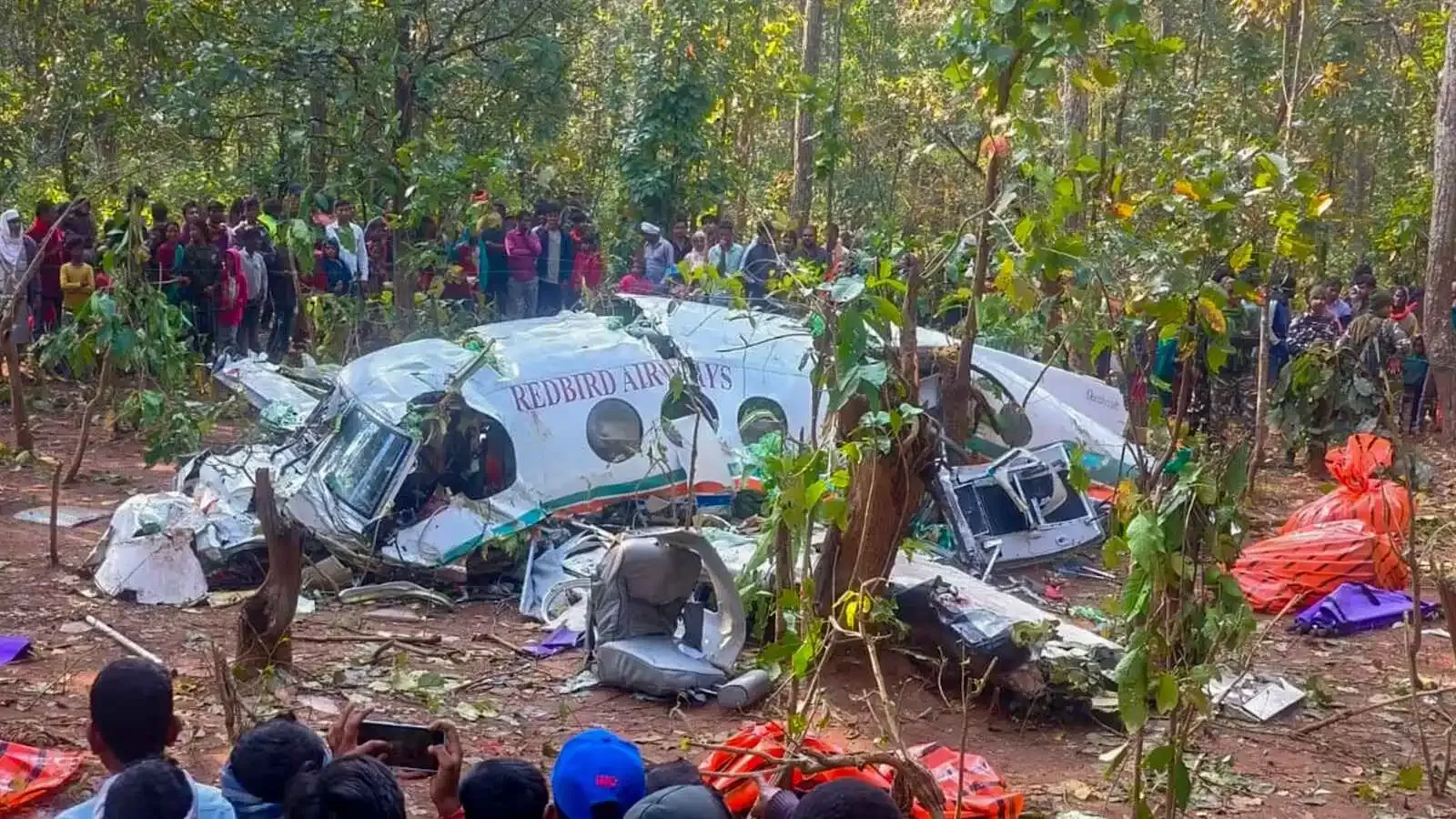
Wrecked remains of the Beechcraft C90 air ambulance after it crashed on Monday, resulting in the death of seven people, near Simaria in Jharkhand's Chatra district, Tuesday, Feb. 24, 2026. (PTI Photo)
The Directorate General of Civil Aviation (DGCA) has announced a sweeping set of stringent safety measures for non-scheduled operators (NSOPs), including mandatory public disclosures, safety rankings, intensive audits and stricter penalties, following a recent spate of fatal charter aircraft crashes.
The new directives were issued after a high-level meeting convened by the regulator on February 24 with all non-scheduled operators to address the “recent surge” in aviation incidents.
The DGCA said a comprehensive review of accident data over the past decade found that non-adherence to Standard Operating Procedures (SOPs), inadequate flight planning and deficiencies in training were the primary causes behind aircraft accidents in the NSOP sector.
Against this backdrop, the regulator said it was adopting a “zero-tolerance policy” toward safety compromises.
Safety above commercial considerations
The aviation watchdog said safety must take precedence over commercial interests, charter commitments or VIP movements.
“To support this, the authority reaffirmed that the Pilot-in-Command's decision to divert, delay, or cancel a flight for safety reasons is final and must be respected by operators without commercial consequences,” the release said.
Mandatory disclosures
As part of enhanced oversight, NSOPs will now be required to mandatorily disclose critical safety information on their websites, including aircraft age, maintenance history and pilot experience.
The regulator also plans to introduce a safety ranking mechanism for all non-scheduled operators.
The rankings, along with the criteria used, will be published on the regulator’s website for public access.
Intensive audits
The regulator will increase random audits of Cockpit Voice Recorders (CVRs) and cross-verify Automatic Dependent Surveillance–Broadcast (ADS-B) data, fuel records and technical logs to detect unauthorised operations or falsification of records.
Senior management will be held personally accountable for systemic non-compliances, the DGCA said, making it clear that safety lapses cannot simply be attributed to pilots.
Pilots found violating Flight Duty Time Limitations (FDTL) norms or attempting to land below prescribed safety minima could face licence suspensions of up to five years.
Operators failing to meet compliance standards risk penalties, including suspension of licences or permits.
Maintenance and weather protocols
The regulator said increased scrutiny would be applied to older aircraft and those undergoing ownership changes. NSOPs operating their own Maintenance, Repair and Overhaul (MRO) facilities will also face audits, and those found inadequate may be directed to outsource maintenance to approved organisations.
The DGCA observed that weather-related accidents often stem from poor judgment rather than unpredictable weather.
“Operators are mandated to establish real-time weather update systems and strict compliance of established SOPs,” it said. “Additionally, recurrent training for pilots must have greater emphasis on weather awareness strategies and decision-making in uncontrolled environments.”
Special Safety Audit Phase 2
The authority further said Phase 2 of its special safety audit of NSOPs will begin after completion of Phase 1 in early March 2026, covering the remaining operators.
A physical safety workshop will also be convened after the current intensive audits to align all stakeholders with the new operational mandates.
The tougher action comes against the backdrop of two fatal crashes involving non-scheduled operators in less than a month, claiming 12 lives.
On January 28, a Learjet 45 (VT-SSK) owned by VSR Ventures crashed at Baramati in Maharashtra, killing five people, including Maharashtra Deputy Chief Minister Ajit Pawar.
On February 23, a Beechcraft C90 aircraft (VT-AJV) operated by RedBird Airways on a medical evacuation flight crashed in Jharkhand, claiming seven lives.
About The Author
Next Story