
Business News
Centre rejects reports claiming it called E20 programme an 'ongoing experiment' in Supreme Court

3 min read | Updated on July 01, 2026, 09:30 IST


SUMMARY
The Ministry of Law and Justice clarified that the Attorney General made no such submission during the hearing of an ethanol allocation case involving Bharat Petroleum Corporation Ltd (BPCL).
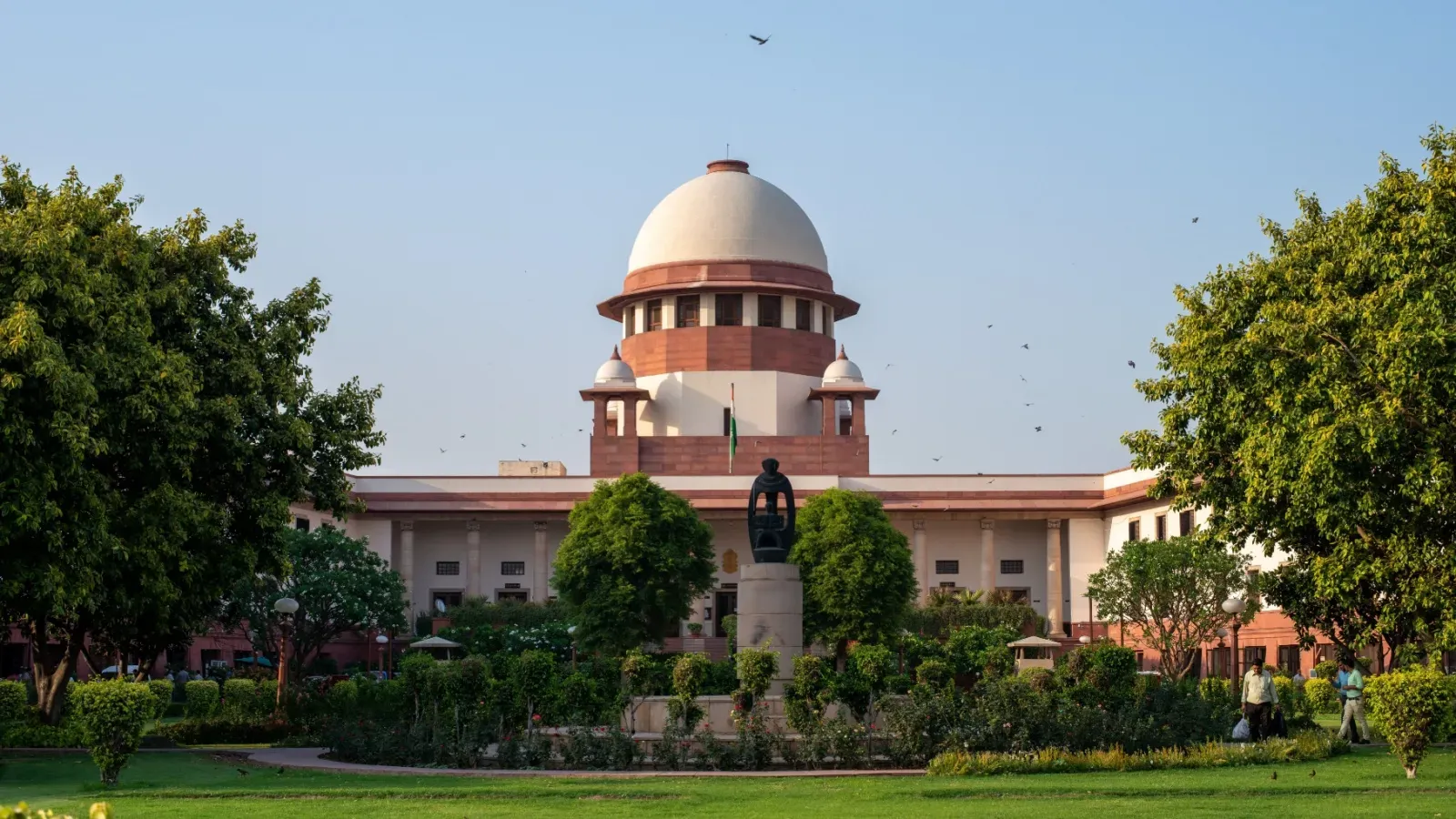
The Supreme Court directed that status quo be maintained on ethanol allocation for the current Ethanol Supply Year (2025-26) while the transfer petitions are filed. Image: Shutterstock
The Centre on Tuesday rejected media reports claiming that it described its 20% ethanol blending programme as an "ongoing experiment" before the Supreme Court, asserting that no such submission was made by the Attorney General during the hearing in the ethanol allocation case.
In a statement, the Ministry of Law and Justice said the Office of the Attorney General had taken note of certain media reports published on June 30 that "incorrectly reported" the submissions made before the apex court in proceedings arising out of a special leave petition filed by Bharat Petroleum Corporation Ltd (BPCL) in the ethanol allocation matter.
The ministry said reports suggesting that the government's Ethanol Blended Petrol (EBP) Programme was "still an ongoing experiment" and that the impact of the policy would become clearer by next year were "completely false" and did not reflect the submissions made before the court.
It clarified that during the hearing, the Attorney General informed the Supreme Court that similar petitions involving allocation of ethanol to dedicated ethanol plants were pending before different high courts.
The Centre also informed the court that transfer petitions were being filed to bring all such matters before the Supreme Court so that common legal questions arising from the same contractual framework could be decided together, avoiding parallel proceedings and conflicting rulings, the ministry said.
According to the statement, the move would also help ensure an expeditious resolution of the litigation so that ethanol supplies to oil marketing companies (OMCs) required for maintaining 20% blending with petrol throughout the year are not affected.
Based on these submissions, the Supreme Court observed that the proposed transfer petitions be filed and directed that status quo be maintained with regard to ethanol allocation for the current Ethanol Supply Year (2025-26) in the present matter, the ministry said.
The clarification came after the Supreme Court directed status quo on a Karnataka High Court order that had asked OMCs to consider enhancing ethanol allocation for Ethanol Supply Year 2025-26 to a dedicated ethanol manufacturer.
The apex court was hearing a plea filed by BPCL, which argued that implementing the high court's order would disrupt the national policy of achieving 20% ethanol blending in petrol.
The ministry stressed that "at no stage" was any submission made before the court that the government's Ethanol Blended Petrol Programme or the E20 blending programme was an "experiment".
"It is clarified in explicit terms that any suggestion that the Government described the E20 programme before the Hon'ble Supreme Court as an 'experiment' is incorrect and does not represent the submissions made on behalf of the Union of India," the statement said.
The ministry also urged media organisations to report judicial proceedings accurately, particularly in matters involving important national policy initiatives.
About The Author
Next Story

