Business News
Budget speech 2026 on February 1: Why government presents Union Budget on this date
.png)
4 min read | Updated on January 08, 2026, 10:20 IST


SUMMARY
Union Budget on February 1: This will be Nirmala Sitharaman’s ninth consecutive budget, bringing her close to Morarji Desai’s record of 10 budgets.
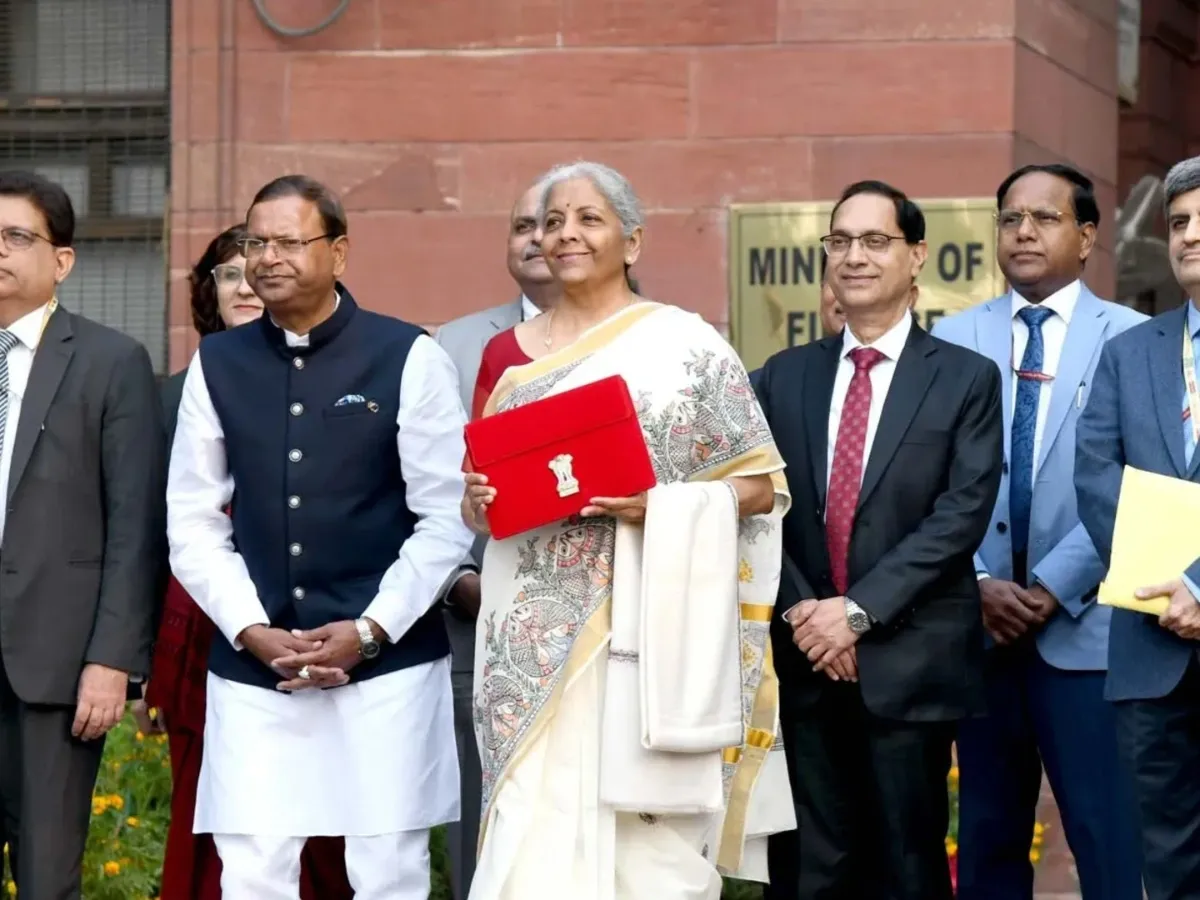
Finance Minister Nirmala Sitharaman will present the Union Budget for FY27 on February 1.
Finance Minister Nirmala Sitharaman is set to present the Union Budget Speech for fiscal year 2026-27 on February 1 after the Cabinet Committee on Parliamentary Affairs (CCPA), under the chairmanship of Defence Minister Rajnath Singh, reportedly approved the date on Wednesday.
There was a brief uncertainty over the budget presentation dates since February 1 was falling on a Sunday, when most of the government offices are closed.
The Budget session will commence on January 28 with the President’s address to the joint sitting of the Parliament, reported News18.
The Economic Survey will be tabled in Parliament on January 29.
Why govt presents Union Budget on Feb 1
It was not always that the government presented the budget on February 1.
The first Union budget in independent India was presented on November 26, 1947 by finance minister R.K. Shanmukham Chetty.
For decades, the Union government presented its annual budget at 5 pm on the last working day of February.
The colonial-era practice, meant to align announcements with the working hours in the United Kingdom, was discontinued in 1999 when finance minister Yashwant Sinha moved the budget presentation to 11 am.
In 2017, the Narendra Modi-led government advanced the budget presentation to February 1. The idea was to get enough time for necessary parliamentary approvals during the budget session and ensure the measures are implemented from the start of the fiscal year on April 1.
Sitharaman will present her ninth consecutive budget, the only finance minister to achieve this milestone.
This would also bring her closer to the record held by former Prime Minister Morarji Desai, who presented 10 Union budgets across two stints as finance minister.
Former Union finance minister P Chidamabaram has presented nine budgets while Pranab Mukherjee, who later went on to become the President, presented eight budgets.
Budget expectations
As February 1 approaches, industry leaders and sectoral experts have started putting up their expectations from the budget.
Industry chamber PHDCCI has sought a fresh thrust to ease financing constraints for micro, small and medium enterprises (MSMEs), including the reintroduction of an interest subvention scheme and a sharp hike in MUDRA loan limits.
The lobby suggested a 2% interest subsidy on new and incremental loans from banks and NBFCs, arguing that lower borrowing costs would improve repayment discipline and enhance competitiveness.
It also pitched for raising the MUDRA loan ceiling to Rs 1 lakh from Rs 50,000 under the ‘Shishu’ category and to Rs 10 lakh from Rs 5 lakh under the ‘Kishore’ category.
The chamber also sought relief from compliance burdens, proposing amendments to Section 44AB of the Income Tax Act to exempt micro enterprises with turnover of up to ₹10 crore from mandatory tax audits, irrespective of profit margins.
Larsen and Toubro Chief Financial Officer R Shankar Raman said he expects about a 10% increase in capital expenditure outgo in the upcoming budget, building on the over ₹11 lakh crore capex allocation in FY26.
"If India is to become a developed economy by 2047, infrastructure has a lot of role to play, and I think the government is seized of this. I am hopeful that they will allocate adequate resources in the budget to be able to do that," PTI quoted Raman as saying.
Raman said manpower shortages in construction continue, but taking projects deeper into the country and closer to workers’ native places could ease the challenge. He welcomed the government’s consultative approach to budget-making, calling it a sign of mature governance.
Skoda Auto Volkswagen India MD and CEO Piyush Arora said the sector expects continuity after the implementation of GST 2.0, along with sustained support for domestic manufacturing and higher allocations for road and transport infrastructure.
He also called for rationalisation of the inverted duty structure for electric vehicles to strengthen local manufacturing and accelerate the transition to sustainable mobility.
About The Author
Next Story