Business News
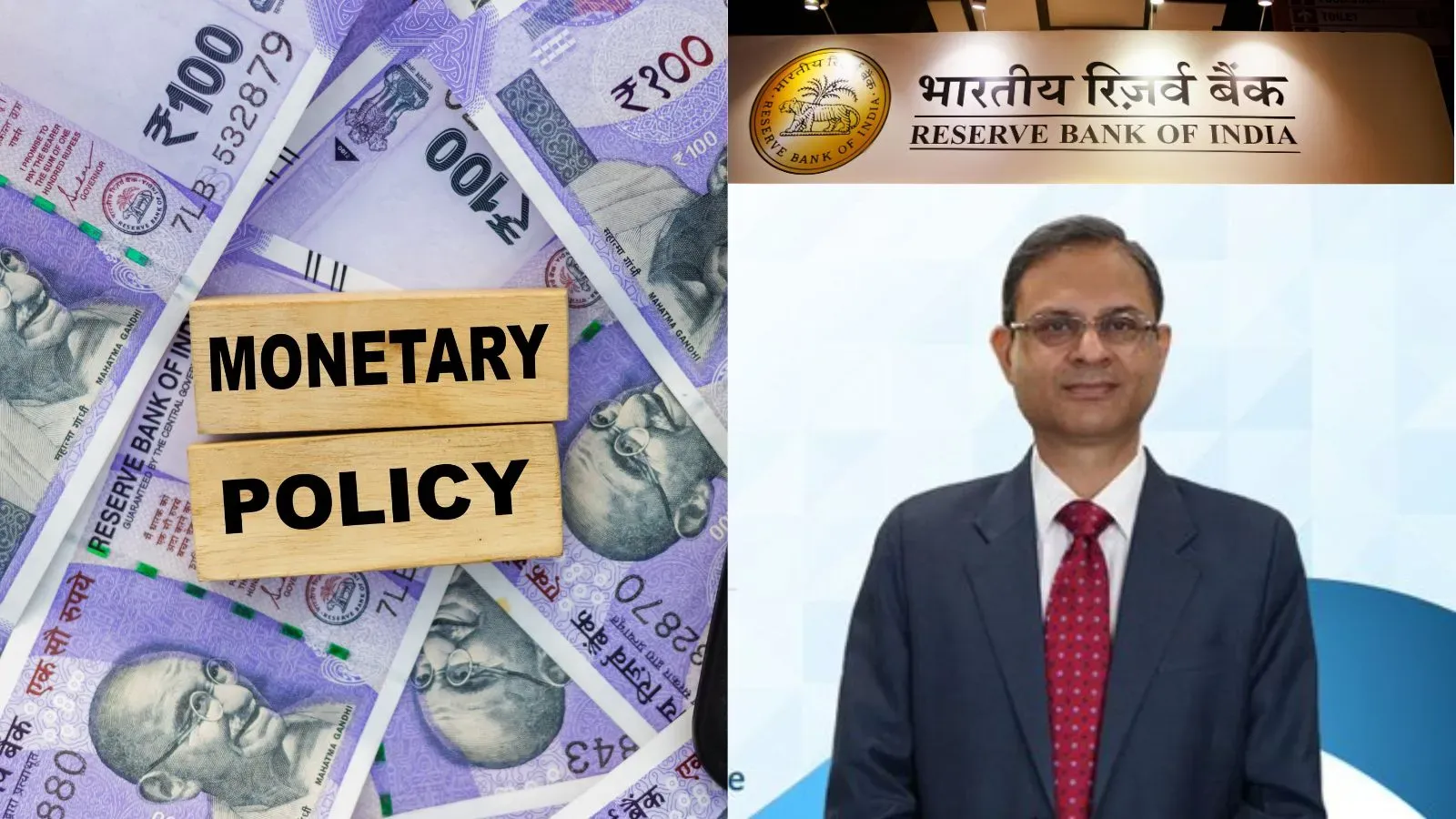
After two back-to-back rate cuts, RBI Governor hints at more in coming months

3 min read | Updated on April 09, 2025, 12:54 IST


SUMMARY
The RBI on Wednesday announced a 25 bps repo rate cut, bringing it down to 6%, and changed its stance to 'accommodative.' In February, the MPC slashed the repo rate by 25 basis points to 6.25%. It was the first reduction since May 2020 and the first revision after two-and-a-half years.

The governor said the Reserve Bank is committed to providing sufficient system liquidity.
After effecting two back-to-back 25 basis point rate cuts, Reserve Bank Governor Sanjay Malhotra on Wednesday hinted at another reduction in the key policy rate by changing the central bank's monetary stance to 'accommodative' from 'neutral', which may further lower EMIs for consumers.
The bi-monthly monetary policy is scheduled to be announced on June 6.
Unveiling the April monetary policy after the meeting of the Monetary Policy Committee (MPC), Governor Malhotra said that in the context of the RBI, the stance of monetary policy signals the intended direction of policy rates going forward.
"Accordingly, with respect to the policy rate, which is the mandate of the MPC, today's change in stance from 'neutral' to 'accommodative' means that going forward, absent any shocks, the MPC is considering only two options, status quo or a rate cut," he said.
He also clarified that the stance should not be directly associated with liquidity conditions.
Dwelling on the monetary policy stance, Malhotra said that from a cross-country perspective, the monetary policy stance is typically characterised as accommodative, neutral or tightening.
While an accommodative stance entails easy monetary policy that is geared towards stimulating the economy through softer interest rates; tightening refers to contractionary monetary policy whereby interest rates are hiked to restrain spending and curb economic activity, all with the objective of reining in inflation.
A neutral stance, he said, is typically associated with a state of the economy that neither calls for stimulating economic activity nor calls for controlling inflation by curtailing demand and provides flexibility to move in either direction on the basis of evolving economic conditions.
In February, the MPC slashed the repo rate by 25 basis points to 6.25%. It was the first reduction since May 2020 and the first revision after two-and-a-half years.
Governor Malhotra further said while liquidity management is important for monetary policy including decisions related to policy rate, it is an operating tool with the RBI for various purposes including monetary policy transmission.
"Monetary policy decisions to change policy rates do however have implications for liquidity management, being the operational tool to carry out the policy changes. To summarise, our stance provides policy rate guidance, without any direct guidance on liquidity management," he said.
System liquidity was in deficit in January 2025 with net injection under the liquidity adjustment facility (LAF) scaling a peak of ₹3.1 lakh crore on January 23, 2025.
However, as a result of a slew of measures injecting liquidity of about ₹6.9 lakh crore, the system liquidity deficit tapered during February-March 2025 and further turned into surplus on March 29, the governor said.
Malhotra further said that coupled with government spending picking up pace during the latter half of March, system liquidity further improved and it stood at a surplus of ₹1.5 lakh crore as of April 7, 2025.
Reflecting on these developments, he said the weighted average call rate (WACR) softened and remained near the repo rate since the last policy meeting.
The spreads of three-month CP and three-month CD rates over 91-day Treasury bill rate have also softened since the second half of March, suggesting improvement in liquidity conditions.
The governor said the Reserve Bank is committed to providing sufficient system liquidity.
The RBI, he added, will continue to monitor the evolving liquidity and financial market conditions and proactively take appropriate measures to ensure adequate liquidity.
By signing up you agree to Upstox’s Terms & Conditions

About The Author
Next Story