Business News
After Maduro’s removal, can India recover $1 billion dues from Venezuela; here's what it would take
.png)
4 min read | Updated on January 05, 2026, 15:19 IST


SUMMARY
ONGC Videsh and other Indian companies stand to recover unpaid dividends and restart production at assets such as the San Cristobal and Carabobo-1 projects if sanctions are eased.
Renewed access to Venezuelan heavy crude could also help India diversify away from Russian oil, though political uncertainty in Caracas may complicate Washington’s plans.
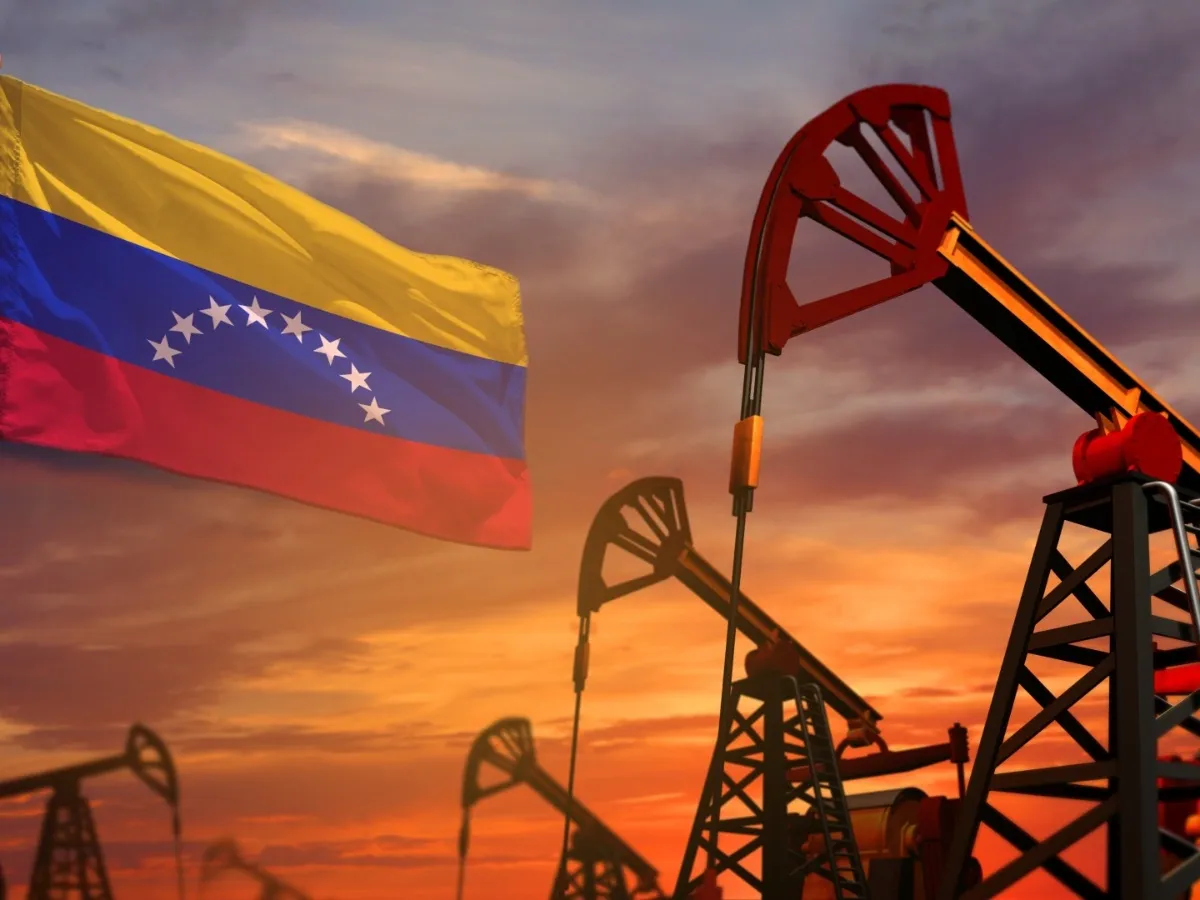
A possible restructuring of Venezuela’s oil sector post President Nicolas Maduro’s removal could quietly unlock nearly $1 billion for India in long pending dues, PTI reported citing analysts and industry sources. It could also revive stranded oilfields operated by Indian firms, and reopen access to a crude grade that Indian refineries are uniquely equipped to process.
The opportunity has emerged in the wake of Washington’s dramatic intervention in Venezuela, which removed Maduro and placed the country’s oil industry under American oversight.
How India’s oil money got stuck in Venezuela
India’s exposure dates back to the period when Venezuelan heavy crude was a mainstay for Indian refiners.
At its peak, India was importing more than 400,000 barrels per day from the Latin American producer, before US sanctions and compliance risks forced purchases to stop in 2020.
ONGC Videsh Ltd, the overseas arm of India’s state-run oil producer, operates the San Cristobal onshore oilfield in partnership with Venezuela’s national oil company Petroleos de Venezuela SA (PDVSA).
Although the field holds commercially attractive reserves, production collapsed as sanctions cut off access to drilling rigs, spare parts, services and financing.
As output dwindled, so did payments. Venezuela failed to remit more than $536 million in dividends owed to OVL up to 2014.
A similar amount has accumulated since then, but Caracas has blocked audits for later years. In effect, close to $1 billion belonging to India has remained locked inside Venezuela’s oil system.
Why US oversight changes the equation
The calculus shifts sharply once sanctions are relaxed or restructured under US control.
With restrictions eased, OVL could rapidly redeploy drilling rigs and equipment to San Cristobal, lifting production from current levels of just a few thousand barrels per day.
Industry officials estimate the field can produce 80,000–100,000 barrels per day with additional wells and modern rigs, many of which ONGC already operates in India.
Once exports resume, OVL could recover its unpaid dues directly from oil sales, rather than relying on cash-strapped Venezuelan state finances.
OVL had earlier sought a US sanctions waiver similar to the licence granted to Chevron in 2022, which allowed the American major to restart limited production and exports under strict conditions.
More fields, bigger stakes
OVL, along with Indian Oil Corporation and Oil India Ltd, holds stakes in the Carabobo-1 heavy oil project, another asset that has languished under sanctions. Analysts say these projects are unlikely to be sidelined even if PDVSA is restructured, as Washington will need experienced operators and reliable buyers.
US President Donald Trump has already indicated that American oil companies will return to Venezuela to repair decaying infrastructure and raise output. But analysts argue that retaining international partners like OVL provides not just operational depth, but guaranteed access to large consumer markets such as India.
Why Venezuelan crude matters to India
Indian refiners are among the few globally configured to process Venezuela’s heavy, high-sulphur crude. Facilities operated by Reliance Industries, Nayara Energy, IOC, HPCL-Mittal Energy and Mangalore Refinery can efficiently blend these grades into transport fuels, particularly diesel.
Before sanctions, Venezuelan oil was an economic fit as well, often cheaper than alternatives and well suited to Indian refinery configurations. The renewed supplies may help India diversify away from geopolitical concentration risks, particularly as New Delhi seeks to reduce over-dependence on Russian crude while navigating sensitive trade discussions with Washington.
“If sanctions are eased...trade flows can resume rapidly,” said Nikhil Dubey, senior research analyst at Kpler. “India is actively diversifying its crude basket - not only to reduce its dependence on Russian oil, but also amid ongoing India-US trade discussions, where lowering exposure to Russian barrels remains a key theme.”
Not easy for US to take control
Despite the capture of Maduro by US troops, it won't be easy for America to take control of what it calls "stolen" oil assets.
For that, the Trump administration has to install a leadership that would let the United States regain a foothold in the oil infrastructure inside Venezuela.
However, the events that unfolded in the immediate aftermath of Maduro's capture may complicate that vision.
Venezuela's top court has asked Vice President Delcy Rodriguez, who is no anti-Maduro figure, to take charge of the country as the interim president. Rodriguez demanded that the United States free Maduro and called him the country's rightful leader.
Speaking to The Atlantic, Trump said that Rodríguez could "pay a very big price" if she doesn't do what he thinks is right for the South American country.
By signing up you agree to Upstox’s Terms & Conditions

About The Author
Next Story