Business News
90 days to qualify: Centre’s draft rules lay down social security terms for gig, platform workers
.png)
6 min read | Updated on January 02, 2026, 16:49 IST


SUMMARY
The Centre has released the Draft Social Security Code (Central) Rules, 2025, outlining a framework to extend social security benefits to unorganised, gig and platform workers.
The draft rules provide for Aadhaar-based electronic self-registration on a central portal and define eligibility conditions linked to days of engagement with aggregators.
The Centre has issued the Draft Social Security Code (Central) Rules, 2025, amid growing calls for extending social security to gig and platform workers.
The draft rules, made public on December 30, 2025, provide the framework for registration and delivery of social security benefits to unorganised workers, gig workers and platform workers. The rules lay down who can register, how registration will be done, and the conditions under which workers will become eligible for social security schemes.
Who is covered under the draft rules?
The proposed rules apply to all unorganised workers, gig workers and platform workers who are 16 years of age or older. This includes workers in the informal economy as well as those engaged by digital platforms and aggregators.
As per the draft rules issued by the Ministry of Labour and Employment, every eligible unorganised worker will be required to register electronically on the government’s portal to access benefits under social security schemes framed under the Code.
How will unorganised workers register?
Unorganised workers will be able to register electronically on a self-declaration basis using Aadhaar and other prescribed documents.
The government will provide digital tools such as a mobile application to facilitate self-registration.
State governments and Union Territory administrations will be responsible for ensuring that eligible workers within their jurisdictions are registered on the central portal.
Once registered, workers who do not already have a Universal Account Number will be issued one, along with a digital identity card carrying their photograph and personal details, which can be downloaded from the portal.
They will be required to periodically update information such as address, occupation, mobile number and skills.
If the details are not updated as specified by the government, the worker may lose eligibility for benefits under social security schemes, even if they remain registered on the portal.
How will gig and platform workers be registered?
Gig and platform workers will also be registered on a self-declaration basis using Aadhaar. However, aggregators will play a major role in this process.
Once the final rules are notified, aggregators will have to share details of all gig and platform workers engaged with them on the designated portal for generation of Universal Account Numbers.
When new workers are engaged, aggregators will be required to ensure their registration if they are not already registered.
Like unorganised workers, gig and platform workers will also receive an identity card linked to the central portal.
Eligibility conditions
A worker must have been engaged for at least 90 days with a single aggregator, or 120 days cumulatively across multiple aggregators, in the previous financial year.
Any calendar day on which the worker earns income, regardless of the amount, will be counted as a day of engagement. If a worker is engaged with more than one aggregator on the same day, each engagement will be counted separately.
Eligibility extends not only to those directly engaged by aggregators, but also to workers engaged through associate companies, holding or subsidiary companies, limited liability partnerships or third-party arrangements.
Aggregators will be required to share worker details electronically with the central government portal and update this information periodically. In the absence of such updation, gig and platform workers may be denied access to social security benefits under applicable schemes.
The draft rules also allow the use of Common Service Centres, e-sewa kendras, business correspondents of the Department of Posts and other notified agencies to assist workers with registration, updation of details and access to welfare schemes.
Why are the draft rules significant?
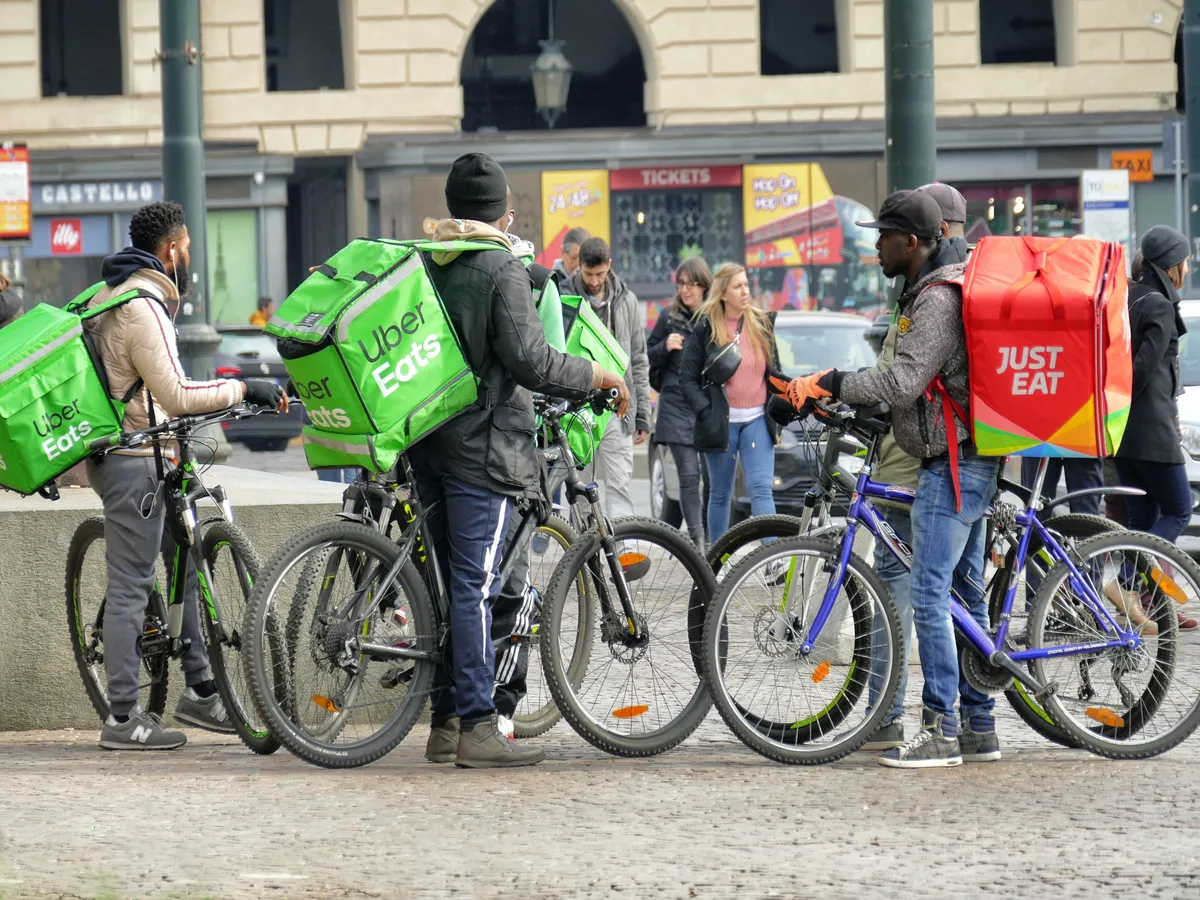
The draft rules were issued amid intensifying calls for extending social security benefits to gig and platform workers who form the backbone of the quick commerce industry.
Major e-commerce and food delivery platforms faced disruptions on December 25 as gig workers staged a strike over what they described as worsening work conditions and reduced commissions.
Delivery workers allege they face long working hours, falling earnings, unsafe delivery targets, arbitrary suspension of work IDs and a lack of basic welfare protections.
A section of gig workers went on strike again on New Year’s Eve. The Gig & Platform Service Workers Union (GIPSWU) said over 1 lakh workers from 22 cities joined the strike, including 14,000 of its members from major cities like Delhi, Mumbai, and others.
However, food delivery aggregators Swiggy, Zomato and magicpin on Thursday said they recorded a massive surge in orders on New Year's Eve and were largely unaffected by the calls of strike.
According to estimates, there are over 12.7 million gig workers in India and NITI Aayog suggests that the gig workforce is expected to rise to 23.5 million by 2029-30.
In a post on X, Eternal Founder Deepinder Goyal said, "Zomato and Blinkit delivered at a record pace yesterday, unaffected by calls for strikes that many of us heard over the past few days. Support from local law enforcement helped keep the small number of miscreants in check, enabling over 4.5 lakh delivery partners across both platforms to deliver more than 75 lakh orders (all-time high) to over 63 lakh customers during the day."
Goyal urged people not to get swept up by "narratives pushed by vested interests", arguing that if a system were fundamentally unfair, it would not consistently attract and retain so many people who choose to work within it.
"The gig economy is one of India's largest organised job creation engines, and its real impact will compound over time, when delivery partners' children, supported by stable incomes and education, enter the workforce and help transform our country at scale," he said.
Anshoo Sharma, Founder and CEO of magicpin, said that the company saw "no impact" of the strike called by gig workers' unions.
Finance Minister Nirmala Sitharaman, in her Budget 2025-26 speech, announced that the government will facilitate identity cards and registration of gig workers on the e-Shram portal.
"...Gig workers of online platforms provide great dynamism to the 'New Age' services economy. Recognising their contribution, our government will arrange for their identity cards and registration on the e-Shram portal," she said.
In November, the government put into effect four long-pending labour codes that consolidate 29 central labour laws.
The Code on Wages, 2019, Industrial Relations Code, 2020, Code on Social Security, 2020 and the Occupational Safety, Health and Working Conditions (OSHWC) Code, 2020 come into effect from November 21, 2025.
Gig and platform workers, covered for the first time in India’s labour framework, will receive social-security benefits funded partly through contributions of 1%–2% of an aggregator’s annual turnover, capped at 5% of payments made to such workers.
About The Author
Next Story