Business News
RBI proposes major overhaul of Lead Bank Scheme; what's changing?
.png)
3 min read | Updated on February 13, 2026, 15:05 IST


SUMMARY
The Reserve Bank of India has released draft revised guidelines for the Lead Bank Scheme (LBS), proposing a comprehensive overhaul aimed at sharpening district-level credit delivery and deepening financial inclusion across the country.
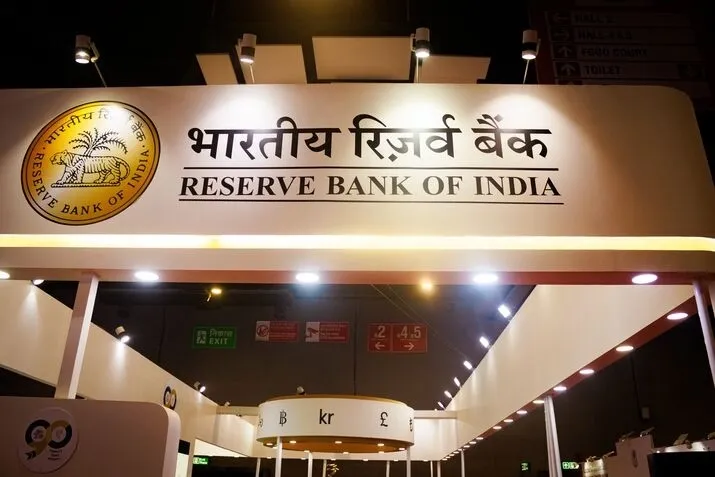
The RBI had announced earlier this month that it would issue comprehensive instructions to streamline operational aspects of the Scheme.
Seeking to sharpen district-level credit delivery and financial inclusion, the Reserve Bank on Friday released draft revised guidelines for the Lead Bank Scheme, proposing a major overhaul of the framework governing how banks, state governments and local administrations coordinate lending and development activities across the country.
The central bank had announced earlier this month, as part of its ‘Statement on Developmental and Regulatory Policies’ on February 6, that it would issue comprehensive instructions to streamline operational aspects of the Scheme.
“The Reserve Bank has undertaken a detailed review of the existing guidelines on Lead Bank Scheme (LBS). It is now proposed to issue a comprehensive set of instructions on the Scheme with a view to streamline the operational aspects,” RBI had said.
The regulator also announced plans to launch a unified portal for reporting bank-wise LBS data, which is currently fragmented across multiple platforms. The new portal, it said, is expected to significantly improve data quality and provide better insights towards achieving the objectives of the Scheme.
In the draft circular, RBI said the revised framework seeks to fine-tune the objectives of the scheme, the structure, membership and agenda of various fora under LBS, clearly delineate roles and responsibilities of key functionaries, and further strengthen State Level Bankers’ Committees (SLBCs) and Lead District Manager (LDM) offices.
The Lead Bank Scheme will continue to operate through a three-tier structure comprising Block Level Bankers’ Committees (BLBCs) at the base level, District Consultative Committees (DCCs) and District Level Review Committees (DLRCs) at the intermediate level, and State Level Bankers’ Committees (SLBCs) at the apex level.
RBI said the scheme aims at coordinating the activities of banks, government and other developmental agencies to “enhance flow of credit to priority sectors for achieving inclusive growth” and “deepen financial inclusion through improved access and usage of financial services”.
As per the draft, RBI will designate a commercial bank as Lead Bank in each district to coordinate efforts of credit institutions and government agencies to improve credit flow and promote financial inclusion, while every Lead Bank will appoint a Lead District Manager to oversee implementation of the Scheme at the district level.
NABARD will continue to appoint District Development Managers to support rural credit and financial inclusion initiatives, and RBI will designate Lead District Officers to represent the central bank at the district level.
The draft also lays out detailed norms for conduct and frequency of meetings at block, district and state levels, preparation of district and state credit plans through a bottom-up approach, monitoring of credit-deposit ratios, and mechanisms to address low-credit districts through special sub-committees and monitorable action plans.
Banks, RBI said, are required to achieve a credit-deposit ratio of 60% for their rural and semi-urban branches on an all-India basis, while districts with CD ratios below prescribed thresholds will be subject to closer monitoring and targeted interventions.
The revised framework also places emphasis on expanding banking penetration in unbanked rural centres, deepening digital payments adoption, capacity-building programmes for bank and government officials, and standardisation of information on SLBC websites.
RBI said the revamped scheme is in line with the National Strategy for Financial Inclusion 2025–30 and includes provisions for promoting sustainable agriculture, MSME financing and financial literacy through dedicated SLBC sub-committees.
Stakeholders have been invited to submit comments on the draft circular by email with the subject line ‘Feedback on the Draft Circular on Lead Bank Scheme’.
The last date for submission of feedback is March 6, 2026.
About The Author
Next Story