Business News
‘India’s growth can’t be bank-funded alone': SEBI makes case for capital markets backing SMEs

3 min read | Updated on February 11, 2026, 17:31 IST


SUMMARY
Over 1,400 SMEs have listed on NSE and BSE SME platforms, with a combined market capitalisation of ₹4.1 trillion, and more than 350 have migrated to the main board.
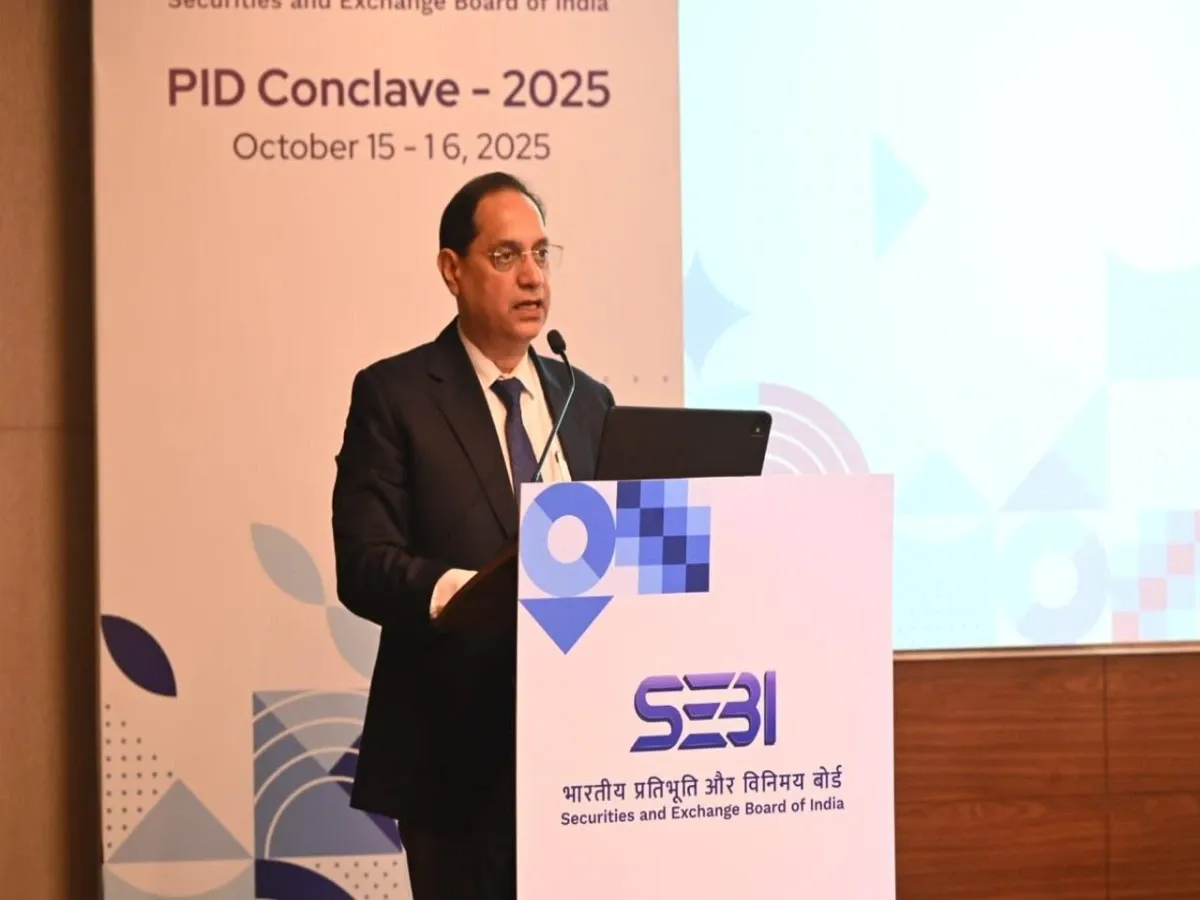
SEBI chairman Tuhin Kanta Pandey was addressing the India SME Finance & Investment Summit.
India’s ambitious growth over the next two decades “cannot be financed by the banking channel alone” and will require deep, liquid and trusted capital markets, SEBI chairman Tuhin Kanta Pandey said on Wednesday, making a strong pitch for greater capital market access for small and medium enterprises.
Addressing the India SME Finance & Investment Summit, Pandey said sustained investments will be needed across infrastructure, energy transition, housing, services and urban development.
“This growth cannot be financed by the banking channel alone — a deep, liquid, and trusted capital market is required to complement the banking system,” he said.
Pandey said India remains among the fastest-growing major economies and is on track to become the world’s third-largest economy, with real GDP estimated to grow 7.4% in FY26.
With over 70 million enterprises, MSMEs are “central to India’s growth and resilience”, contributing around 35 per cent of manufacturing, 49% of exports and 31% of GDP, besides being the second-largest employer after agriculture.
He noted that only about 1.5 per cent of MSMEs fall under the SME category.
Pandey said dedicated SME platforms on National Stock Exchange and Bombay Stock Exchange have evolved from niche channels into “powerful engines for capital formation”,
“Over 1400 SMEs have listed, with current market capitalization of this segment being about ₹4.1 trillion,” the SEBI chief said.
“More than 350 SMEs have migrated to the main board, proving that this is a viable pathway for long-term integration,” he added.
Pandey pointed out that the issue sizes have scaled up over the past three years, reflecting stronger issuer confidence and expanding investor appetite.
“This is a healthy direction, provided we keep strengthening disclosure quality and post-listing compliance, so that SME markets remain a credible pathway for long-term growth and investor trust,” he said.
He said listing on stock exchanges can be transformative for SMEs as it provides “long-term, risk-bearing growth capital”, reduces over-dependence on banks, enables transparent market-based valuation and improves governance.
“At a system level, greater SME participation in markets also diversifies financing channels, reduces risk concentration in the banking sector, and frees bank capacity for genuine working capital and priority lending,” he added.
However, Pandey acknowledged that many SMEs hesitate because capital markets feel unfamiliar, access to credible intermediaries is limited and IPO costs can be deterrents. Disclosure and compliance requirements are also often viewed as burdensome.
He said SEBI had earlier observed instances where some listed SMEs diverted issue proceeds to related parties or shell companies and engaged in unfair trade practices.
“Such instances adversely affected investor sentiment in SME IPOs,” he said.
Stock exchanges have since deepened engagement with merchant bankers and promoters, improved due diligence through site visits and deployed technology, including AI, to process draft offer documents and reduce approval timelines.
“All of these measures are aimed at one outcome — better quality issuers, credible use of proceeds, stronger disclosures and governance, which leads to higher investor confidence and healthier long-term liquidity,” Pandey said.
He said SEBI is undertaking a comprehensive review of LODR regulations to remove redundancy and ambiguity, while examining SME disclosure requirements to improve ease of doing business without diluting investor safeguards.
A dedicated SME portal is also being developed as a one-stop digital gateway with issuer information and mapped compliance guidance.
SEBI will also open local offices in state capitals in a phased manner to improve access to listing-related information, while merchant bankers were urged to strengthen issuer education and post-listing support.
About The Author
Next Story