
Personal Finance News
Dhanteras gold and silver coin buying online: Know 5 points before pressing the payment button

3 min read | Updated on November 06, 2026, 11:42 IST

SUMMARY
Gold and silver coins are now a 10-minute delivery item, with e-commerce platforms listing coins from manufacturers like Kalyan, Malabar, MMTC-PAMP and Tanishq
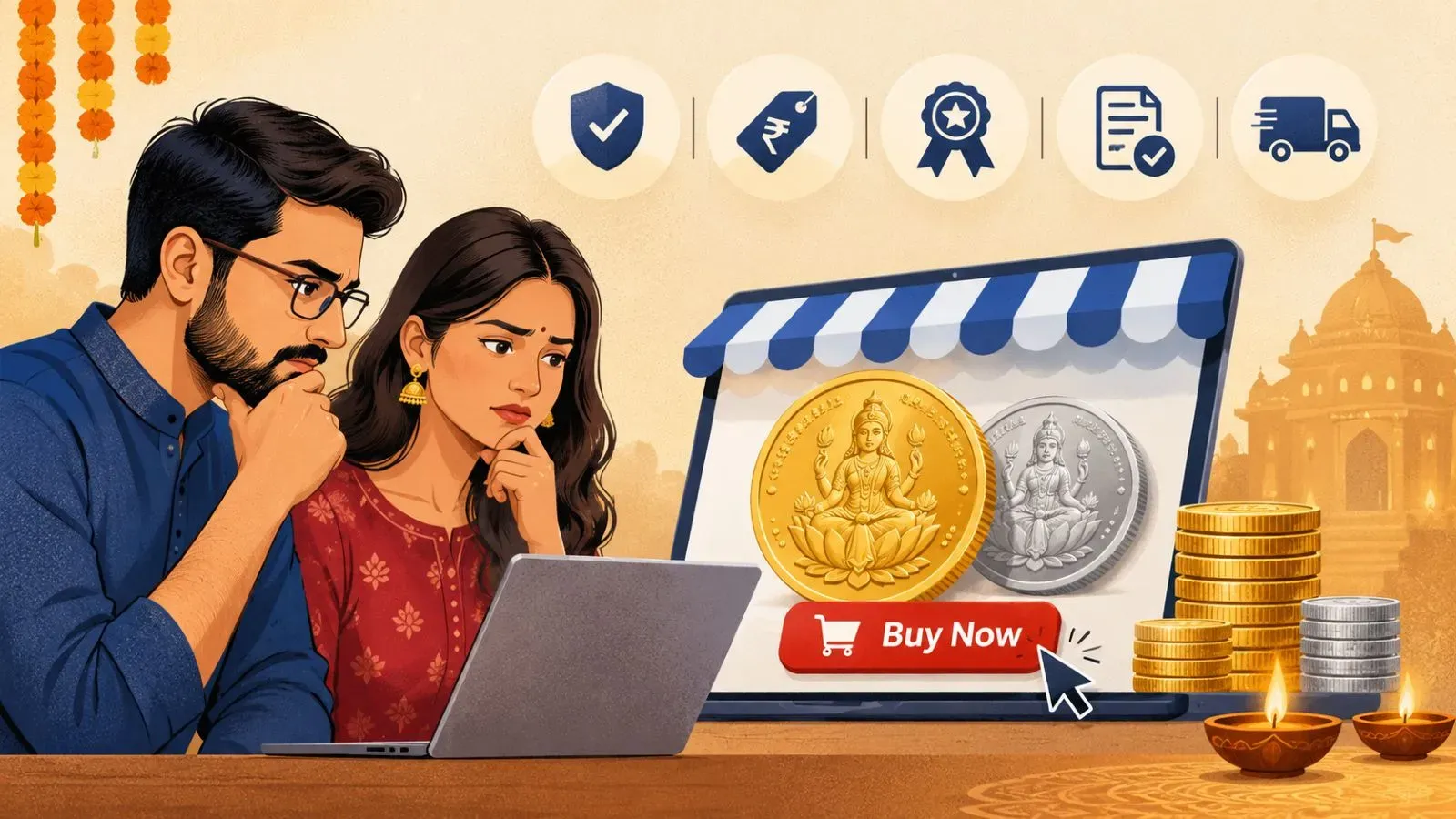
Buyers should treat the online coin order like any other gold purchase and do basic due diligence. | Representational image/AI generated
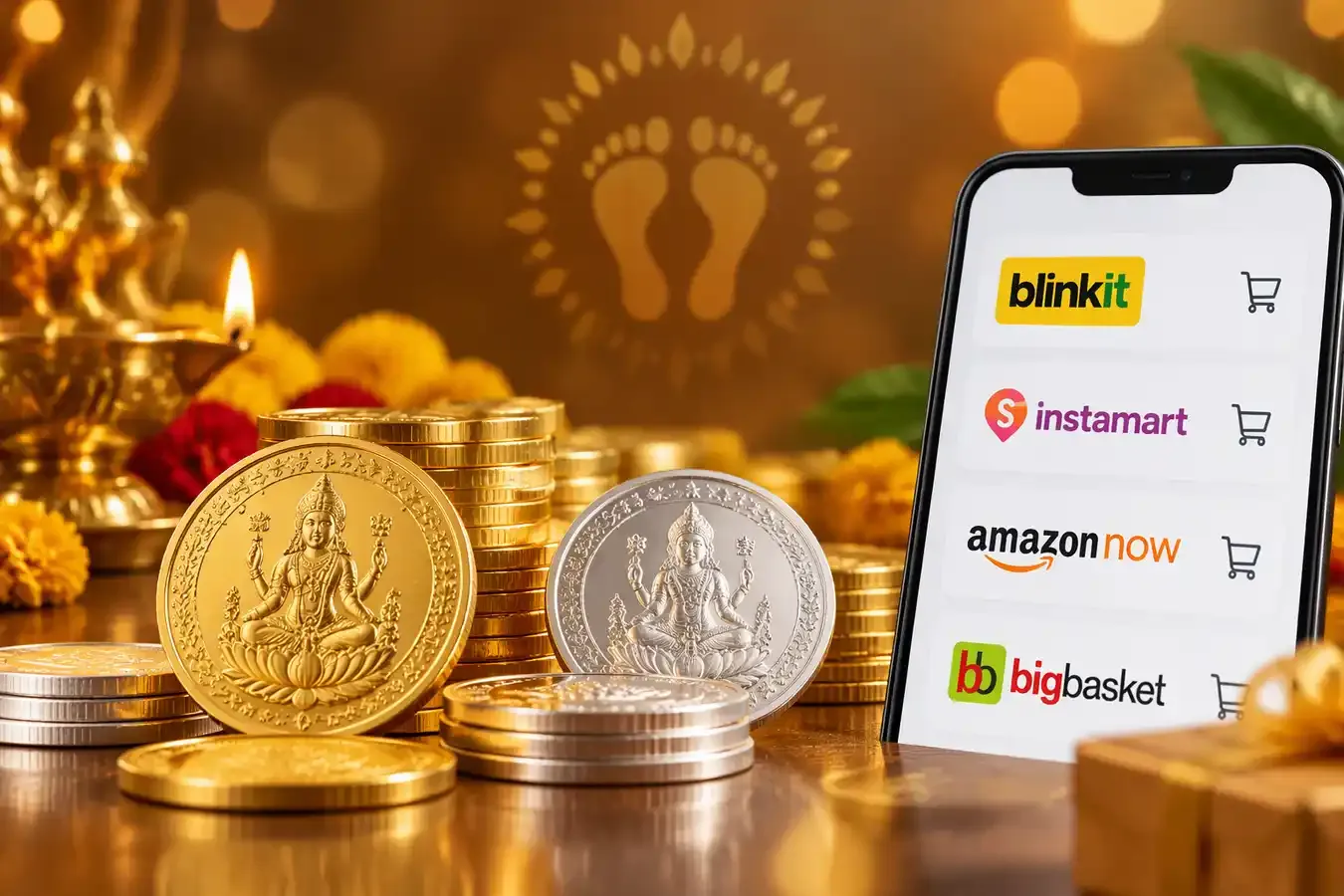
Coins from several manufacturers like Kalyan, Malabar, MMTC-PAMP, Joyalukkas, Tanishq and others are currently listed on these apps with deliveries promised in 10 to 30 minutes across many cities.
While online shopping is convenient, a gold or silver coin is still a financial purchase that requires attention to detail. Here are five points you should know before making the online coin purchase today.
These MRPs are roughly twice the metal value and mean nothing. For buyers, what matters is the final amount on the payment page, after GST, delivery and any platform fee.
Gold coins are usually sold in 24 karat. Some platforms also list 22 karat coins. So buyers should read the purity and the exact weight in the product description instead of relying only on the photograph.
Unlike jewelleries, coins are not covered by mandatory BIS hallmarking and carry no six-digit HUID. So the document that is relevant for online buyers is the manufacturer's assay certificate. Buyers should open the pack in front of the delivery agent and check the weight and certificate against the order.
The entity that is behind the coin is the jeweller or refiner named on the app listing. E-commerce apps are not the actual manufacturers. This fact matters for buy-back and complaints. Kalyan, Malabar, Tanishq and Joyalukkas coins are usually bought back or exchanged at their own stores on the day's rate. The online platform's role ends with delivery. Therefore, one should check that their app invoices carry the name of the manufacturer, weight, purity and price paid.
The same coin can be listed at varying prices on different apps. Therefore, it is advisable to compare rates on different apps. Several apps also offer vouchers and discounts. These vouchers come with conditions on eligibility, purchase period and participating stores. Buyers should compare them across apps.
App policies on coins usually do not permit a return. However, the Consumer Protection (E-Commerce) Rules, 2020 do require redress where goods are defective, spurious or materially different. Therefore, if a coin arriving to you after ordering online is underweight, or of wrong purity or in damaged packaging, you must photograph it, keep its packaging and report within the stated window.
If you have plans for resale, note that no quick-commerce platform buys the coins back. A jeweller will buy only on the day's price. For example, a coin bought at ₹15,100, when the metal is worth ₹14,618, carries a built-in loss of roughly ₹500 before any deduction.
The above points are not for arguing against buying on an app on Dhanteras. They, however, argue for treating the online coin order like any other gold purchase and doing basic due diligence like comparing the final amount rather than the discount, reading the fineness and weight, identifying the seller and jeweller behind the coin, and keeping the invoice and assay certificate together.
Related News
About The Author
Next Story

