
Market News
SBI Q2 results: Net profit likely to grow in double digits on higher NII and strong loan growth; NIM, NPAs in focus

4 min read | Updated on November 03, 2026, 08:45 IST

SUMMARY
State Bank of India will announce its Q2FY27 results on Tuesday, November 3. Experts expect double-digit growth in net profit and net interest income, supported by strong loan growth and higher other income, while margins may slip slightly.
Stock list

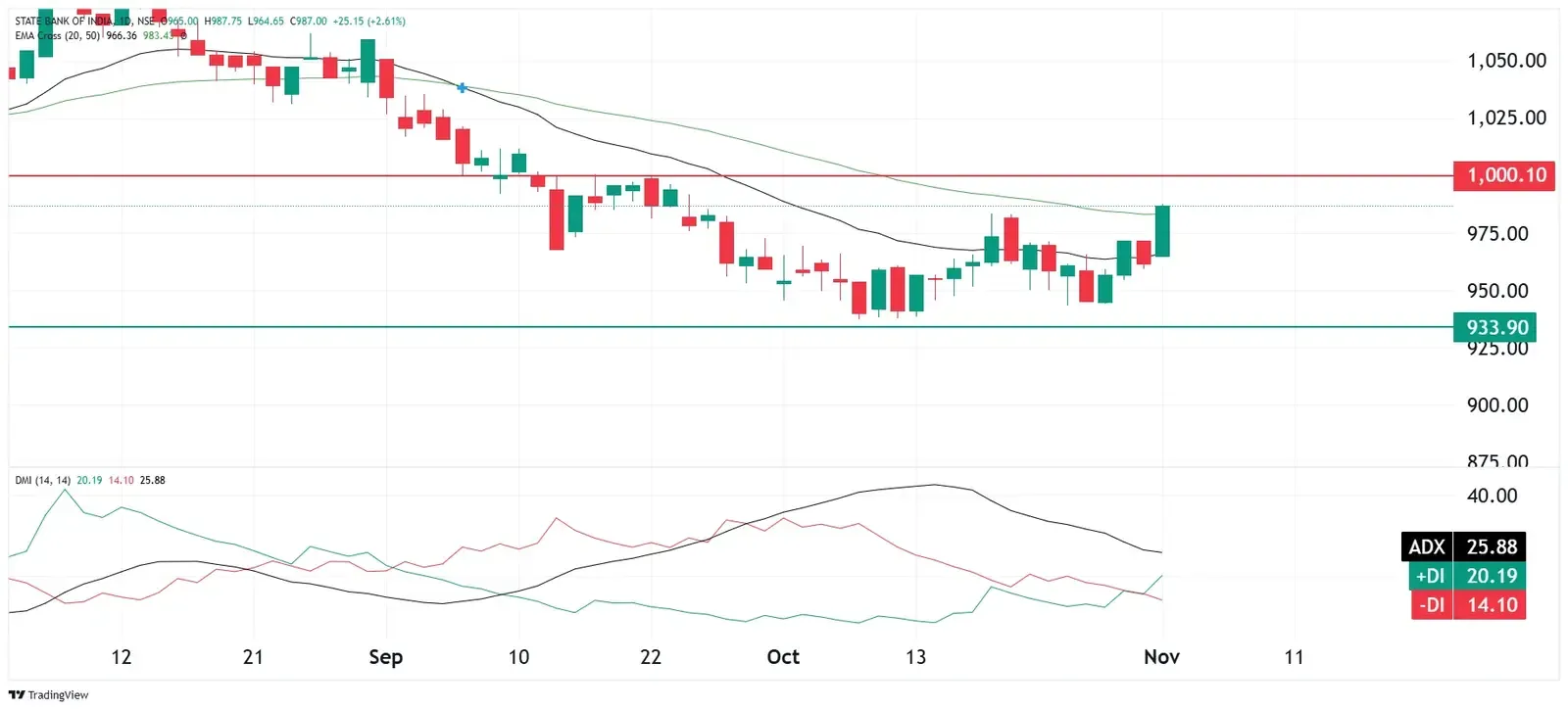
SBI stock is trading above its 20-day EMA and 50-day EMA. The 20-day EMA is still below the 50-day EMA, but the gap has narrowed.
India’s largest public sector bank, State Bank of India (SBI), will announce its financial results for the quarter and half-year ended September 30, 2026 on November 3, 2026. SBI is likely to report double-digit growth in net interest income (NII) and profitability on a yearly basis supported by strong loan growth.
According to experts, SBI’s standalone net profit could rise 11 to 16% YoY to a range of ₹22,310 and ₹23,250 crore supported by strong growth in advances and deposits. SBI reported net profit of ₹20,160 crore in Q2FY26 and ₹21,121 in the previous quarter.
Net interest income (NII) is expected to rise 14% to 18% YoY to a range of ₹47,330 to ₹48,220 crore on the back of healthy growth in loan book. SBI reported an NII of ₹41,071 in the same quarter last year. SBI’s other income could see strong growth following stake sale in SBI Funds Management and NSE via IPO during the second quarter.
Meanwhile, net interest margin (NIM) is likely to decline 3 to 5 basis points to 2.81% to 2.84%. Meanwhile, gross non-performing assets (GNPA) and net NPA are expected to remain unchanged on a sequential basis.
During the quarterly result announcement, investors will track key performance metrics, including loan growth across retail and corporate segments, deposit growth, net interest margin, gross and net non-performing assets (NPAs).
Ahead of the Q2 result announcement, SBI shares closed 2.6% higher at ₹987. So far this year, SBI shares are trading flat with a gain of just 0.4% to investors.
SBI technical outlook ahead of Q2 results
SBI goes into its results with a breakout attempt that took it above its 50-day EMA for the first time since early September, and the close at the high shows buyers stayed in control through the session.
The indicators have turned more positive. The stock is now above both its 20-day EMA and 50-day EMA. The 20-day EMA is still below the 50-day EMA, but the gap has narrowed. In the Directional Movement Index (DMI), buyers have taken the edge. The ADX has fallen from above 40 to 25.9, which shows the earlier downtrend has lost its strength.
SBI options: how much movement is priced in?
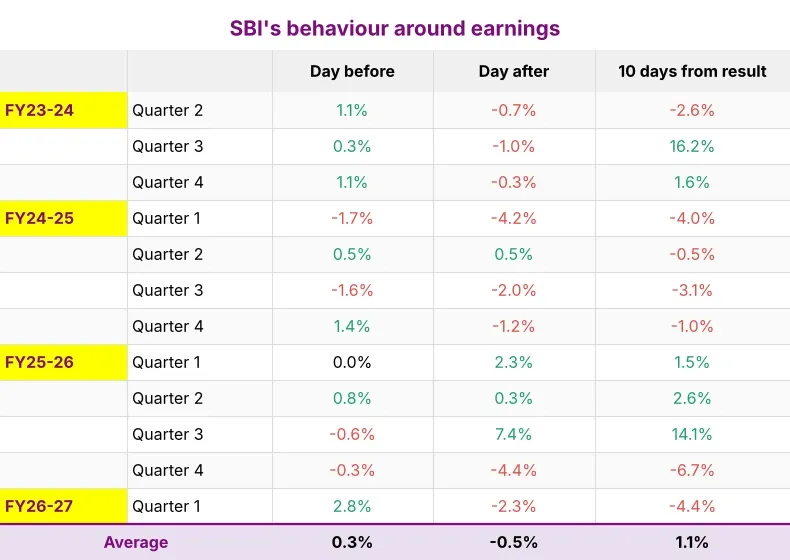
The options market expects a move of about ±5% by expiry, which puts the expected range at roughly ₹941 to ₹1,041. Historically, the SBI has usually reacted calmly to its results. In 8 of the last 12 quarters, the next-day move stayed within ±2.3%, and the stock went beyond 5% only once, with a 7.4% jump after the Q3FY26 results.
Options strategy for SBI Q2 results
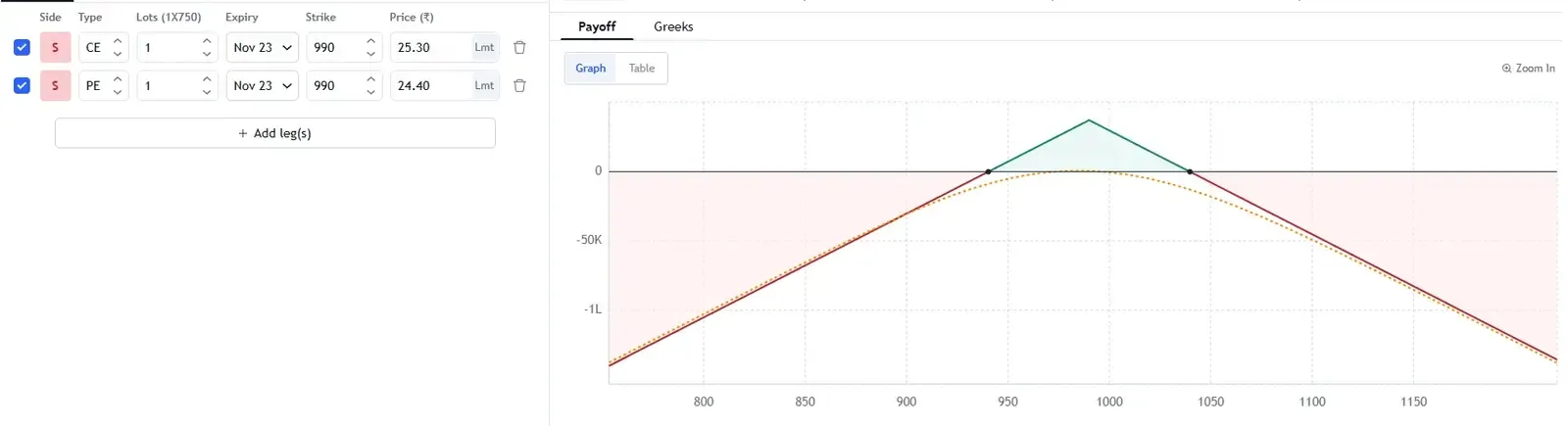
If you expect the stock to stay in a range: A short straddle could be considered. SBI’s next-day moves have mostly stayed well within the current 5% pricing, and option premiums usually fall once the results are out. However, the last three quarters brought bigger moves, and the trade must be held for about three weeks, so strict stop-losses are important. Traders can limit the risk by buying a call and a put further away from the current price.
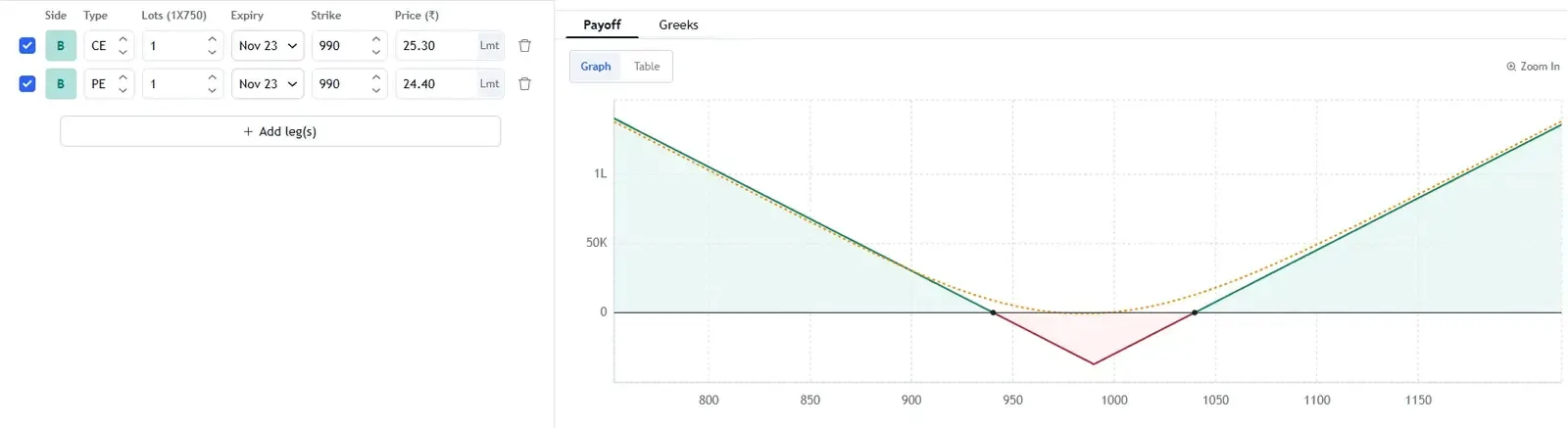
If you expect a sharp move after the results: A long straddle could be considered. The stock is at a turning point: a close above ₹1,000 would confirm a breakout, while a reversal like the one after the Q1FY27 results could take it back towards the base. However, option premiums usually fall after the results, so the move needs to be large for this trade to work.
About The Author
Next Story

