Market News
Maruti Suzuki Q2 results: Net profit likely to fall up to 12% YoY due to higher input costs; key focus on Q2 sales volume and EBITDA margin

4 min read | Updated on October 27, 2026, 09:54 IST


SUMMARY
Maruti Suzuki will announce its Q2FY27 results on Tuesday, October 27. Experts expect strong revenue growth on higher volumes, but net profit could fall as higher raw material costs squeeze margins. Demand trends and margin commentary are in focus.
Stock list

Maruti Suzuki options contracts are pricing in a move of about ±6.7% by the November expiry.
Automobile giant Maruti Suzuki India is set to announce its September quarter results on Tuesday, October 27, 2026. India’s largest carmaker is likely to report mixed quarterly earnings: double-digit growth in revenue, but lower profit due to higher raw material costs and a weaker EBITDA margin.
Maruti Suzuki Q2 revenue and net profit expectations
According to experts, Maruti Suzuki’s standalone revenue could rise 27% to 28% YoY and 2% to 3% QoQ to between ₹53,755 crore and ₹54,100 crore. Sales volumes are expected to grow 25% to 28% YoY in the September quarter.
However, net profit could decline 9% to 11% YoY and 10% to 12% QoQ to between ₹2,950 crore and ₹3,010 crore. Profitability could be hit by higher raw material costs during the quarter, and the EBITDA margin is likely to contract by 280 to 310 basis points on a yearly basis.
Maruti Suzuki reported standalone revenue of ₹42,332 crore in Q2FY26 and ₹52,456 crore in the previous quarter. Its net profit stood at ₹3,303 crore in the same quarter last year and ₹3,352 crore in Q1FY27.
Investors will keep an eye on management commentary on demand trends and the impact of raw material inflation on overall profitability. Key metrics such as quarterly sales volumes, export volumes, average selling prices and EBITDA margin will also be closely tracked.
Ahead of the Q2 results, Maruti Suzuki shares are trading 1.1% higher today around ₹11,355 on NSE on Tuesday, October 27. So far this year, Maruti Suzuki shares are down over 31%.
Technical outlook ahead of Q2 results
Maruti Suzuki goes into its Q2FY27 results in a clear downtrend. The stock is trading below its 20-day EMA and well below its 50-day EMA. The 20-day EMA has been below the 50-day EMA since late August. Every recovery attempt in October has been sold at the 20-day EMA. The most recent attempt failed near ₹11,650 last week and was followed by a sharp fall.
There are early signs the selling may be slowing. The stock has held the ₹11,000 level for the past few sessions, and the long lower shadows on recent candles show buyers stepping in near that mark. The Directional Movement Index (DMI) supports this view. However, the ADX has eased from its peak to 51.5. It is still high, but its decline suggests the downtrend is losing some of its strength.
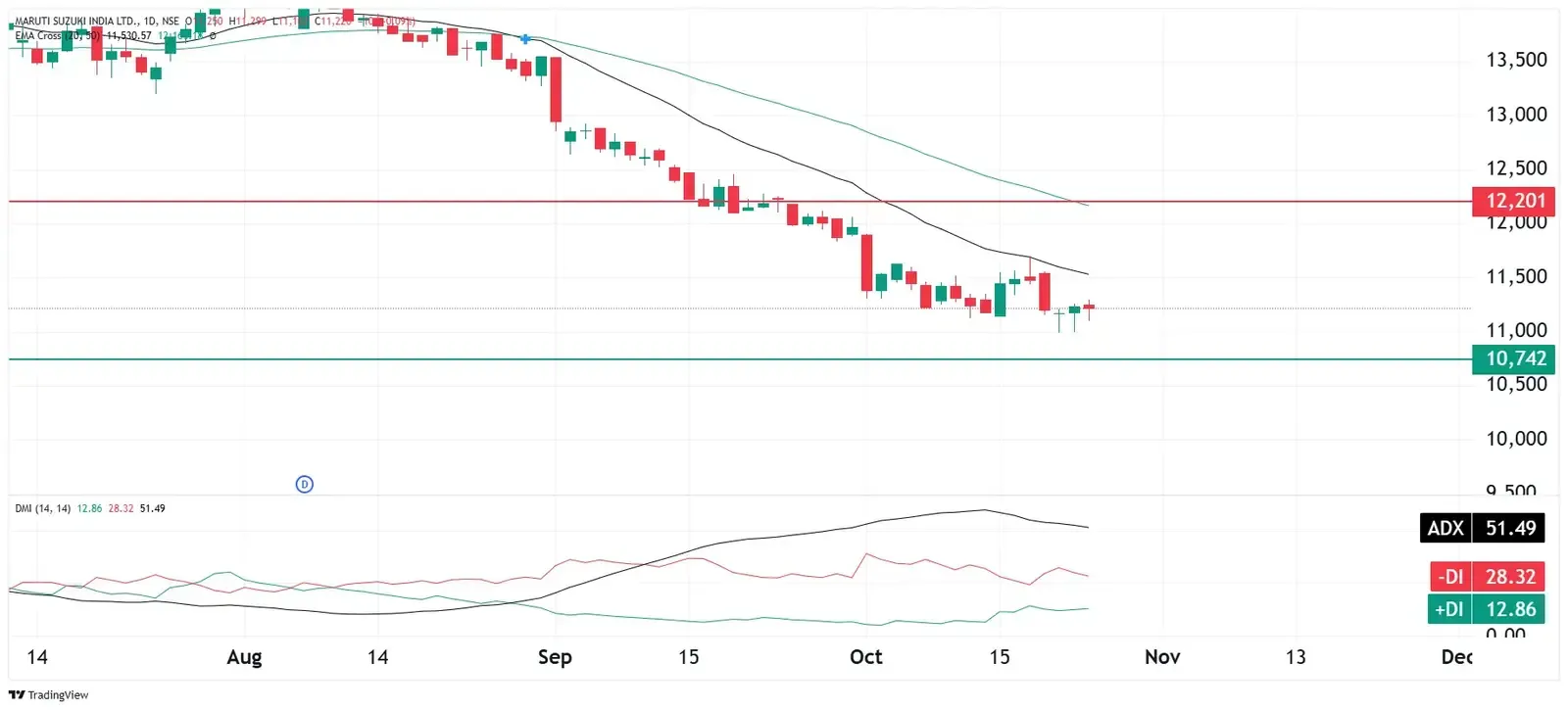
Maruti Suzuki November options contracts are pricing in a move of about ±6.7% by the November expiry, which puts the expected range at roughly ₹10,540 to ₹12,056.
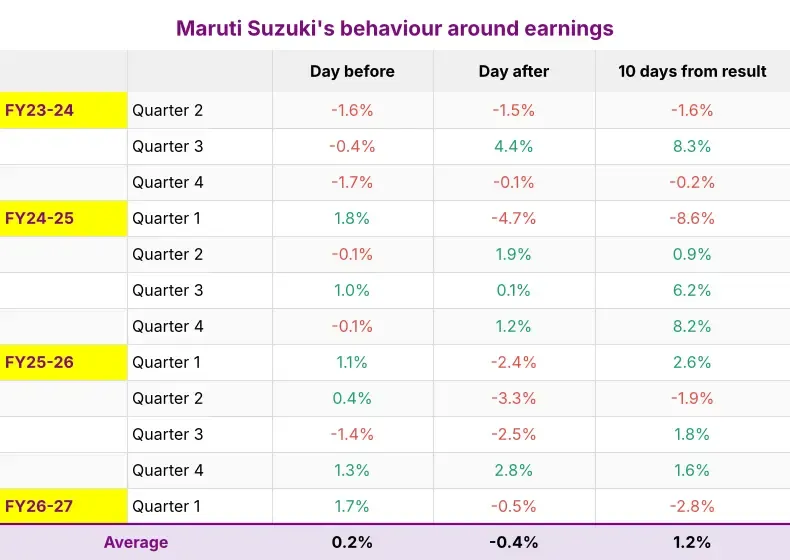
Maruti Suzuki’s history suggests this pricing is on the higher side. The day after in the last 12 quarters, the stock never moved more than 4.7% on the day after its results.
Options strategy for Maruti Suzuki Q2 results
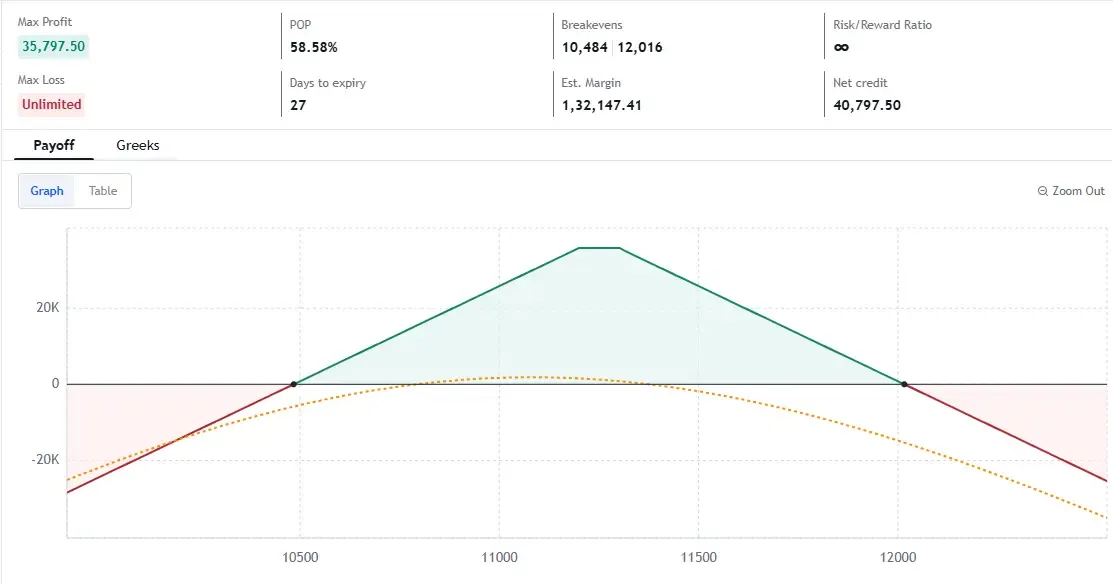
If you expect the stock to stay in a range: A short straddle, selling the ATM call and put, could be considered. Maruti’s calm history around results supports this view, and option premiums usually fall once the results are out. The strategy makes profit if the stock stays between roughly ₹10,484 and ₹12,016 until the November expiry. However, the stock is in a strong downtrend. Traders can limit the risk by also buying a call and a put further away from the current price, and strict stop-losses are important.
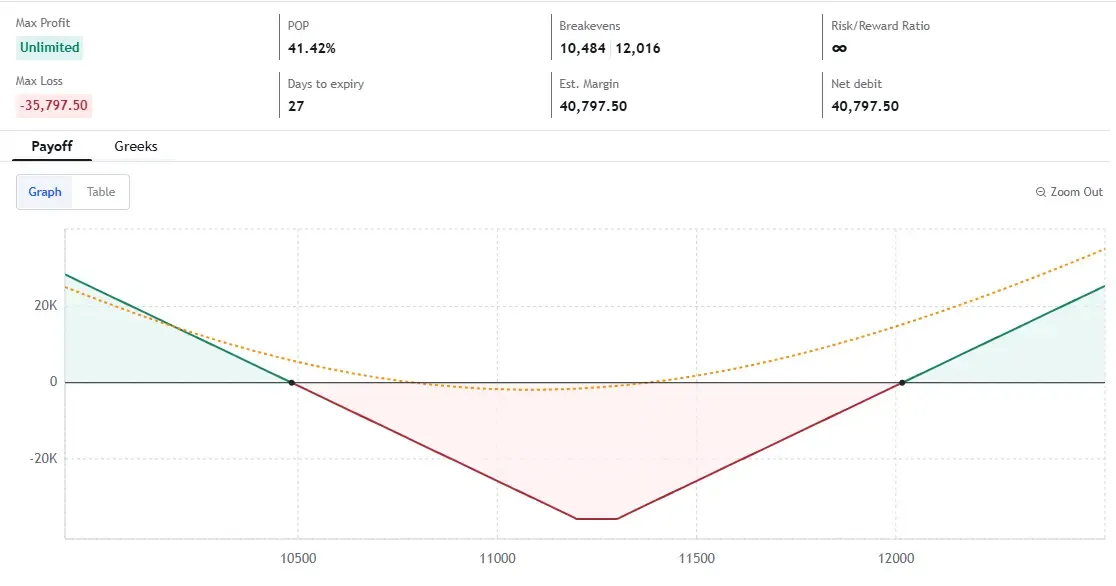
If you expect a sharp move after the results: A long straddle, buying the ATM call and put, could be considered. The strategy makes a profit if Maruti falls below roughly ₹10,484 or rises above ₹12,016 by expiry. At ₹758, the cost is high, and option premiums usually fall after the results, so the stock needs to move sharply for this trade to work.
If you want to trade a move in one direction: The trend is still down, but the stock is holding the ₹11,000 level. Traders can wait for the results to confirm the next move before taking a position. If Maruti closes above the 20-day EMA, a bull put spread could be considered. If it closes below ₹11,000, a bear call spread may be more suitable.
Related News

About The Author
Next Story