Market News
ITC Q2 results: Net profit likely to see double-digit fall due to subdued cigarette business growth

4 min read | Updated on November 02, 2026, 10:26 IST

SUMMARY
ITC will announce its Q2FY27 results on Monday, November 2. Experts expect weak earnings as higher cigarette taxes hit volumes and margins, partly offset by growth in the FMCG business. Revenue could range from a small decline to modest growth.
Stock list

Net profit could decline 8% to 11% YoY to between ₹4,550 crore and ₹4,700 crore, as steep tax hikes on cigarettes weigh on consumer demand, volumes and margins.
Diversified conglomerate ITC will announce its second-quarter results on Monday, November 2, 2026. The FMCG major is expected to report weak quarterly earnings, mainly due to weakness in the cigarette business, partly offset by growth in FMCG.
ITC Q2 revenue and net profit expectations
According to experts, ITC’s consolidated revenue could range widely, from a 3% decline to a 5% rise YoY, at ₹18,900 crore to ₹20,510 crore. Revenue from the cigarette business is expected to fall sharply, as price hikes have not yet fully offset the impact of higher taxes. ITC reported consolidated revenue of ₹19,502 crore in the same quarter last year and ₹19,114 crore in the previous quarter.
Net profit could decline 8% to 11% YoY to between ₹4,550 crore and ₹4,700 crore, as steep tax hikes on cigarettes weigh on consumer demand, volumes and margins. The company reported a net profit of ₹5,126 crore in Q2FY26 and ₹4,394 crore in the previous quarter.
Cigarette volumes could decline 7% to 10% YoY, while the FMCG segment could see sales growth and margin expansion.
During the results announcement, investors will closely monitor revenue and volume growth across the FMCG, cigarette and agribusiness segments. The demand outlook in urban and rural markets and overall consumption trends will also be tracked.
Ahead of the Q2 results, ITC shares closed 0.2% higher at ₹265 on Friday, October 30. So far this year, ITC shares are down over 34% amid multiple headwinds, including higher taxes and rising input costs.
ITC technical outlook ahead of Q2 results
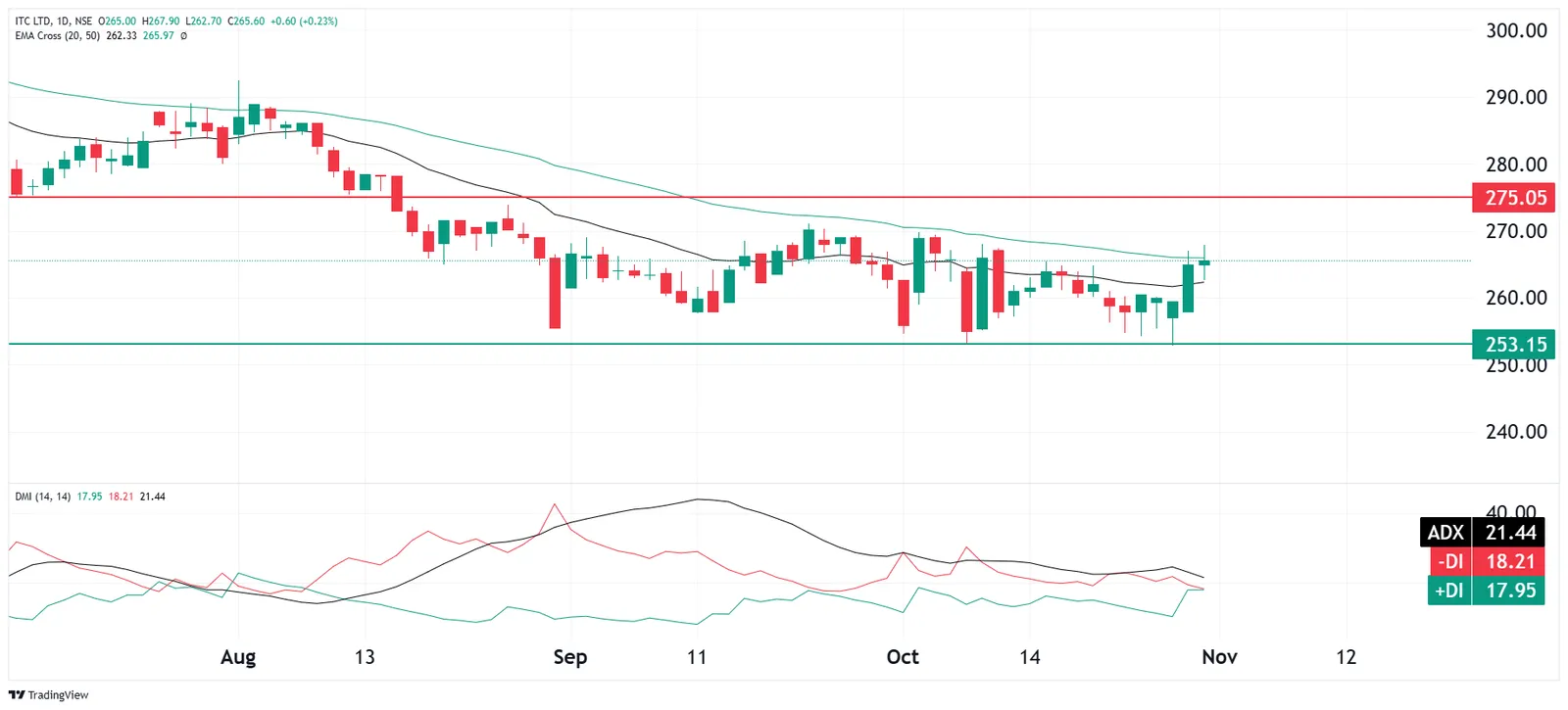
ITC has been stuck in a narrow range for two months after a long decline. The stock fell from about ₹290 in early August to near ₹255 by the end of the month. Since then it has moved sideways, roughly between ₹253 and ₹270.
The stock is now testing the upper part of its range and is trading above its 20-day EMA and it rose above the 50-day EMA during Friday’s session but slipped back below it by the close. The 20-day EMA has stayed below the 50-day EMA since July, so the broader trend is still weak. Meanwhile, the ADX has eased to 21.4, which confirms the lack of a clear trend.
ITC options a modest move priced in
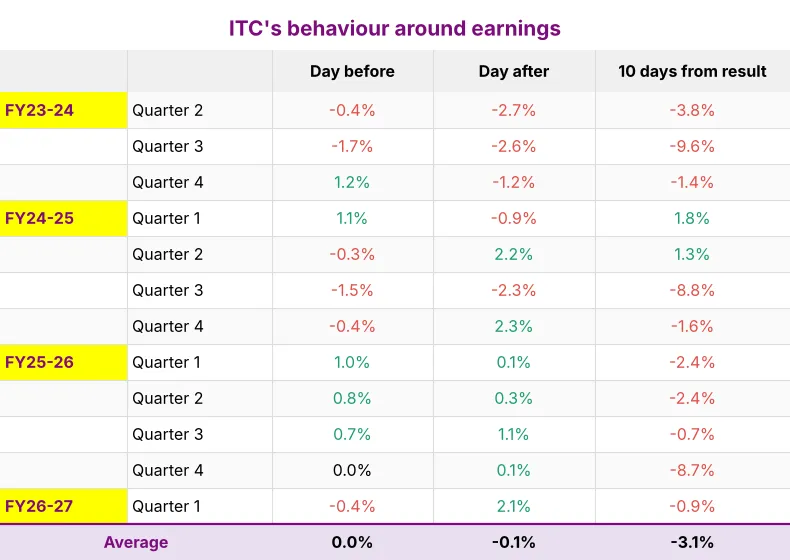
With November futures at ₹268, the options market expects a move of about ±4% by expiry, which puts the expected range at roughly ₹257 to ₹279. ITC is one of the calmest stocks around. In the last 12 quarters, its next-day move never went beyond ±2.7%, well inside the current 4% pricing.
The picture changes over 10 days. The stock was lower 10 days after its results in 10 of the last 12 quarters. So the bigger risk around ITC’s results has been a slow decline over the following days rather than a sharp first-day move.
Options strategy for ITC Q2 results
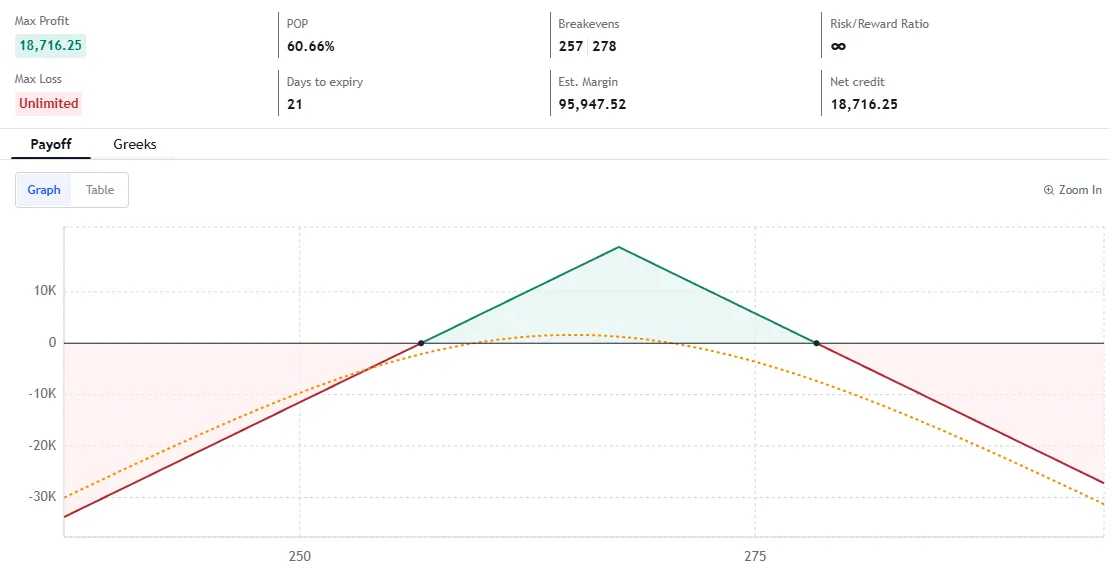
If you expect the stock to stay in a range: A short straddle, selling the ATM call and put, could be considered. ITC’s first-day reactions have always stayed well within the current pricing, the stock has been range-bound for two months, and option premiums usually fall once the results are out. However, strict stop-losses are important, and traders can limit the risk by buying a call and a put further away from the current price.
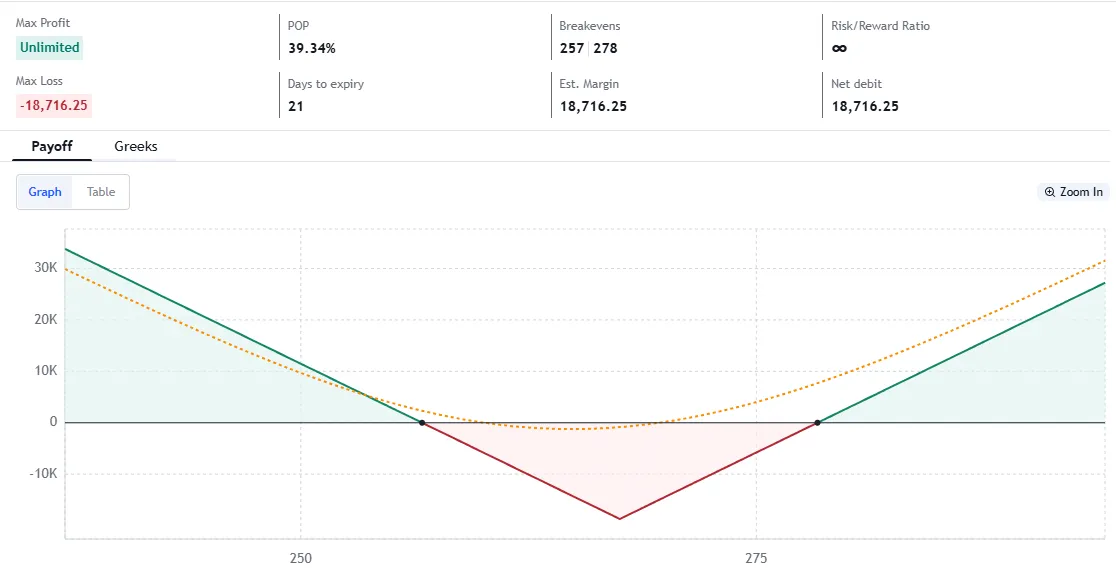
If you expect a sharp move after the results: A long straddle, buying the ATM call and put, could be considered. At about ₹11, the cost is low, and a break of the two-month range in either direction could carry the stock beyond the expected levels. The trade makes money if ITC falls below roughly ₹257 or rises above ₹279 by expiry. However, ITC has rarely moved sharply right after its results, and option premiums usually fall once the results are out, so this trade needs a bigger move than the stock usually makes.
Related News

About The Author
Next Story