
Business News
Will midterms setback derail Trump's foreign policy agenda or will he be 'Mr Veto'?

5 min read | Updated on November 04, 2026, 18:37 IST

SUMMARY
The stunning rebuke delivered to Republicans in the midterm elections can have major implications on how President Donald Trump handles his domestic and foreign policy agenda. Let’s take a look at what he can and cannot do.
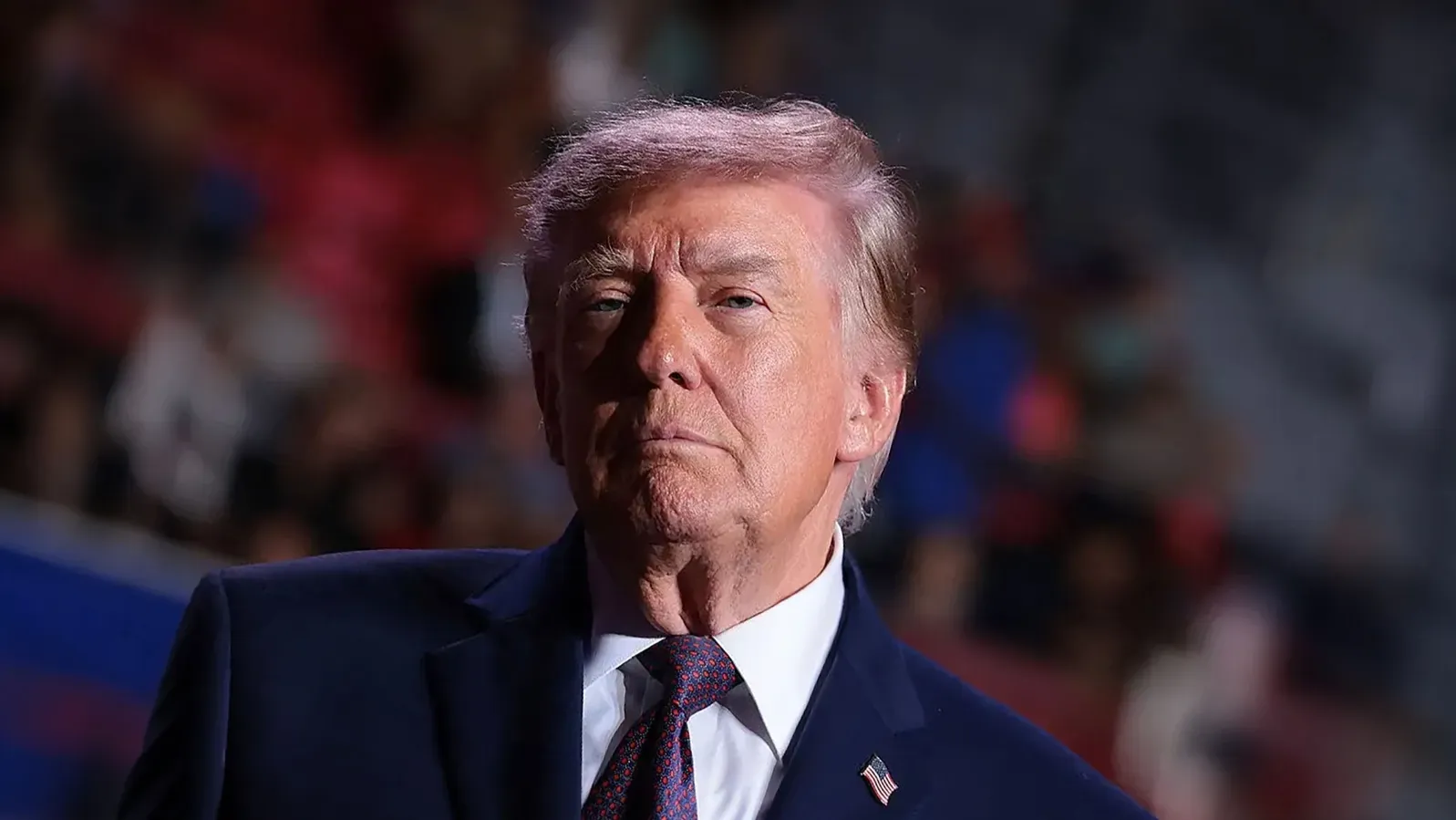
The election results could also complicate Trump’s foreign policy although he indicated no immediate change in his approach to Iran.
‘Mr Veto” – That’s what US President Donald Trump intends to become after Republicans suffered historic losses in the midterm elections.
Trump, during the election campaign, had encouraged voters to pretend he was on the ballot, only for it to backfire in such a dramatic fashion that the US President had to distance himself from the results, reminding the world that he wasn’t contesting.
"I wasn’t on the Ballot and if I was, we would have won IN A LANDSLIDE!" Trump exclaimed on his Truth Social platform.
Not only did Democrats win in swing states like Georgia, Michigan, New Hampshire and North Carolina, the voters delivered a stunning rebuke to Republicans in the deep-red states of Iowa, Kansas, Texas and even South Carolina.
The United States also recorded several firsts in its midterm elections.
Democrat Keisha Lance Bottoms became the first Black woman to be elected governor in the United States, defeating Republican businessman Rick Jackson in Georgia.
Abdul El-Sayed, a Democrat, is on course to become the first Muslim senator in US history by defeating Republican Mike Rogers in Michigan’s Senate race.
Gina Hinojosa is projected to become the first Hispanic governor of Texas, unseating Republican Governor Greg Abbott who served almost 12 years in office. Texas has not had a Democratic governor since 1995.
Amy Acton, a physician and researcher who served as the director of the Ohio Department of Health, is set to become the first woman elected governor of Ohio.
Democrats have so far flipped seven seats in the Senate and 27 in the House of Representatives, taking back complete control of the US Congress. And this will have major implications for Trump’s legislative agenda.
Implications of the midterm results
The Democratic victory could have serious consequences for Trump's domestic agenda and the functioning of his administration.
Senior Democrats have already outlined plans to investigate the administration's policies, the conduct of government officials and alleged links between public officials and private corporations seeking influence in the White House.
“Among the potential targets are the Trump family's business dealings, the administration's handling of the Jeffrey Epstein investigation and broader allegations of corporate corruption,” reported Associated Press.
A Democratic majority will be armed with control of committees, bigger budgets and staff, and subpoena powers that could compel the administration to be responsive to Congress.
The prospect of investigations, and potentially impeachment proceedings, could dominate Trump's relationship with Congress during the remainder of his presidency.
Robert Garcia, a Democratic congressman from California expected to lead the House Oversight Committee, warned Republicans on social media: “LAWYER UP.”
Roadblocks for Congress
Trump is preparing for a bruising political battle with Democrats but the president's veto power could allow him to block much of the opposition's legislative agenda.
On Tuesday night, Trump posted a picture of his signature red ball cap with “VETO” stitched on it.
Each and every bill that passes through the House and the Senate goes to the President for approval. The President can either sign the bill into law or send it back “with his Objections” to the chamber where it was first introduced.
While the word ‘veto’ is not explicitly mentioned in the US Constitution, a clause in Section 7 of Article 1 provides the President with the power to reject legislation, which is commonly called the presidential veto.
“If he approve he shall sign it, but if not he shall return it, with his Objections to that House in which it shall have originated, who shall enter the Objections at large on their Journal, and proceed to reconsider it,” the clause states.
A regular veto is not absolute.
In case Trump returns the bill, the House and Senate can each override the objections by passing it again with a two-thirds majority.
But it’ll be nearly impossible for Democrats to garner two-thirds majority on a contentious bill despite their comprehensive victory in the midterms.
So, in practical terms, Trump can prevent Democrat-sponsored bills from becoming law.
Trump has exercised the veto 12 times during his presidency and has been overridden only once.
All 10 vetoes during his first term came after Democrats took control of the House in 2019.
Eight involved resolutions rather than ordinary legislation, including two measures seeking to end a national emergency Trump had declared at the US-Mexico border.
In May 2020, Trump vetoed a bipartisan congressional resolution seeking to limit his authority to use military force against Iran. The Senate subsequently voted 49-44 to override the veto, falling short of the required two-thirds majority.
During his second term, Trump vetoed two bills on December 29, 2025 — one concerning water projects and another involving tribal lands.
The Republican-controlled House upheld both vetoes.
“So a key question is whether this midterm drubbing was serious enough to make some Republican members of Congress get serious about joining Democrats in restraining Trump,” Andrew Gawthorpe, Lecturer in History and International Studies, Leiden University, wrote in The Conversation.
Will results derail Trump’s foreign policy agenda
Trump has repeatedly declined to rule out a resumption of US strikes after the elections in the United States.
While the Republican leader on Wednesday acknowledged that the Iran war played a role in his party's losses in the midterms, he didn’t seem too keen on reversing the course.
“I think part of it was Iran, but at the same time, people understood the importance of what I have done with Iran. Historically, it will be much more important than this evening because you can’t let the number one state sponsor of terror have a nuclear weapon,” Trump told Fox News.
With the midterms now over, Trump has no obligations to be careful about political consequences of his actions since he cannot run for the White House again.
“Now, with political constraints lifted, he could become more erratic and unpredictable,” Gawthorpe wrote.
Democrats can use defence spending as leverage but cutting off funding would require supermajority in both chambers, which they are unlikely to enjoy despite comprehensive win.
About The Author
Next Story

