
Business News
Why is oil falling? Will Strait of Hormuz reopen? What we know about Iran-Oman talks

4 min read | Updated on August 27, 2026, 12:20 IST


SUMMARY
Iran and Oman have agreed to develop a framework to restore safe navigation through the strategic waterway, including a temporary joint navigation corridor and mine-clearance efforts.
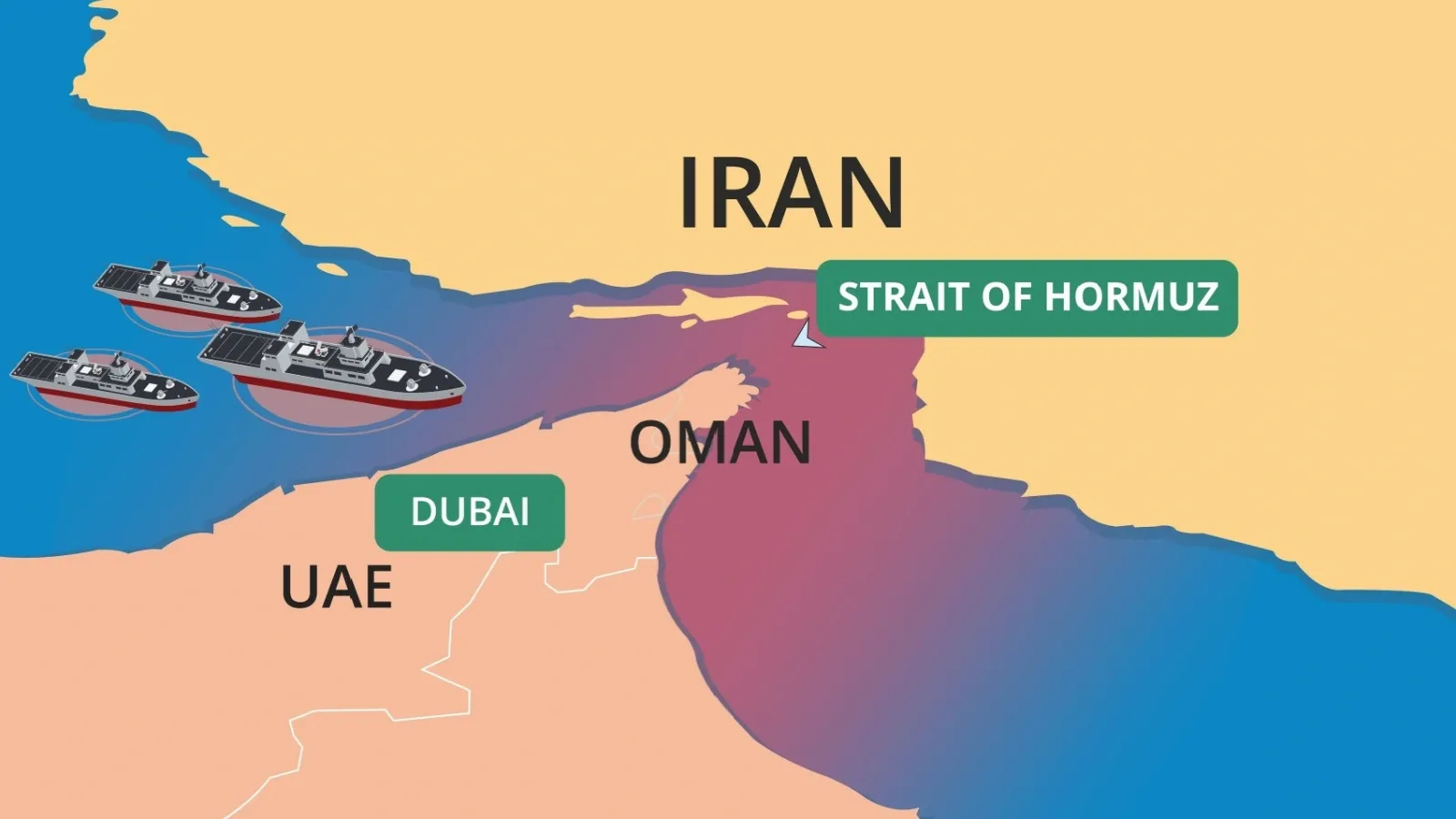
The Strait of Hormuz previously handled oil and gas shipments equivalent to around one-fifth of global consumption. Image: Shutterstock
Oil prices fell Thursday for a fourth straight day as hopes of diplomatic progress between Iran and Oman raised expectations that the Strait of Hormuz could be reopened.
Brent crude futures fell 0.5% to $87.43 a barrel at 0330 GMT, while US West Texas Intermediate crude declined 0.5% to $81.86.
Earlier on Wednesday, Oman and Iran said they have agreed to work on a framework to restore safe navigation through the Strait of Hormuz, including a temporary joint navigation corridor and a project to clear mines from the strategic waterway,
The announcement followed a visit to Tehran by Oman's Foreign Minister Badr bin Hamad Al Busaidi, who held talks with his Iranian counterpart, Abbas Araghchi.
The proposed framework would preserve the sovereignty and sovereign rights of coastal states while allowing technical negotiations to continue on a permanent navigation corridor and the future administration of the strait, according to a joint statement.
The two sides also proposed mechanisms for sharing information, managing maritime traffic and providing navigation and security services.
Oman and Iran said they wanted to hold discussions with other countries bordering the Persian Gulf and stressed the need to comply with international law and respect the sovereign rights of coastal states.
The statement came as Qatar prepared to send its prime minister to Tehran for talks aimed at easing tensions and restoring freedom of navigation through the strait.
Qatar's Prime Minister Sheikh Mohammed bin Abdulrahman Al Thani will meet Iranian officials Thursday to discuss de-escalation and conditions for dialogue, Qatar's Foreign Ministry spokesperson Majed Al Ansari said on X.
He said the talks would also address freedom of navigation and the need for the strait to return to the status quo before February 28.
Qatar has played an important mediating role in the conflict between Iran and the United States.
The Strait of Hormuz is one of the world's most important energy chokepoints.
Before the war between Iran and the United States and Israel began on February 28, the waterway carried oil and natural gas shipments equivalent to about one-fifth of global consumption.
Oil flows have since fallen to about one-quarter of their prewar level, according to ship-tracking data.
Washington has not immediately responded to the Iran-Oman joint statement.
US President Donald Trump has repeatedly claimed that the strait is under US control, and has threatened Oman with military action if it obstructs what he describes as the US path through the waterway.
A memorandum of understanding reached between the United States and Iran in mid-June had provided for the reopening of the Strait of Hormuz.
It left Iran and Oman to determine the future administration of the waterway and maritime services in consultation with Gulf states and in accordance with international law.
That agreement was intended to pave the way for talks aimed at permanently ending the war, but the negotiations subsequently collapsed.
The United States has halted attacks on Iran for about a month and is instead seeking to increase economic pressure on Tehran.
The pause in fighting and diplomatic efforts have raised expectations among investors that supply disruptions in the Gulf could ease.
Iran's Revolutionary Guards said Wednesday that negotiations with Oman had produced an understanding on sharing revenues from fees imposed on ships using the strait, an arrangement opposed by Washington.
Iran has continued to condition a full reopening of the waterway on US concessions, including an end to the war and the lifting of the blockade on Iranian ports.
Iranian official Gharibabadi warned Washington late Tuesday that the strait would not be reopened until the United States fulfilled commitments it had breached.
"The Strait of Hormuz will only be reopened in exchange for an end to the war on all fronts, the lifting of the blockade and a resolution to the situation in Yemen," he said.
About The Author
Next Story

