
Business News
Why Airtel's Sunil Mittal wants India to have a 'kill switch' for satellite internet

3 min read | Updated on November 13, 2026, 13:33 IST

SUMMARY
Starlink, Reliance Jio’s satellite venture Jio Satcom and Bharti-backed Eutelsat OneWeb have secured licences to provide satellite communication services.
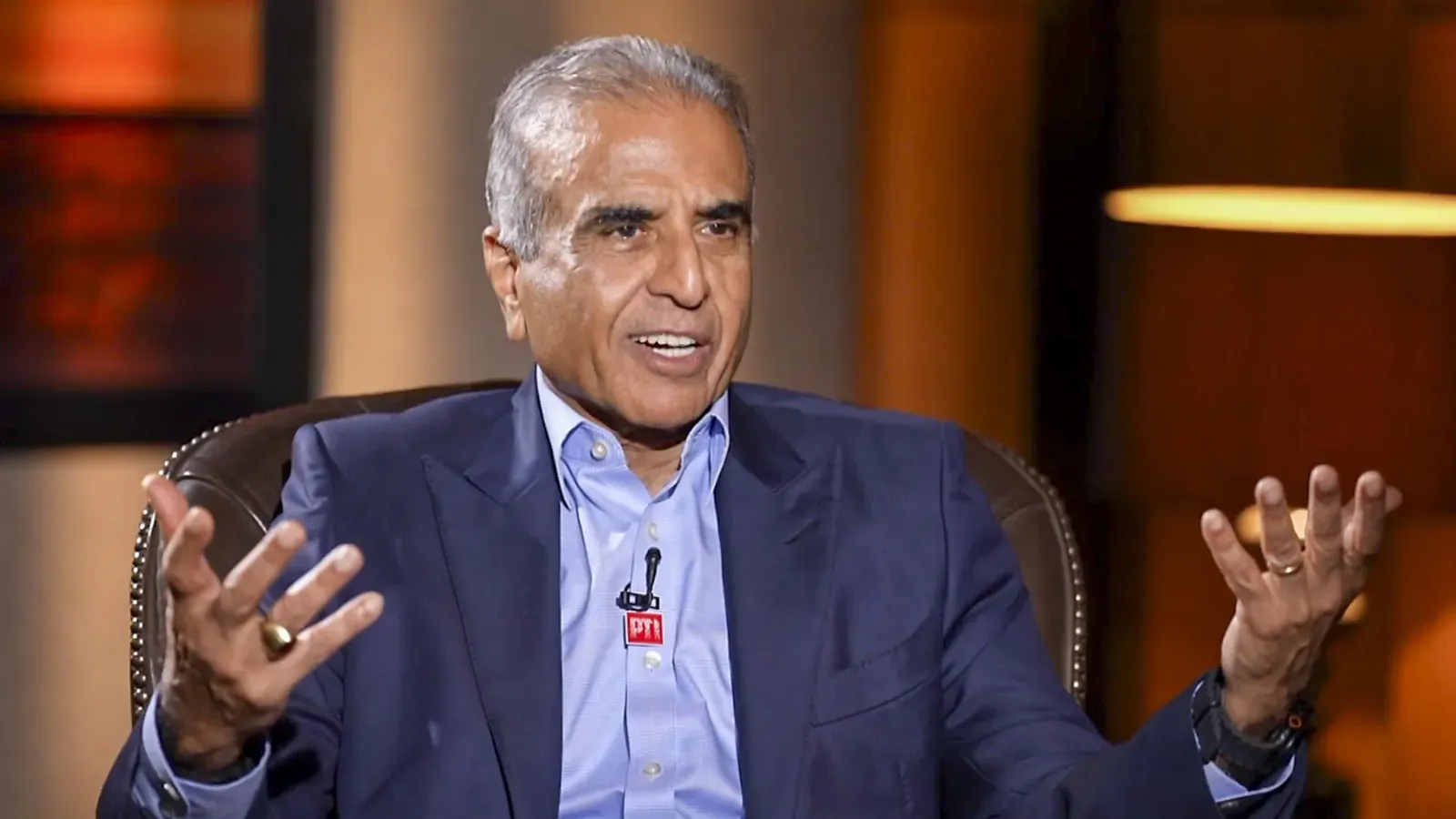
Bharti Enterprises Chairman Sunil Bharti Mittal speaks during an interview with PTI, in New Delhi, Friday, Nov. 13, 2026. (PTI Photo)
Amid the ongoing regulatory tussle over the entry of satellite broadband services in India, Bharti Airtel founder and chairman Sunil Bharti Mittal has said India must retain control of the “kill switch” for satellite communications operating on its soil.
“The kill switch, as we call it, should not be sitting somewhere else,” Mittal told PTI in an interview marking the 50th year of Bharti Enterprises. “India must have control over its own space destiny.”
The ‘kill switch’ is basically the ability to remotely disable or restrict a satellite network, either in a specific area or across an entire country.
Mittal said that warfare was increasingly moving into space, making it imperative for countries to retain control over critical communication infrastructure.
“Whether it’s drone or it’s cyber issues, or indeed guided missiles and all, they’re all going to be managed from space,” he said.
“Everybody in the world needs to have control over its security. There India will need to have guardrails. It’ll need to secure itself.”
Mittal said India should not depend on a single satellite communications provider or country and must ensure that critical infrastructure and data flows remain under its jurisdiction.
“Importantly, it may need to have different players. You can’t just depend on one country or one company,” he said.
India must also ensure “the security of the apparatus, of the equipment, the communications coming down into the ground to be monitored” and that “everything should be routed through India”, he added.
The comments come against the backdrop of a public spat between Elon Musk, chief executive of SpaceX, which operates Starlink, and Indian business interests over the satellite internet service’s proposed entry into the country.
“Unfortunately, we are being blocked by certain oligarchs in order to maintain their monopolistic chokehold on the Indian people,” he said in a post on X.
He later took a swipe at Reliance Industries chairman Mukesh Ambani, sarcastically addressing him as “Prime Minister Ambani” and suggesting that the industrialist was attempting to prevent competition from Starlink.
The Ministry of Communications, however, rejected allegations of regulatory discrimination, saying all three companies licensed to provide Global Mobile Personal Communication by Satellite (GMPCS) services using non-geosynchronous satellite orbit-based systems were at largely the same stage of regulatory scrutiny.
“Security assessment as part of this process is currently under way in respect of all the three licensees,” the ministry said.
Starlink, Reliance Jio’s satellite venture Jio Satcom and Bharti-backed Eutelsat OneWeb have secured licences to provide satellite communication services.
The licensed operators will be assigned spectrum after the government finalises a revenue-based charging framework and can commence operations after individually meeting security requirements, Scindia has said.
Related News

About The Author
Next Story

