
Business News
OpenAI made its own AI chip; It’s called Jalapeño and 'it is fast'

3 min read | Updated on August 26, 2026, 12:57 IST


SUMMARY
Jalapeño could enable faster ChatGPT responses, more responsive Codex sessions and AI agents while reducing the cost of serving growing AI demand.
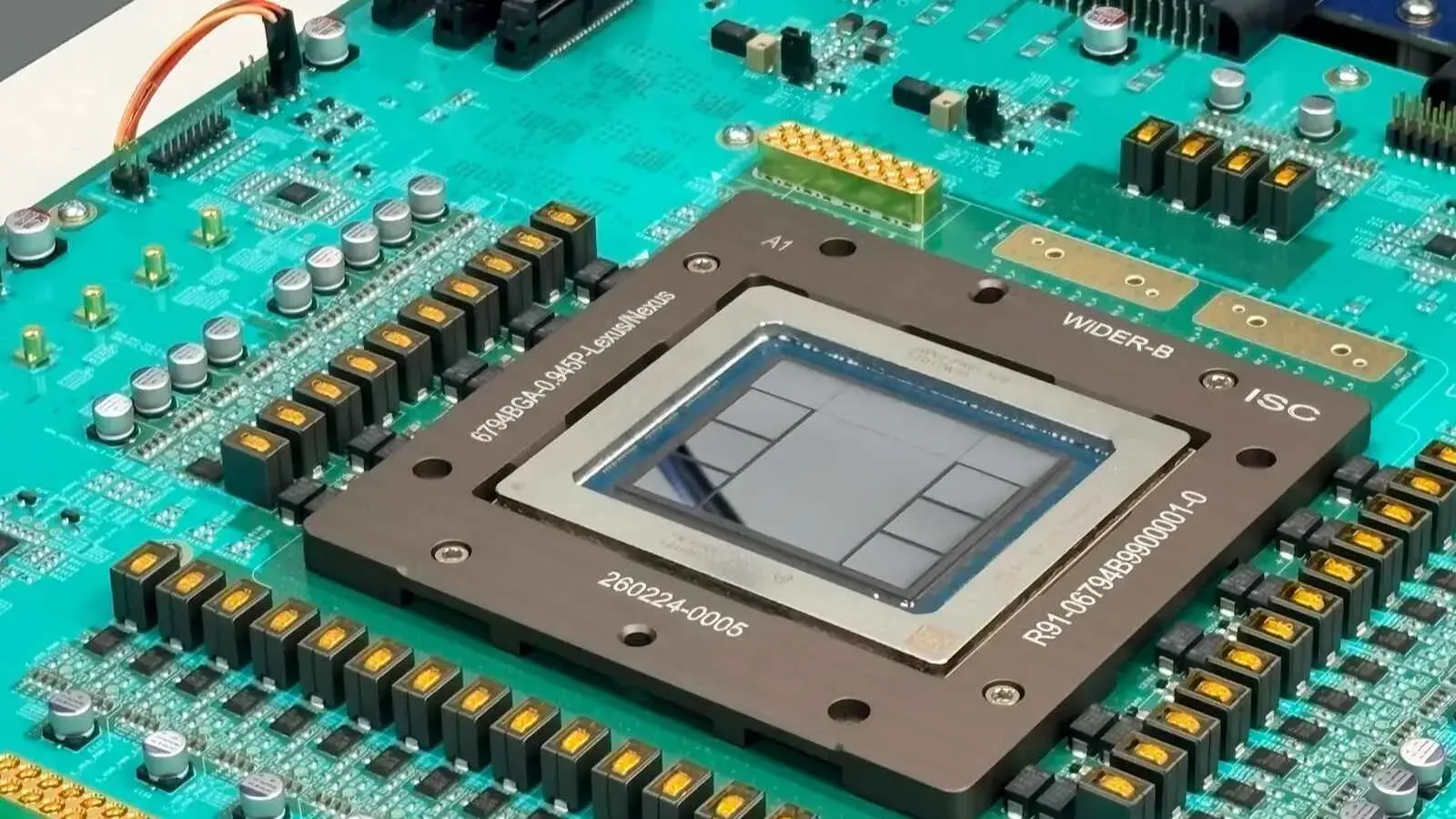
OpenAI plans to begin deploying Jalapeño in its infrastructure by the end of 2026.
OpenAI on Wednesday said its first custom artificial intelligence inference chip, codenamed Jalapeño, has demonstrated significant gains in speed and energy efficiency, as the ChatGPT maker moves to deploy its own silicon in its computing infrastructure.
The company said testing showed Jalapeño delivered 1.5 to 1.9 times more AI work per watt at peak throughput and 1.7 to 3.6 times lower end-to-end latency than comparison systems across GPT-OSS 120B, DeepSeek R1 and Kimi K2.5 1T models.
For highly interactive workloads, Jalapeño delivered 2.1 to 4.1 times higher performance, OpenAI said.
"We made a chip and it is fast," OpenAI CEO Sam Altman said in a post on X.
The company said the results demonstrate that its custom chip architecture can work across models developed both by OpenAI and external developers.
Jalapeño is designed to improve the speed and efficiency of AI inference, the process through which trained AI models generate responses to user requests.
OpenAI said the chip could mean faster ChatGPT responses, more responsive Codex coding sessions and AI agents, while also helping it handle growing demand for AI services.
"By producing more useful work from the same power and hardware, Jalapeño can help us serve more demand and lower the cost of delivering a successful result," the company said.
The company said greater inference efficiency could improve its operating leverage by allowing useful work and revenue to grow faster than the cost of serving users.
OpenAI said its own AI models were also used in developing and optimising Jalapeño.
Earlier generations of its models helped engineers design and bring up the chip, while newer models are being used to optimise and program it.
The chip is part of a strategy in which OpenAI is integrating the design of AI models, products, serving software, chips, memory, networking and computing systems.
The company plans to begin deploying Jalapeño within its computing infrastructure by the end of 2026, subject to production qualification, software maturation and further validation across models.
Jalapeño is the first generation of what OpenAI described as a multigenerational custom silicon roadmap.
The company said Gen 2 is deep in development and Gen 3 is taking shape.
OpenAI, however, said it would continue to widely deploy accelerators from Nvidia and other partners for both AI training and inference, noting that meeting growing demand will require compute from multiple sources.
The company said the current results are based on ongoing testing and that it is continuing to prepare Jalapeño for operation at scale.
"Each generation will build on what we learn and further advance both efficiency and speed," OpenAI said.
About The Author
Next Story

