
Business News
Sitharaman says welfare shift from cash transfers to basic services helped cut poverty

4 min read | Updated on November 23, 2026, 12:42 IST

SUMMARY
Finance Minister Nirmala Sitharaman said improved access to essential services helped reduce household expenses and prevent vulnerable families from falling back into poverty.
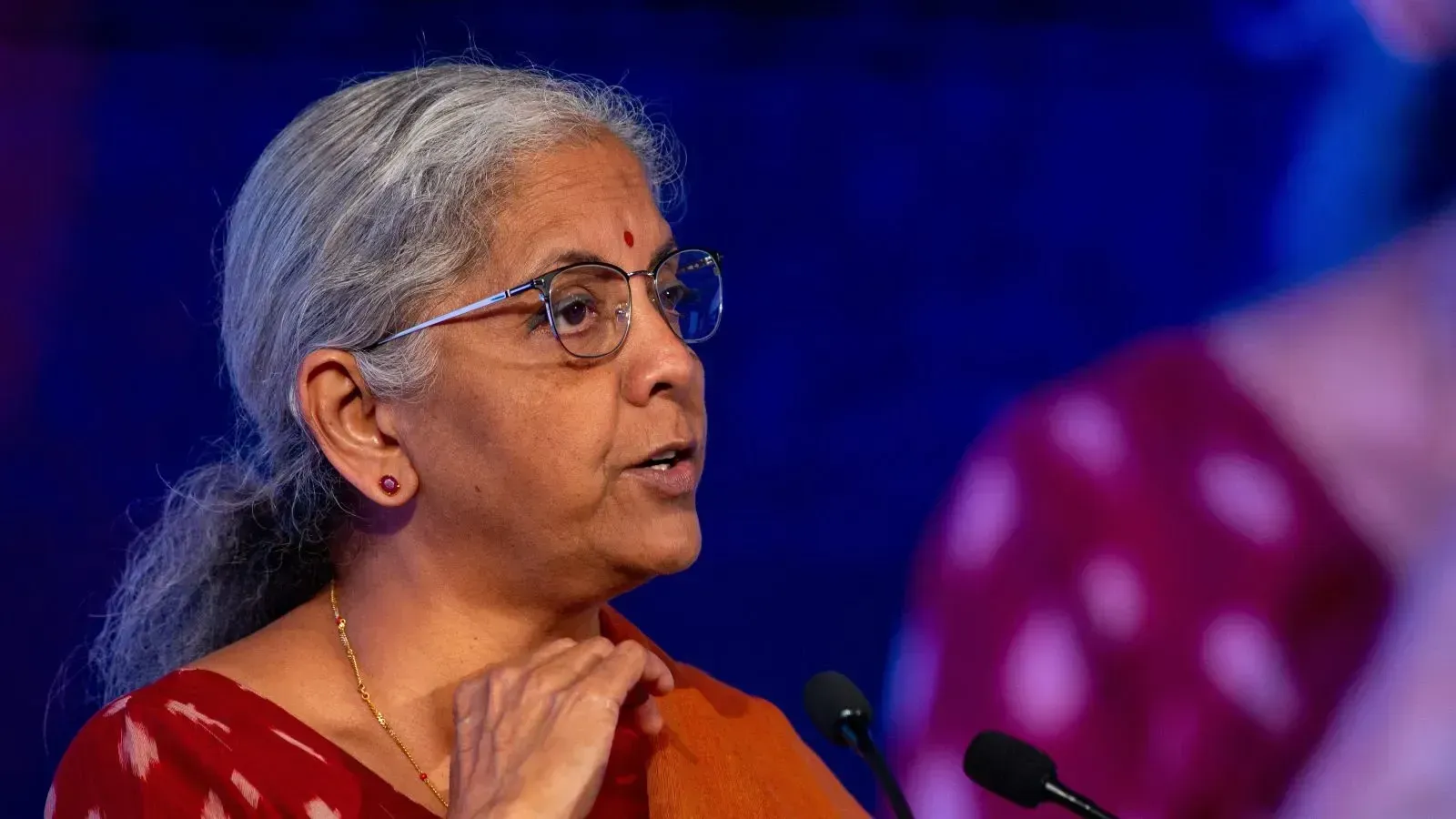
Sitharaman's remarks come against the backdrop of the World Bank’s October 2026 Poverty and Equity Brief.
Finance Minister Nirmala Sitharaman on Monday said India’s approach to poverty reduction over the past decade shifted from temporary relief and cash transfers to addressing basic deprivations such as lack of housing, sanitation, drinking water and healthcare, helping lift nearly 50 crore people out of poverty.
In a blog post on LinkedIn, Sitharaman said the government under Prime Minister Narendra Modi had chosen the “harder path” of addressing deprivations, household by household, instead of relying merely on putting money into the hands of the poor.
Her remarks come against the backdrop of the World Bank’s October 2026 Poverty and Equity Brief, which estimated that 496 million Indians moved out of poverty between 2011 and 2023.
The share of the population living below the lower-middle-income poverty line of $4.20 a day declined from 57.7% to 16.1%, according to the report.
Extreme poverty, measured at $3 a day, fell from 27.1% to 2.6% over the same period, the report said.
“It was not always so. For over six decades after Independence, eradicating mass poverty remained an unfulfilled promise,” Sitharaman said, adding that the last decade had overturned the belief that poverty could be addressed simply by putting money into the hands of the poor.
The government, she said, adopted an approach that was “targeted, focused and tailored”.
Citing the Swachh Bharat Mission, Jal Jeevan Mission, Ujjwala Yojana, PM Awas Yojana and Ayushman Bharat, the finance minister said access to toilets, tap water, clean cooking fuel, pucca houses and healthcare had helped protect vulnerable families from falling back into poverty.
Under the Jal Jeevan Mission, rural tap-water connections increased from around 3 crore households in 2019 to nearly 16 crore, she said.
Access to household toilets under Swachh Bharat had helped avert an estimated 60,000-70,000 infant deaths annually, while Ayushman Bharat provided financial protection against hospitalisation expenses, she added.
“A family cannot climb out of poverty while illness and the daily burden of fetching water keep pulling it back,” Sitharaman said.
She argued that such interventions not only improved living conditions but also reduced household expenditure and freed up time for productive activities, particularly for women.
The finance minister also said financial inclusion and access to credit had helped poor households move from welfare support towards entrepreneurship and income generation.
Over 59 crore Jan Dhan accounts had enabled direct transfer of government benefits to recipients without middlemen, she said, adding that access to formal banking also helped people build financial records and obtain credit.
Under the Pradhan Mantri Mudra Yojana, 60 crore loan accounts had been sanctioned, around two-thirds of them to women, Sitharaman said.
She cited the examples of women entrepreneurs who had used collateral-free loans to restart businesses and expand employment, saying access to finance had helped translate aspirations into livelihoods.
According to the World Bank report, India’s poverty reduction was primarily due to strong consumption growth, rising employment among women, and expanded social transfers, including food subsidies.
It noted that poverty remained concentrated among households with lower education, fewer assets and limited access to stable employment.
The report said 19.3% of the rural population remained below the $4.20-a-day poverty line in 2023, compared with 8.6% in urban areas. A contiguous belt stretching from Uttar Pradesh to West Bengal accounted for about 57% of India’s poor population.
Sitharaman said the next phase of poverty reduction would focus on ensuring that those who had moved out of poverty continued to advance and did not slip back.
“Welfare offered via various measures must now be complemented by even wider access to finance, markets and the digital economy,” she said.
“Having achieved in ten years what remained unfulfilled for six decades, India can face the next twenty with confidence,” she added.
About The Author
Next Story

